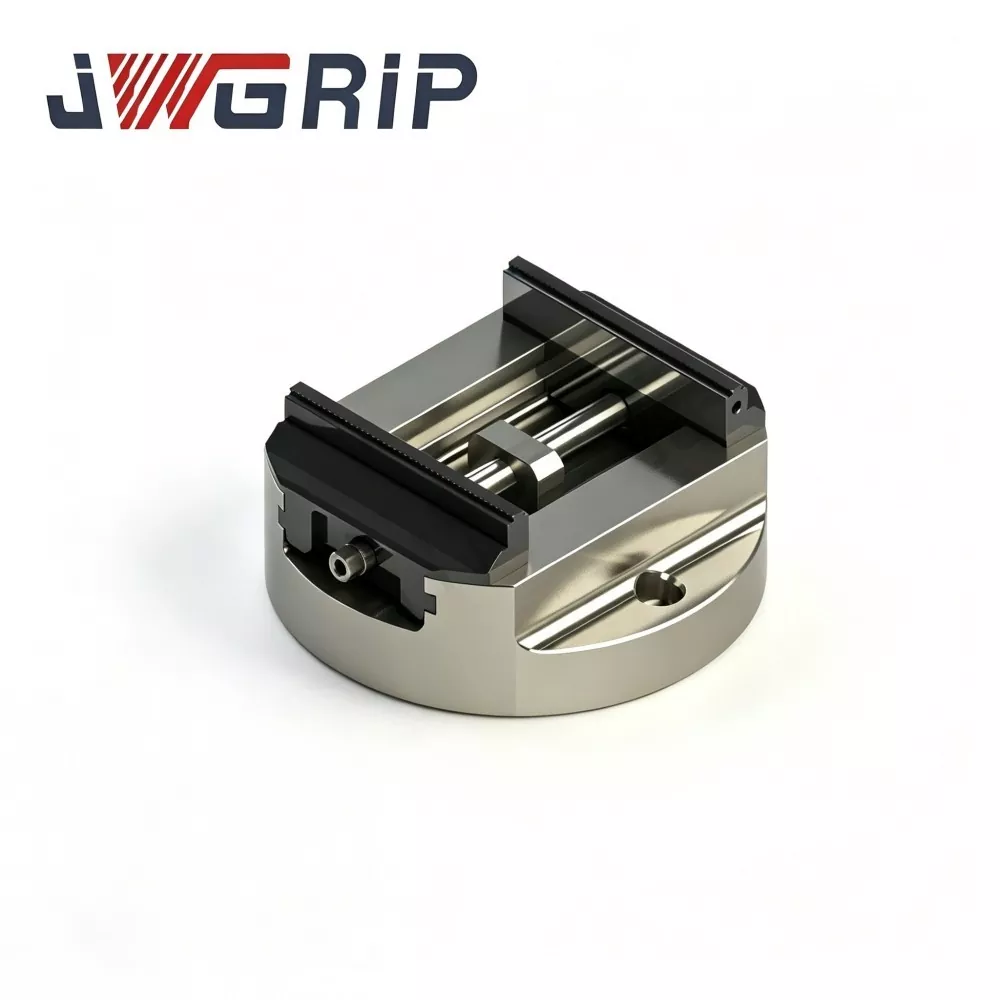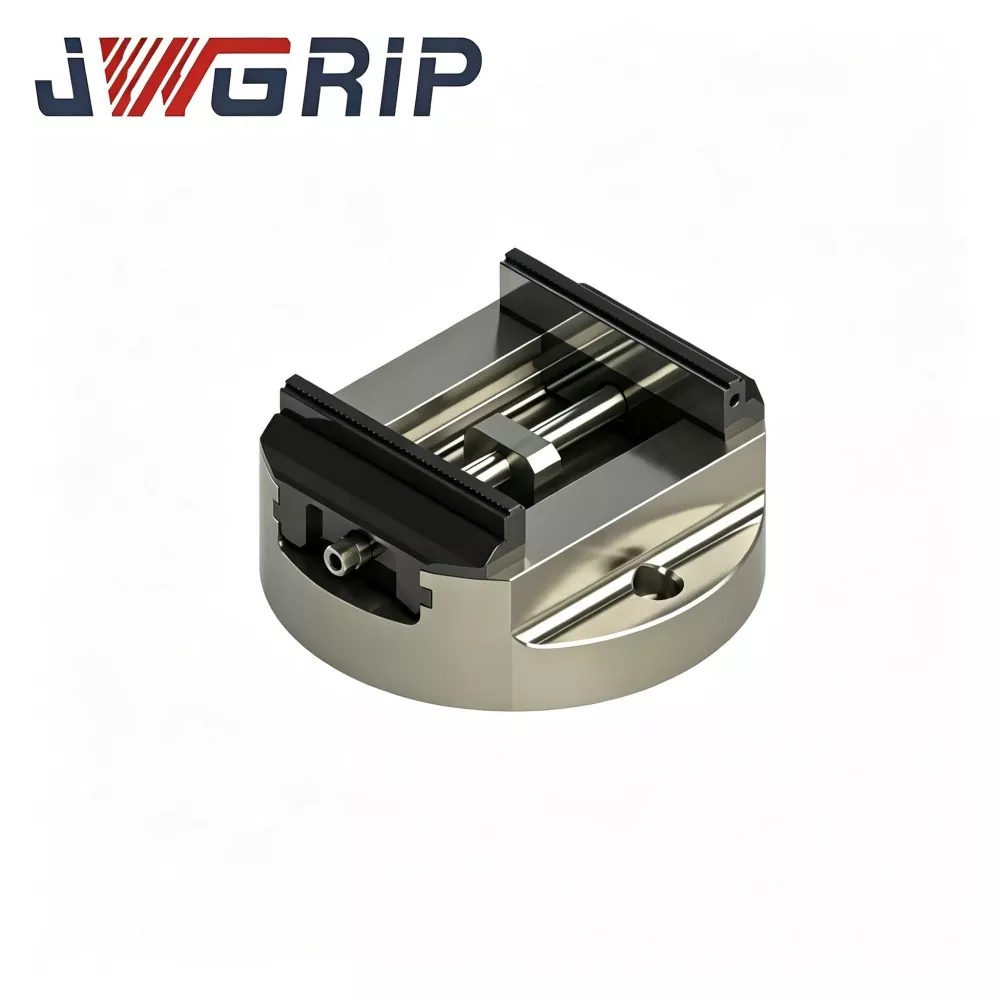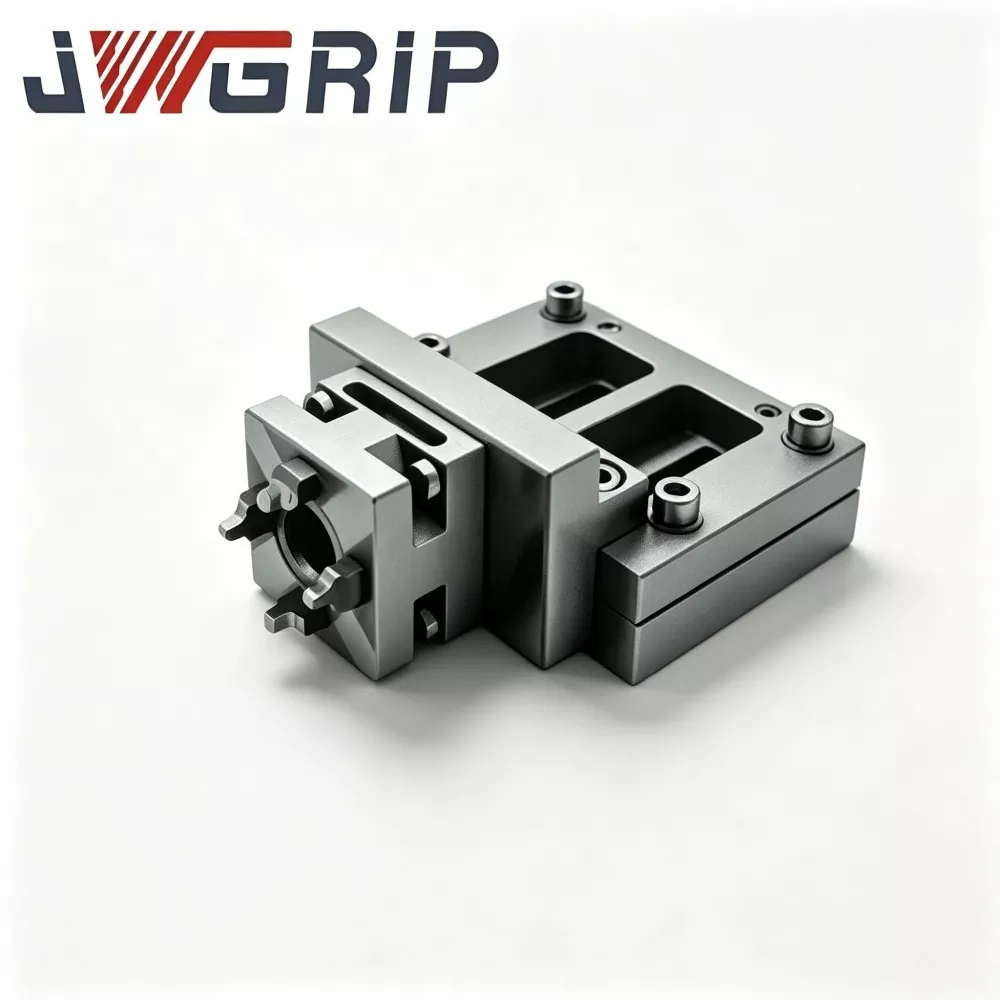
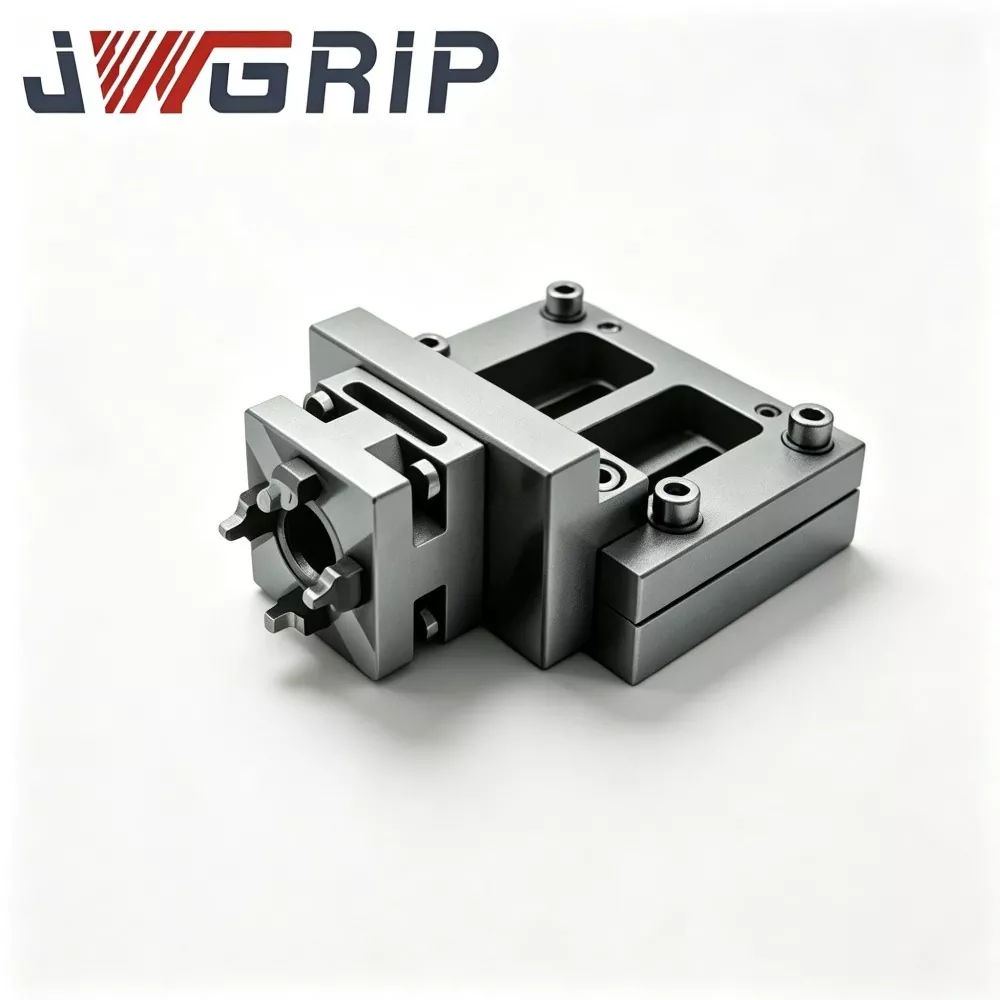
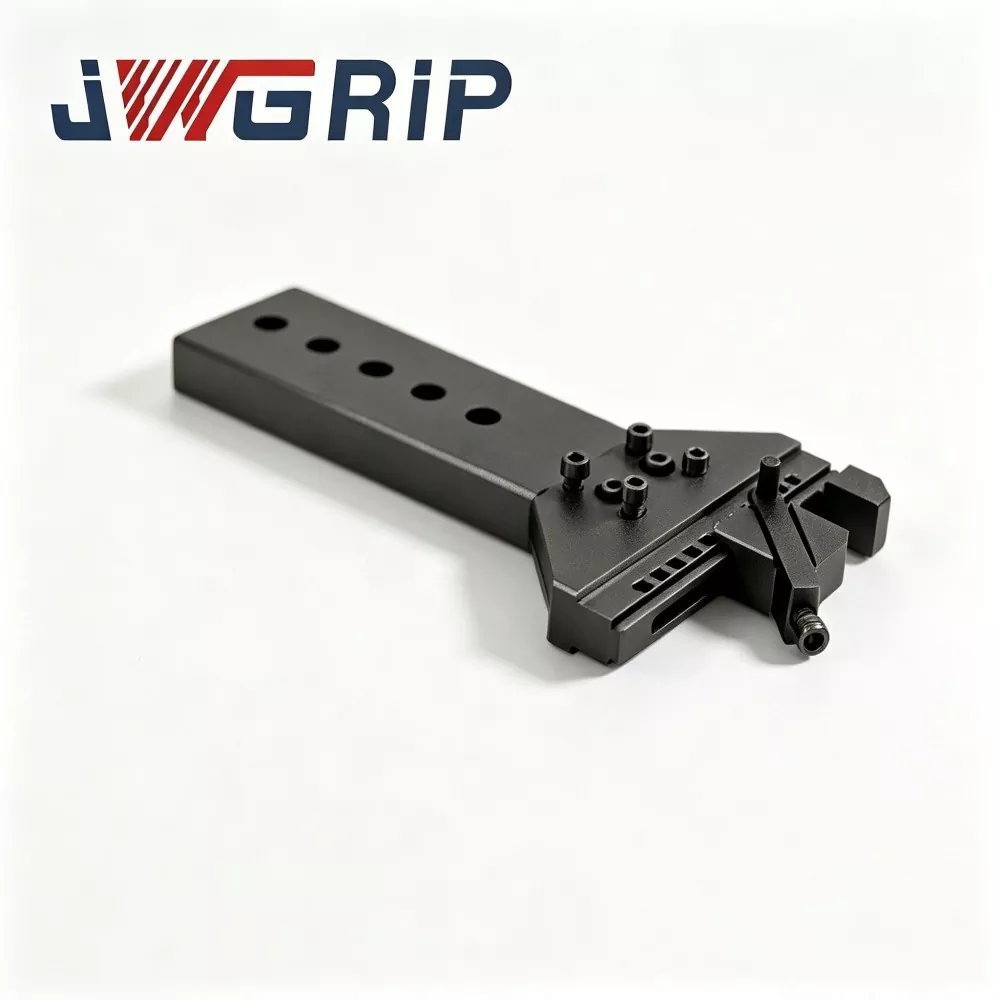
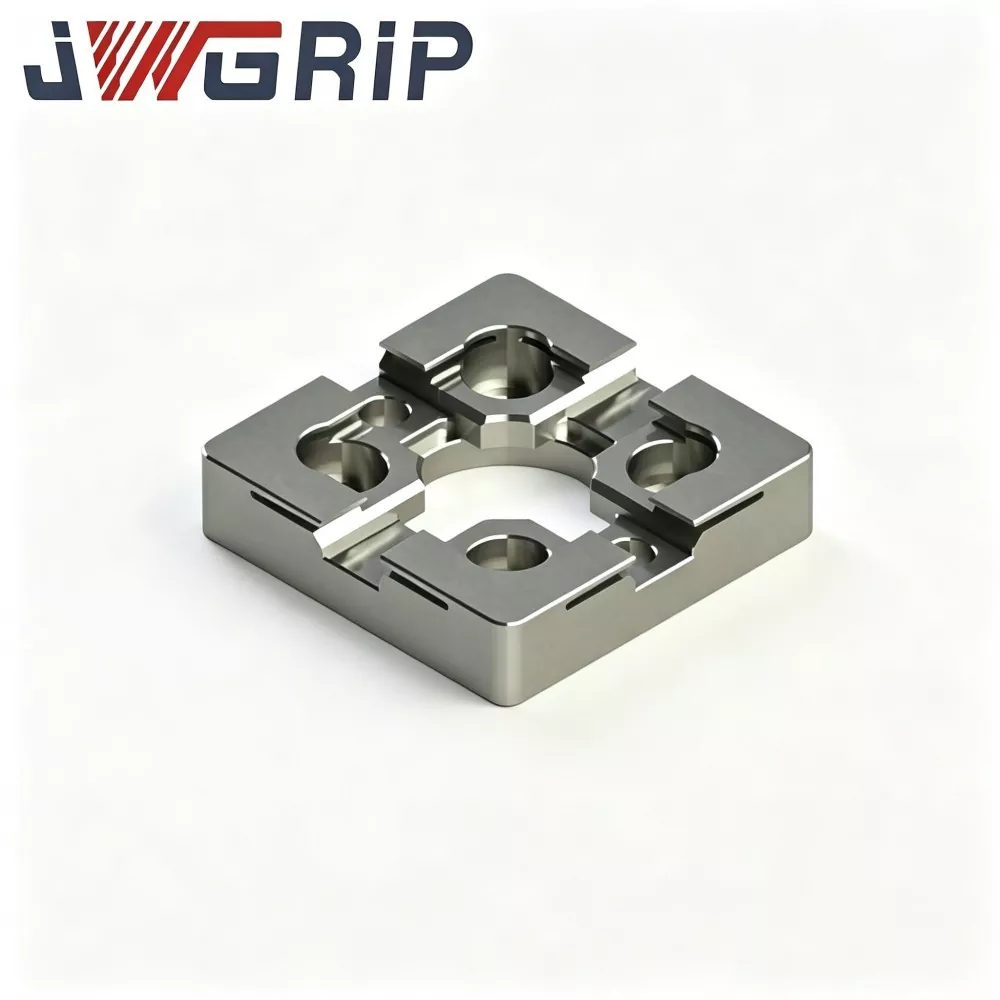
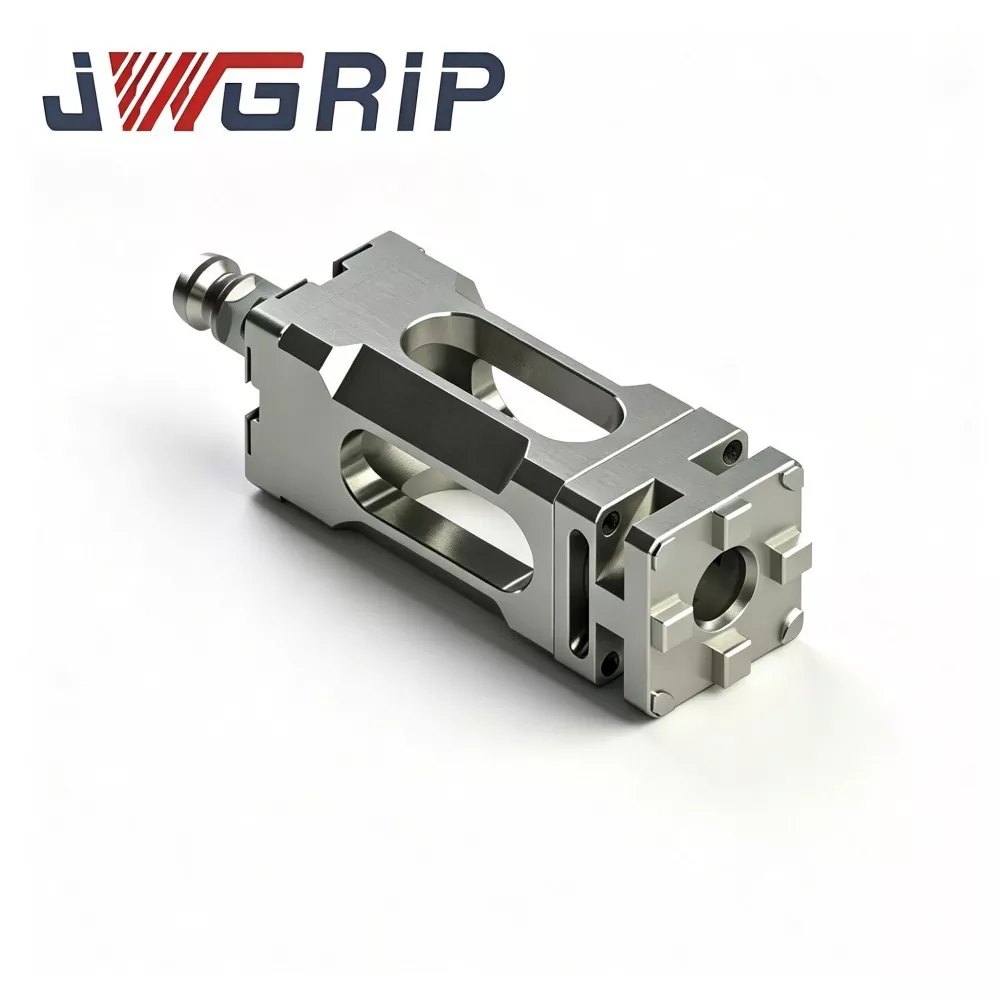
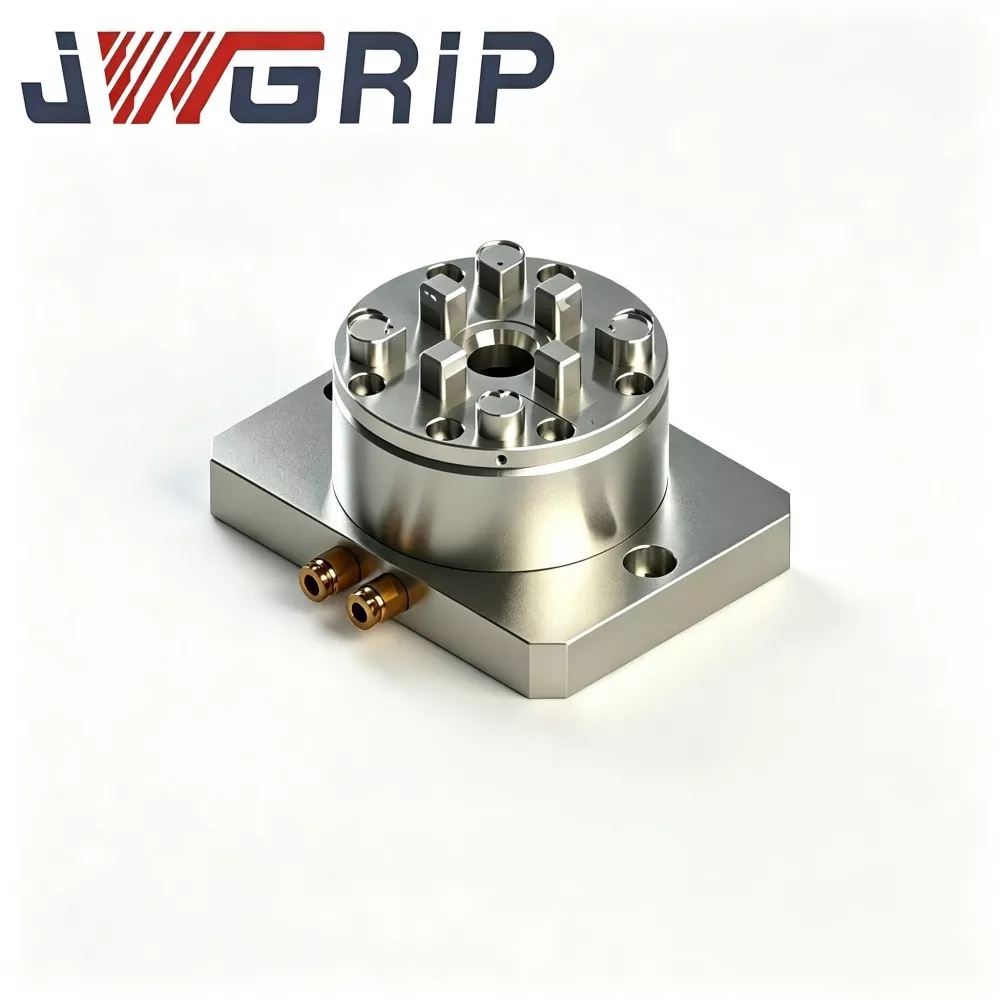
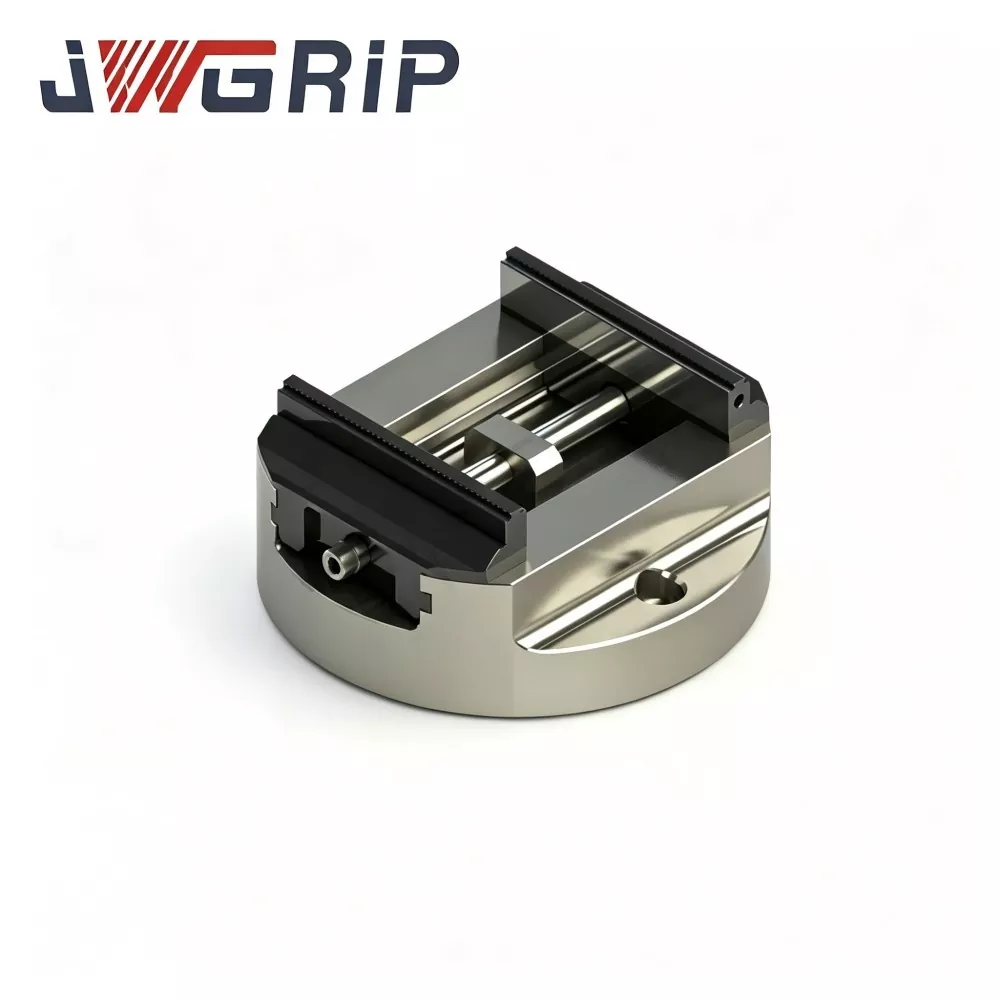
Heavy-Duty Round Base Self-Centering Vise for 5 Axis Machining
JWGRIP is the professional manufacturer and supplier of New Design Heavy-Duty Round Base Self-Centering Vise for 5 Axis Machining in China, with standard specifications fully in Stock for timely project delivery. It is a purpose-built integrated high-rigidity clamping fixture professionally optimized for high-load 5-axis simultaneous machining, cradle-type and rotary table processing scenarios. Adopting upgraded thickened round base structure and manufactured with high-quality materials and rigorous industrial production standards, it integrates strong anti-overturning rigidity, high-efficiency workpiece setup and durable modular structure into a single integrated unit.
This high-performance heavy-duty round base self-centering vise features outstanding anti-overturning rigidity, efficient clamping operation, ultra-long service life and user-friendly modular maintenance. The thickened round base is made of high-strength alloy steel and undergoes multiple stress-relieving aging processes to thoroughly eliminate internal residual stress, maintaining stable structural performance under alternating heavy cutting torque and large-angle swinging conditions. Core centering transmission assemblies are finished by ultra-precision grinding technology, ensuring accurate and consistent centering performance after repeated rotary indexing and long-term cyclic operation.
With excellent resistance to chip erosion and coolant corrosion, Heavy-Duty Round Base Self-Centering Vise for 5 Axis Machining effectively avoids internal component wear and accuracy attenuation in harsh workshop environments. Widely applicable to heavy mold components, high-strength alloy structural parts, heavy-duty rotary workpieces and precision mechanical castings, this Made-in-China fixture provides stable, reliable and high-load clamping solutions for global 5-axis heavy cutting CNC machining workshops.
Real-World Bottlenecks
1. Overturning moment at large tilting angles
When cradle table swings workpiece to 45°–90° inclination, combined gravitational moment plus tangential cutting force generates huge overturning load on the vise base. Thin-wall ordinary round-base vises produce micro-deformation, causing centering datum shift and multi-face dimensional inconsistency after indexing.
2. Heavy solid-blank clamping demand
Mold steel, thick castings and high-strength alloy blanks require very high clamping force to resist 5-axis tilting cutting impact. Ordinary gear-rack transmission sets suffer elastic deformation under high clamping force, leading to asymmetric jaw movement and partial workpiece slippage.
3. Time-consuming on-machine datum alignment
Conventional round-base designs lack optimized concentric mounting datum. Every vise installation on cradle table requires repeated dial-indicator adjustment, consuming substantial non-cutting auxiliary time.
4. Harsh 5-axis workshop contamination
5-axis machining generates massive splashing coolant and metal chips from all directions. Inadequate sealing allows contaminants to invade internal transmission chamber, causing jamming, corrosion and progressive accuracy decay.
5. High maintenance cost in continuous heavy-load production
Non-modular jaw designs force whole-vise replacement once jaw surfaces wear out under long-term heavy-load clamping, raising long-term workshop operating expenditure.
JWGRIP Heavy-Duty Round-Base Self-Centering Vise is engineered against all above-mentioned bottlenecks through five core measures: thickened reinforced round base, heavy-duty enlarged-cross-section transmission, cradle-table-optimized mounting datum, multi-layer labyrinth full-enclosed sealing and modular replaceable hard-jaw system.
Assembly Composition
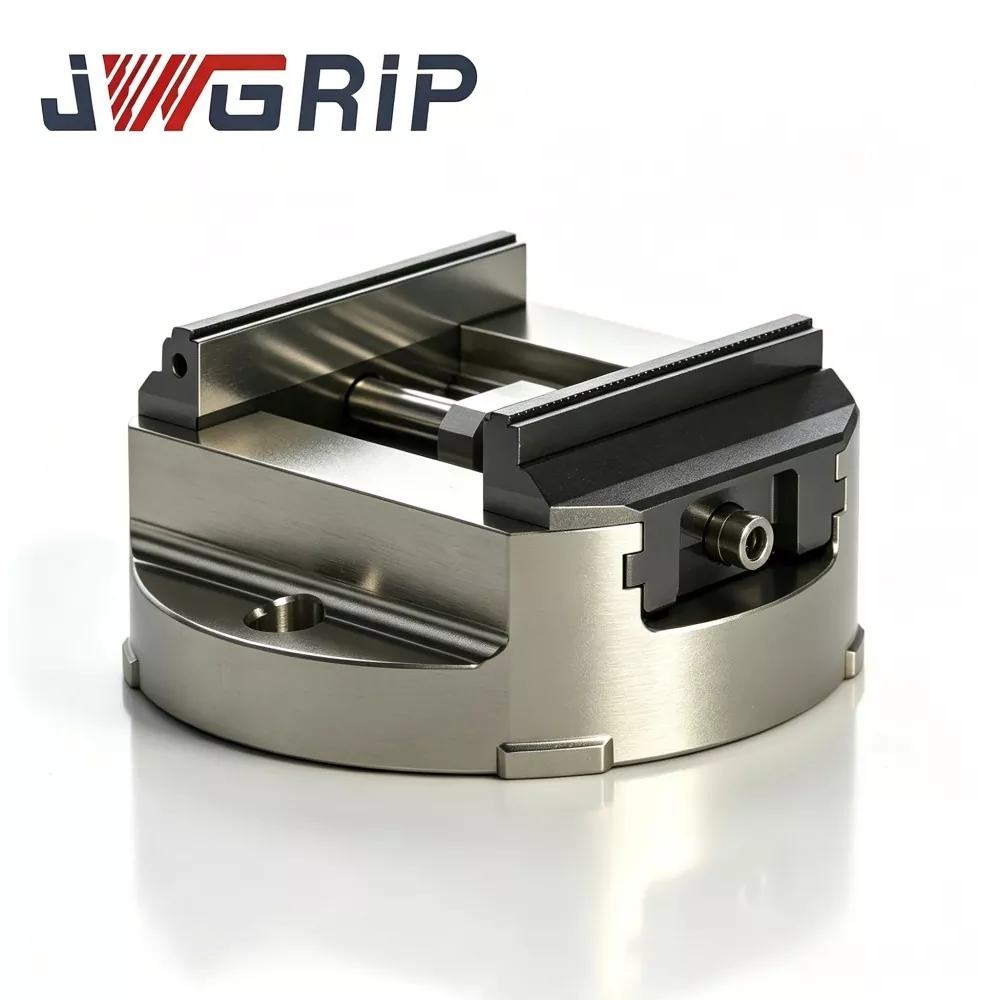
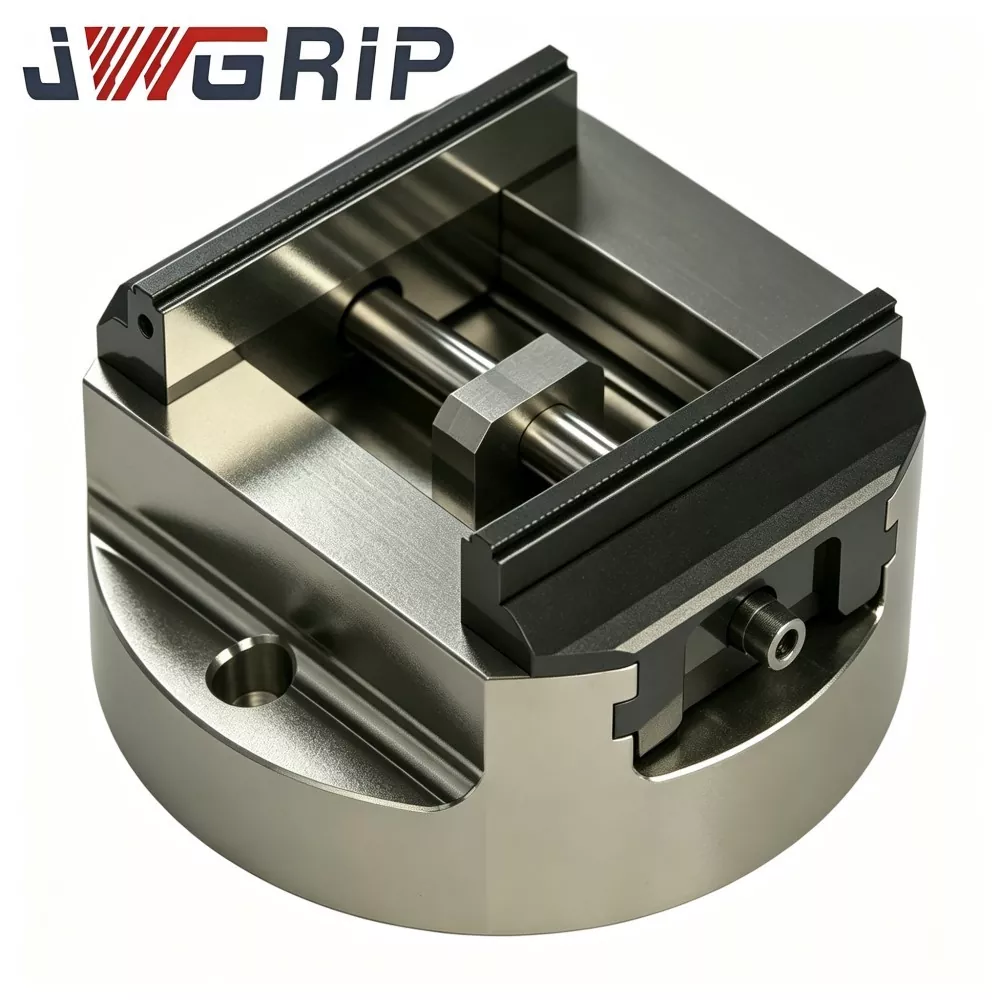
JWGRIP Heavy-Duty Round Base Self-Centering Vise for 5 Axis Machining consists of five core assemblies:
· Thickened reinforced stress-relieved round base
· Heavy-duty enlarged-cross-section synchronous gear-rack transmission unit
· Modular high-hardness replaceable hard-jaw set
· Cradle-table-optimized mounting datum platform
· Multi-layer labyrinth full-enclosed sealing unit
1. Thickened reinforced round base
High-strength alloy steel thick-wall casting with dense radial reinforcing-rib layout. Multiple stress-relieving aging cycles eliminate residual stress. Under cradle-table large-angle tilting plus heavy cutting force, the base effectively suppresses micro-deformation and maintains centering datum stability after repeated indexing.
2. Heavy-duty synchronous gear-rack transmission
Enlarged-cross-section quenched gear-rack components resist high clamping-force elastic deformation. Dual jaws maintain high-precision synchronous displacement even when clamping heavy solid blanks, avoiding asymmetric clamping force and workpiece partial slippage in 5-axis tilting-cutting conditions.
3. Modular replaceable hard-jaw system
Hard jaws adopt independent detachable modular design. Multiple jaw profile options available for cylindrical, stepped and irregular heavy-duty workpieces. After long-time heavy-load clamping wear, jaws can be replaced separately without changing whole vise.
4. Cradle-table-optimized mounting datum
Outer-circle concentric datum and locating-pin / mounting-hole layout follow mainstream cradle-table standards. Direct positioning installation is supported, reducing dependence on custom adapter plates and cutting stacked assembly tolerance introduced by transition parts.
5. Multi-layer labyrinth full-enclosed sealing
Multi-stage labyrinth structure plus wear-resistant rubber sealing rings build multi-barrier protection. It isolates massive splashing coolant and metal chips of 5-axis machining from invading internal heavy-load transmission chamber, preventing transmission jamming and precision attenuation.
Working Summary
After vise is fastened onto cradle-table mounting plane via locating pins and bolts, place heavy workpiece between hard jaws. Activate internal heavy-duty synchronous transmission; dual jaws move synchronously to finish automatic centering clamping. When cradle table executes large-angle tilting and rotary indexing for multi-face machining, thickened reinforced round base resists overturning moment. Multi-layer labyrinth sealing protects inner transmission parts. Modular jaws can be exchanged to match varying heavy-workpiece geometries.
Core Technical Highlights
1. Thickened reinforced round-base construction with excellent anti-overturning performance
Different from thin-wall ordinary round-base vises, thickened wall plus dense radial reinforcing-rib layout and multi-cycle stress-relief greatly enhance structural rigidity. Under huge overturning moment generated by cradle-table large-angle tilting together with heavy-load cutting force, micro-deformation of circular base is effectively suppressed. Centering datum remains stable after repeated indexing movements, guaranteeing multi-face machining dimensional consistency for heavy-duty workpieces.
2. Heavy-duty high-strength synchronous gear-rack transmission assembly
Enlarged-cross-section quenched gear-rack components resist high clamping-force elastic deformation. Even when clamping heavy solid blanks, dual jaws maintain high-precision synchronous displacement, avoiding asymmetric clamping force and workpiece partial slippage in 5-axis tilting-cutting conditions. Satisfy heavy-load clamping demands of mold steel, thick castings and high-strength alloy blanks.
3. Mounting datum optimized for mainstream cradle-style 5-axis rotary tables
Outer-circle concentric datum and locating-pin / mounting-hole layout follow mainstream cradle-table standards. Direct positioning installation is supported, reducing dependence on custom adapter plates. It cuts stacked assembly tolerance introduced by transition parts and lowers pre-production fixture preparation workload.
4. Multi-layer labyrinth full-enclosed sealing unit
Multi-stage labyrinth structure plus wear-resistant rubber sealing rings build multi-barrier protection. It isolates massive splashing coolant and metal chips of 5-axis machining from invading internal heavy-load transmission chamber. Prevent transmission jamming and precision attenuation caused by workshop pollutants, improve durable service performance under continuous heavy-load mass-production.
5. Modular high-hardness replaceable hard-jaw system
Hard jaws adopt independent detachable modular design. After long-time heavy-load clamping wear, jaws can be replaced separately without changing whole vise. Multiple jaw profile options are available for cylindrical, stepped and irregular heavy-duty workpieces, realizing flexible configuration for different production batches.
6. Complete OEM custom-development engineering support
As a China-based fixture manufacturer, JWGRIP factory supports project-oriented OEM custom-development. Targeted adjustment includes clamping-stroke modification, special jaw profile development, mounting-hole re-layout for non-standard cradle-tables and special heavy-load-rating optimization, satisfying personalized fixture demands of complex 5-axis heavy-load processing projects.
Application Sectors
1. Heavy-duty mold manufacturing
Large mold cores, heavy mold inserts and thick mold-base components. Heavy-load clamping resists 5-axis rough-milling impact. Anti-overturning round base secures multi-face indexing dimensional consistency, lowering mold trial-run scrap rate and shortening mold development cycle.
2. High-strength alloy structural-part machining
Aerospace high-strength alloy blanks, heavy structural frames. High-precision synchronous centering meets strict coaxiality and positional-tolerance requirements for high-value alloy components.
3. Heavy cast-iron & foundry-part processing
Thick cast blanks, heavy mechanical castings. Heavy-duty transmission and hard-jaw configuration withstand high material-removal rough-milling of cast workpieces under 5-axis tilting conditions.
4. Heavy-equipment & engineering-machinery component production
Large base plates, heavy structural brackets and rotary-feature heavy parts. Wide clamping-force range and anti-overturning base adapt to varied heavy-equipment part geometries.
5. New-energy heavy structural-part fabrication
Large battery-housing structural blanks, heavy chassis frames. 5-axis multi-face milling and drilling with stable centering performance supports mass-production throughput.
6. General heavy-load multi-axis precision workshops
Varied heavy mechanical rotary-feature parts. Supports frequent heavy-workpiece variant switching. Cradle-table-optimized mounting datum cuts fixture-setup labor for 5-axis workshops.
Installation Workflow
1. Pre-installation cleaning inspection
Thoroughly clean cradle rotary-table mounting plane, vise round-base bottom contact face and locating-pin holes. Completely remove metal chips, coolant residue and oil stains. Tiny foreign particles will cause vise tilting, amplify deviation under large-angle cradle-table tilting and seriously degrade multi-face machining accuracy of heavy-duty workpieces.
2. Datum positioning and fastening
Place vise onto cradle-table mounting plane, insert locating pins. Perform dial-indicator centering adjustment referencing round-base outer concentric datum. After centering is completed, tighten mounting bolts strictly in accordance with machine-tool-specified torque value. Double-check vise is firmly fixed without shaking or positional play.
3. Heavy-workpiece clamping adjustment
Place heavy-duty workpiece between hard jaws. Activate synchronous self-centering clamping mechanism. Adjust clamping force according to workpiece material and cutting process. Apply sufficiently high clamping force for heavy solid blanks to resist combined load of 5-axis tilting overturning moment and milling cutting force. Avoid insufficient clamping force leading to workpiece slip.
4. Cradle-table full-range idle-run verification
Execute full-range tilting and rotary indexing idle movement of cradle-table. Simulate actual 5-axis working conditions, inspect for mechanical interference, check that no workpiece shifting tendency occurs under simulated overturning moment and cutting load. Only pass idle-run test can enter trial-cut phase.
5. Trial-cut accuracy validation
Perform trial-cut machining using test heavy-duty blank. Measure multi-face dimensional and geometric-tolerance indexes. Confirm centering stability and anti-overturning performance satisfy engineering requirements before formal mass-production processing.
Maintenance Regimen
1. Daily routine maintenance After each production shift, clean hard-jaw clamping faces and round-base bottom datum surface. Remove accumulated chips and coolant residues to eliminate sources of positioning deviation.
2. Semi-monthly lubrication work Open sealing-unit maintenance access. Inject special high-viscosity anti-wear lubricating grease into internal heavy-load gear-rack transmission pair. Keep jaw synchronous-movement smooth and stabilize transmission-gap status under continuous 5-axis indexing production.
3. Regular wearable-part inspection Inspect hard-jaw contact surfaces periodically. Replace modular jaws independently once scratches or wear degrade clamping quality. Do NOT keep running production with worn jaws; this will cause centering errors for heavy-duty workpieces.
4. Quarterly datum-verification procedure Dismount vise from cradle-table every quarter. Inspect round-base bottom surface for bruising or indentation. Measure self-centering repeat-accuracy with gauges, detect subtle accuracy drift ahead of mass-production scrap incidents.
5. Long-term idle-storage protection Fully clean whole vise unit when kept out-of-service for long periods. Apply anti-rust protective coating on round-base datum and jaw working surfaces. Store in dry dust-proof environment.
6. Forbidden-operation rules Forbid over-stroke clamping and over-load workpiece holding. Never strike vise-body or jaws with heavy tools to avoid round-base deformation and inner-transmission component damage.
Common Fault Diagnosis & Remedies
Fault 1: Multi-face dimensional inconsistency after 5-axis indexing
· Probable causes: jaw-surface wear; insufficient clamping force; loose round-base mounting bolts; insufficient lubrication leads to transmission-pair-gap drift
· Solutions: Replace worn modular jaws; adjust clamping-force to fit workpiece property; retighten mounting-bolts to standard torque; replenish special lubricating grease and re-verify centering-accuracy.
Fault 2: Sluggish jaw movement, degraded synchronous-centering performance
· Probable causes: Chips / coolant penetrate sealed transmission-chamber; lubricant depletion; offset of transmission-pair clearance
· Solutions: Open sealing housing; fully clean inner gear-rack assemblies; refill anti-wear grease; fine-tune transmission-clearance parameters.
Fault 3: Position shift occurs after repeated cradle-table indexing cycles
· Probable causes: Foreign contaminants trapped between round-base bottom-datum and cradle-table plane; mounting-bolt under-torque; local micro-deformation from long-term overload operation
· Solutions: Dismount vise; thoroughly clean two mating-surfaces; retighten bolts with specified torque; inspect round-base for permanent deformation; replace vise unit if permanent deformation exists.
Fault 4: Workpiece micro-slip during heavy-load 5-axis rough-milling
· Probable causes: Insufficient locking torque; chip residues stuck on hard-jaw clamping-faces
· Solutions: Increase locking torque moderately; fully clean jaw contact surfaces before clamping workpieces.
Packaging & Shipment
JWGRIP Heavy-Duty Round Base Self-Centering Vise for 5 Axis Machining:
· Standard stocked models support fast global shipment.
· Every vise undergoes multi-item strict precision inspection before leaving factory, accompanied by formal precision-test report and product qualification certificate.
· Anti-rust passivation treatment is applied for all datum surfaces.
· Single-unit products adopt shock-absorbing pearl cotton plus high-strength carton packaging.
· Export-oriented orders adopt shock-resistant fumigation-free wooden-case partition packaging, protecting round-base datum and hard-jaw working surfaces against precision damage during long-distance sea-land transportation.
· OEM custom-development modified orders follow mutually-negotiated lead-time.
Engineering Selection Evaluation Points
Heavy-Duty Round-Base Self-Centering Vise for 5-Axis Machining targets heavy-load multi-angle tilting-indexing processing scenarios of cradle-type 5-axis equipment. It solves core industry pain-points:
· Insufficient round-base anti-overturn rigidity
· Centering drift under repeated indexing
· Poor cradle-table adaptability
· Insufficient clamping force for heavy solid blanks
· Rapid wear caused by harsh 5-axis workshop environment
Standard in-stock versions fit most mainstream cradle-style 5-axis machine-tool projects, featuring short delivery cycle and stable high-performance. For projects with non-standard cradle-table installation dimensions, super-heavy-load workpieces or special jaw-profile requirements, it is recommended to adopt OEM custom-development engineering service.
When conducting selection evaluation:
1. First confirm maximum workpiece outline dimension and required clamping stroke.
2. Verify physical dimension and locating-pin layout of on-site cradle-style 5-axis rotary table.
3. This vise owns durable heavy-load structural performance, user-friendly operation and easy-maintainable modular design.
4. It effectively lowers reject rate of heavy-duty 5-axis parts and reduces long-term workshop maintenance cost.
FAQ
Q1: Can this vise bear large overturning moment when cradle-table tilts to maximum angle?
Yes. Thickened reinforced stress-relieved round-base structure is specially optimized for large overturning-moment working-condition of cradle-type 5-axis machines. It restrains micro-deformation under maximum-angle tilting and heavy-cutting combined load.
Q2: Do I have to replace the whole vise after hard-jaw heavy-load wear?
No. Hard jaws adopt independent modular detachable design. Worn jaws can be replaced separately without replacing the complete vise unit, cutting down long-term maintenance cost.
Q3: Can it be mounted directly on mainstream cradle-style 5-axis rotary tables?
Standard-version mounting-hole and locating-pin layout matches mainstream cradle-table specifications. For special non-standard cradle-table equipment, OEM custom-development can realize adaptive modification.
Q4: Is Heavy-Duty Round Base Self-Centering Vise for 5 Axis Machining suitable for heavy-load rough-milling with large material removal rate?
Yes. Heavy-duty synchronous transmission and high-hardness hard-jaw configuration can satisfy rough-milling processing of thick mold-steel blanks and heavy cast-workpieces under 5-axis tilting conditions.
Q5: After initial datum centering, is repeated dial-indicator alignment required for each batch change-over?
After completing one-time datum centering during first installation, the relative positional relationship between vise and cradle-table keeps unchanged. Batch-over only requires visual inspection without repeated full dial-indicator centering work.
Hot Tags: Heavy-Duty Round Base Self-Centering Vise for 5 Axis Machining, China, Manufacturer, Supplier, Factory
Send Inquiry
Contact Info
-
Address
No. 44, Daning Entrepreneurship Road, Humen Town, Dongguan City, Guangdong Province, China
-
Tel
-
Email
Welcome to send inquiry to JWGRIP. Our professional technical and sales team will provide free fixture selection, customized solution design and accurate quotation.