Quick Change Workholding System Manufacturer for Precision Machining
As a professional OEM & ODM manufacturer of Quick Change Workholding System, JWGRIP supplies custom-built fixture discs, robot gripper assemblies and precision pull studs for high-mix job shops, robotic machining cells and mold-making factories scattered across global manufacturing industries. Independent technical development supports diversified on-site conditions to remove repetitive manual setup bottlenecks in daily production.
Apart from this modular tooling infrastructure, JWGRIP also provides Zero Point Positioning System and R-Type EDM Workholding System, forming unified workholding frameworks covering milling, die-sinking and robot-assisted processing workflows.
Productivity Bottlenecks
Most machine shops take bolt-down fixture mounting for granted. Operators tighten multiple bolts, perform manual indicator checking, re-zero coordinates and verify positioning accuracy every time they swap a new batch of workpieces. Few managers fully calculate how much production capacity gets eaten away during these repeated setup cycles.
Every bolt tightening, every dial-gauge check consumes valuable machine runtime. Even skilled technicians cannot fully rule out human deviation during repeated manual locating. Small positioning deviations accumulate and eventually trigger scrap parts, re-inspection and delayed order delivery.
Is buying extra CNC machines the only path to boost output? Actually many profitable workshops choose to restructure their existing workholding architecture first. Refitting with standardized quick-change modules unlocks extra available hours without large-scale capital investment into new machine tools.
Modular tooling infrastructure
Under this product category, JWGRIP has developed three well-matched secondary series that can operate independently or interoperate as a complete set:
1. Robot Quick Change Gripper Series
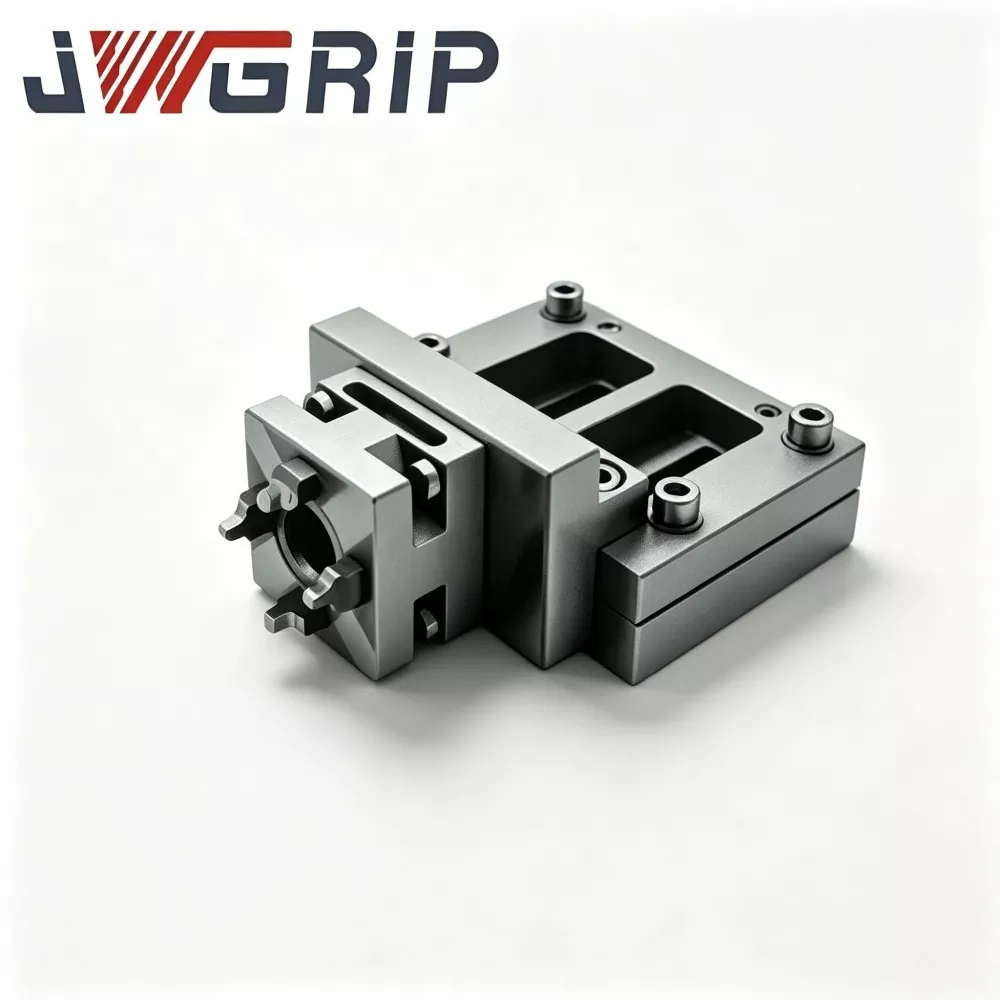
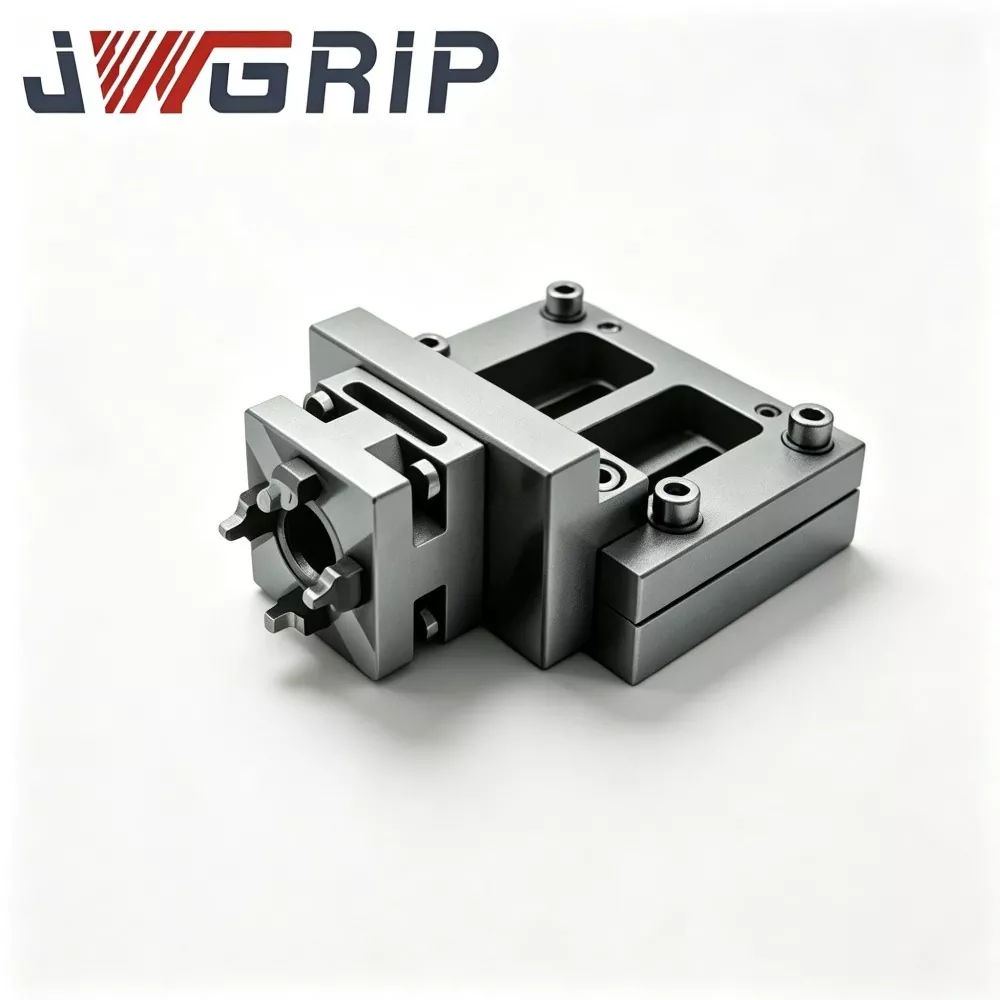
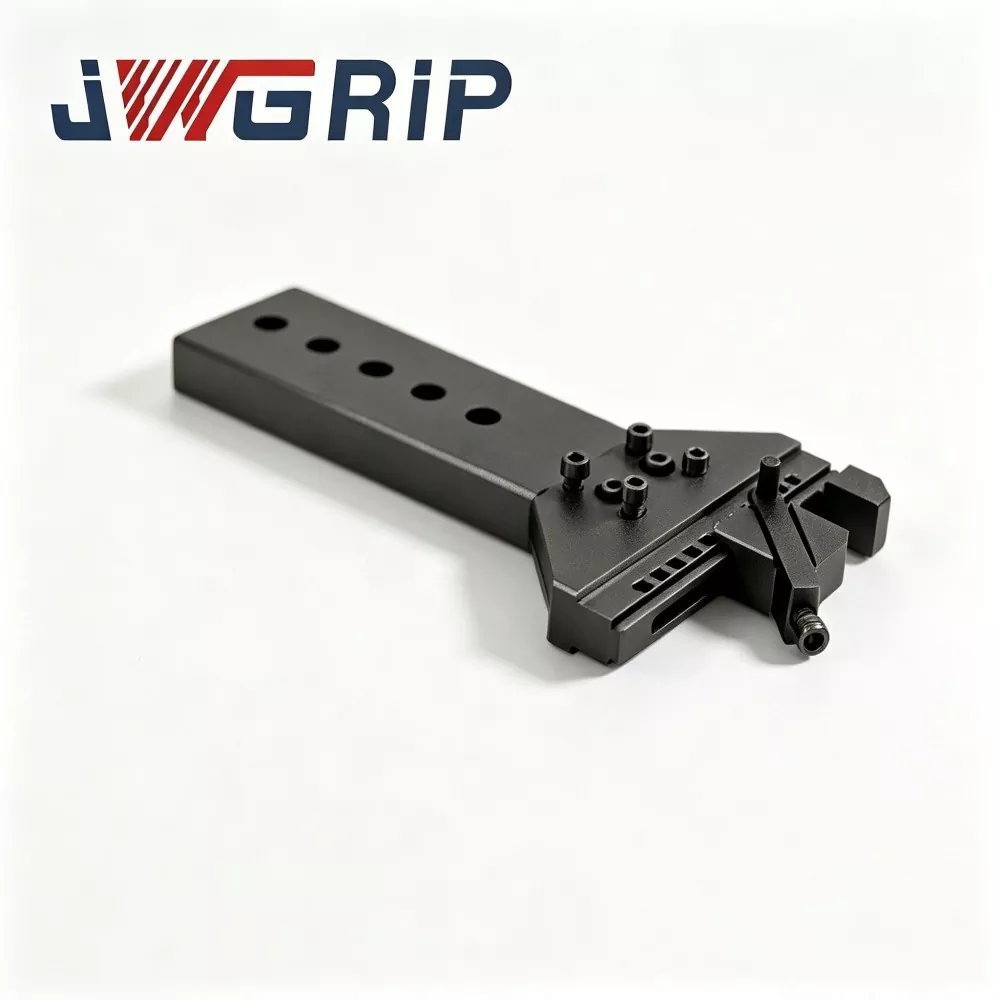
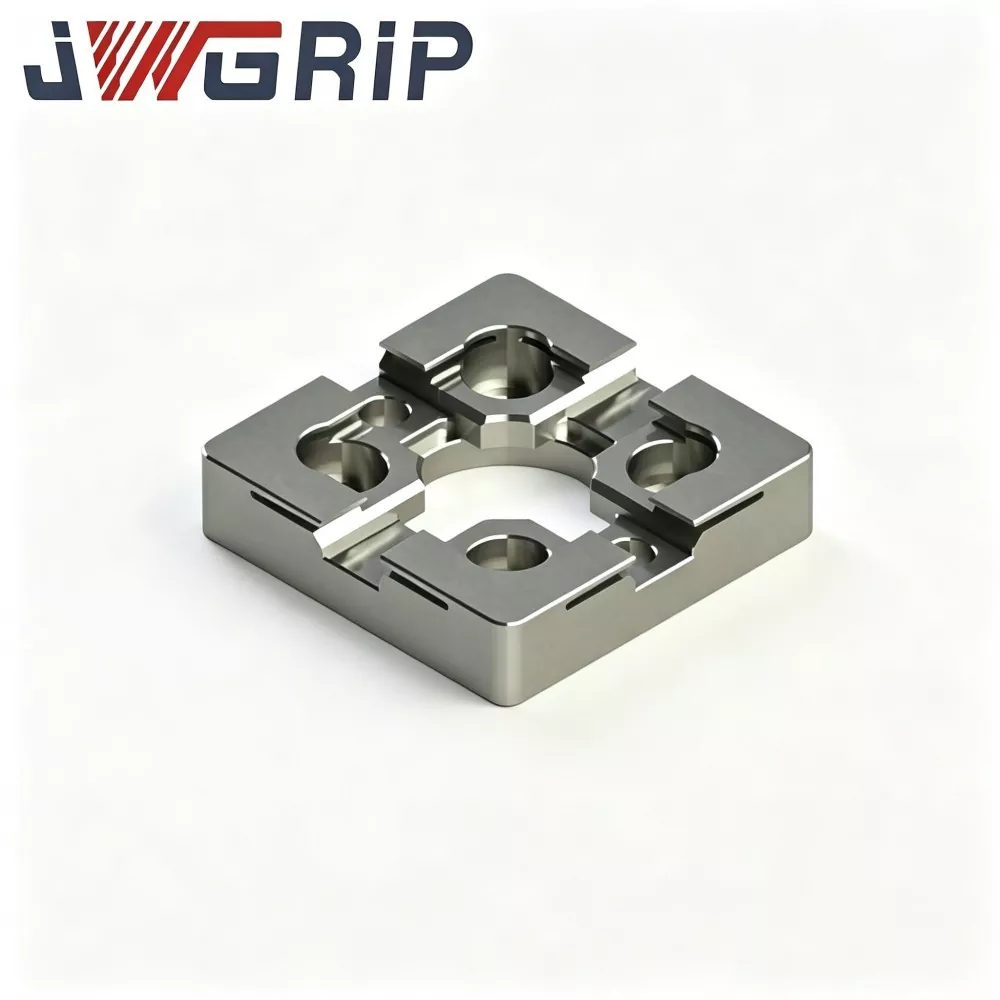
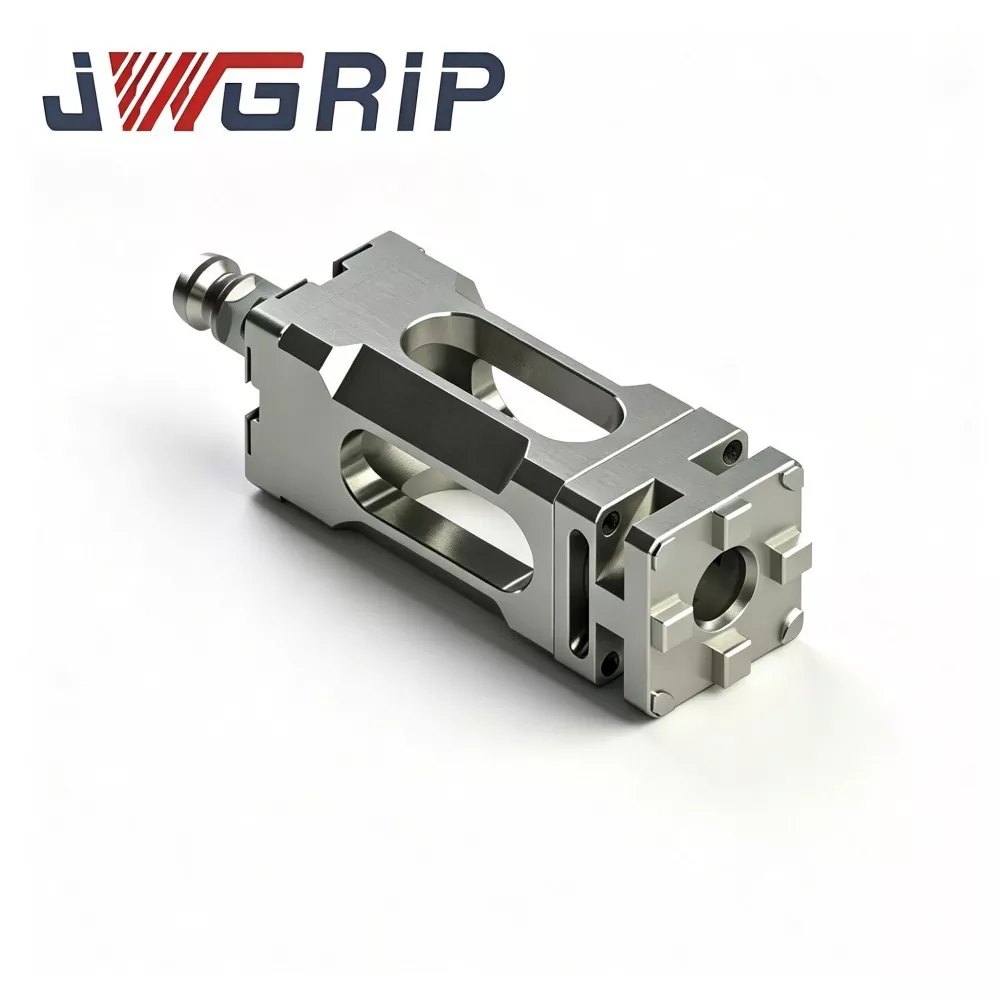
Representative components include Robot Quick Change Gripper Tray Coupling, N160 Robot Quick Change Gripper Module, N160 Hinge Linkage Arm for Robot Quick Change Gripper.
This series forms the robotic connection interface. It allows mechanical arms to switch among different gripper and handling tools automatically. Factories can realize multi-task robotic material handling without manual tool swapping. It is critical hardware for upgrading semi-manual stations toward full automation.
2. Manual Zero Point Pull Studs
Key items: Precision D16 Zero Point Pull Stud for CNC Workholding, Precision D20 Zero Point Pull Stud for CNC Fixture.
Pull studs act as the universal interconnection bridge. Installed onto pallets, custom jigs and fixture bases, they make legacy fixtures compatible with quick-change platforms. Heat-treated and precision-ground surfaces guarantee consistent locating repeatability after thousands of clamping loops.
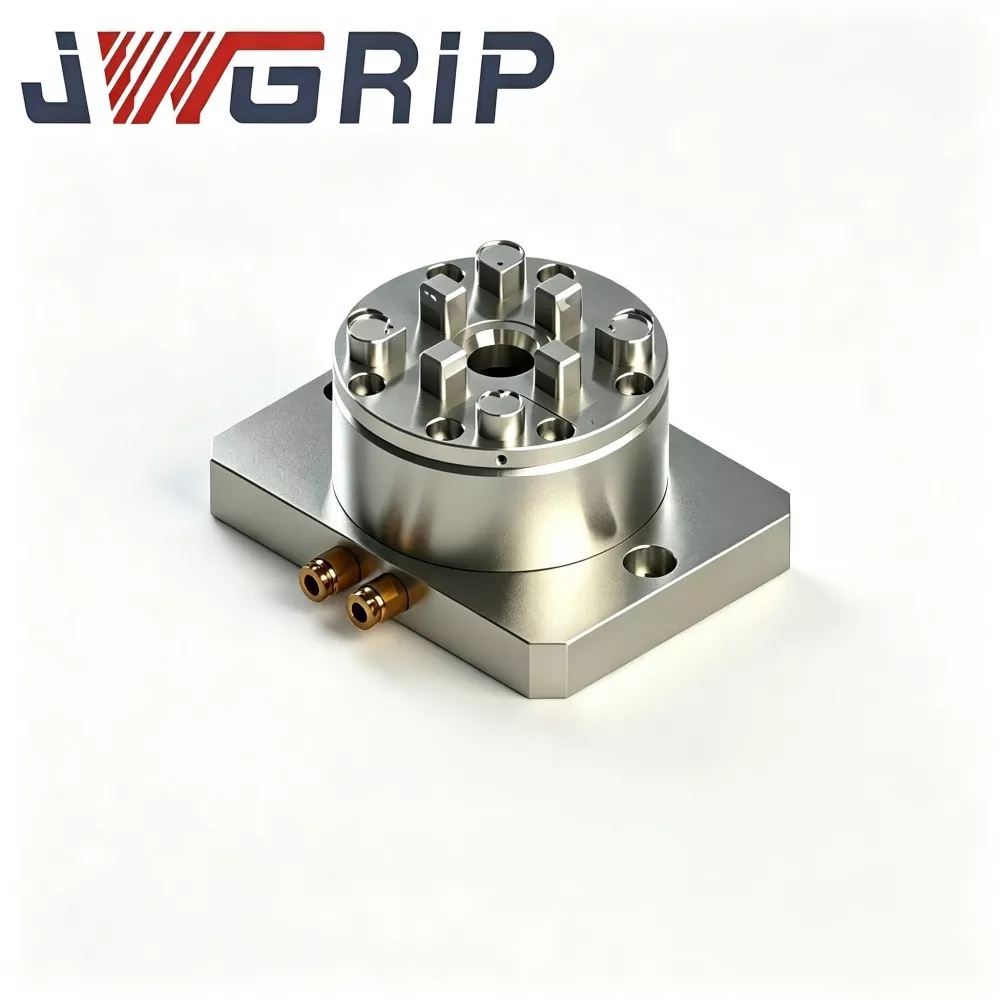
3. Quick Change Fixture Disc Series
Main models: 52 Quick Change Fixture Plate for CNC Workholding, 96 Quick Change Fixture Plate for CNC Workholding, Double Sided Swivel Quick Change Fixture Base, 96 to 52 Quick Change Fixture Base Adapter.
Fixture discs establish standardized mounting datum on machine worktables. Operators can pre-assemble workpieces on spare fixture discs outside machine envelopes. Completed pre-loaded discs can be exchanged rapidly, drastically compressing on-machine setup duration. Adapters enable smooth transition between different disc specifications so existing tool assets do not become wasted.
Phased Tooling-Upgrade Strategies
Many plant worry that switching over to new tooling will force them to discard all existing jigs and fixtures, bringing high transformation expense. How can you avoid that unnecessary waste?
Phase one: Introduce Manual Zero Point Pull Studs and a small quantity of fixture discs. Retrofit your current usable fixtures by mounting pull studs. In this stage you gain partial quick-change capability while still keeping most of your original tool investment.
Phase two: Add Quick Change Fixture Disc Series accessories including swivel bases and specification adapters. Expand the quantity of offline pre-assembly stations, further shorten batch-swap cycle time.
Phase three: If you plan to push forward robotic automation, deploy Robot Quick Change Gripper Series. Combine gripper modules with pallet handling logic to construct semi-automatic or fully-automatic production cells.
Common Pitfalls
Ignore interface matching: Pull stud specifications must correspond to chuck and fixture disc standards. Mismatched combinations will damage locating surfaces and destroy repeat positioning performance.
Neglect routine maintenance: Chips, cutting fluid residue adhered on locating surfaces will generate positioning offset. Simple daily cleaning procedures must be added into workshop standard operating instructions.
Pursue full-automation blindly: Not every production site requires robot hardware immediately. Phased transformation starting from manual quick-change modules brings faster return-on-investment for most high-mix small-batch manufacturers.
Why select JWGRIP as your partner?
All load-bearing functional parts adopt high-strength alloy steel material, undergoing quenching and precise surface grinding. Every finished component goes through strict repeatability and clamping-force inspection before shipment. Interchangeability is guaranteed across different production batches.
Our engineering team possesses rich field experience with job-shop and mold-factory production conditions. We do not merely supply standard catalogue goods. We provide feasible phased-upgrade suggestions according to your machine models, part mix and long-term automation roadmap.
Custom modification service is supported. We can adjust fixture disc dimensions, develop special pull-stud structures or redesign robot gripper connecting parts against customer-provided drawings and samples.
Unified Datum Standards
If you intend to build consistent datum standards throughout different processing departments, JWGRIP can deliver coordinated tooling resources. Pair your quick-change fixture discs with Zero Point Positioning System for stable palletized milling operations. When handling mold electrode manufacturing tasks, you can match with R-Type EDM Workholding System to unify datum standards between milling workshops and EDM departments. Consolidating workholding standards across multiple processes reduces repeated datum conversion errors and lifts overall factory-level productivity.
Contact JWGRIP today to discuss your tooling-upgrade project, get component recommendations and acquire detailed quotation documentation.
- View as
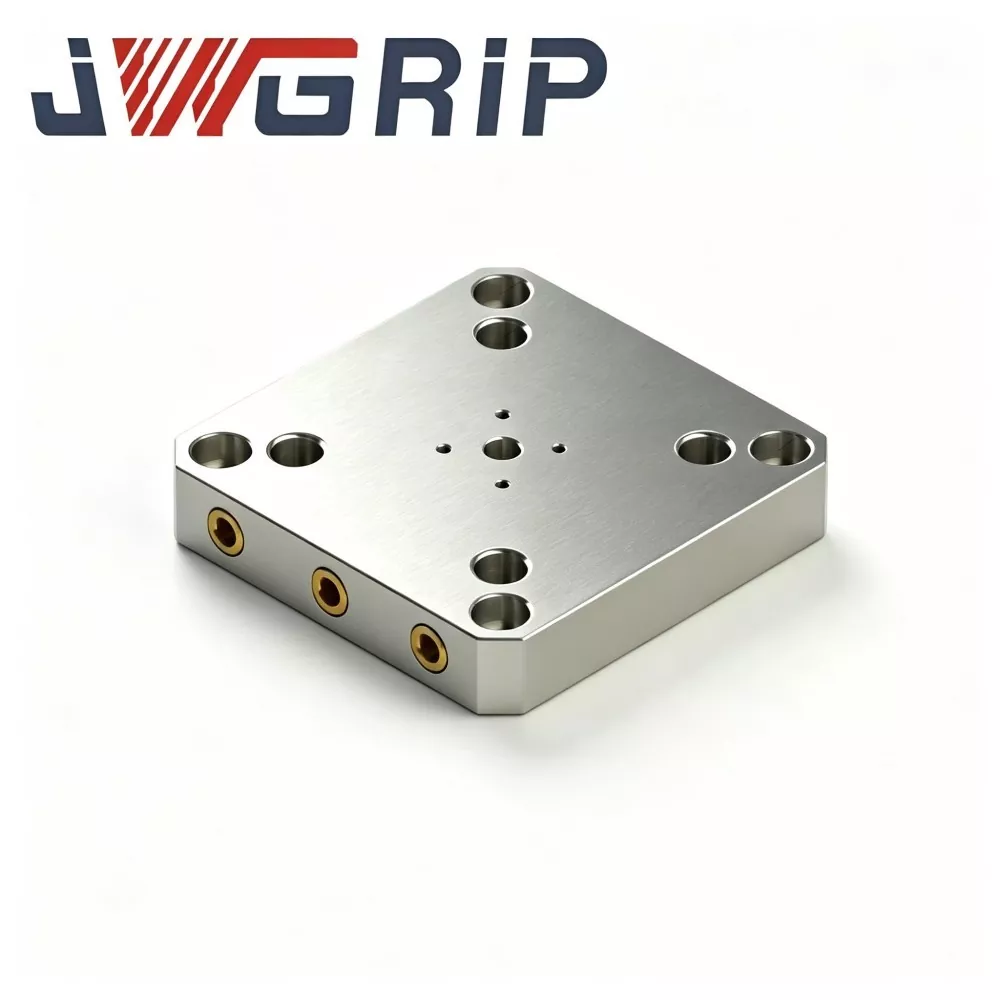
96 Quick Change Fixture Plate for CNC Workholding
JWGRIP is the professional manufacturer and supplier of 96 Quick Change Fixture Plate for CNC Workholding in China, providing Factory Direct service with standard models fully in Stock to support global tender procurement and project cooperation. It is a high-efficiency integrated upper tooling plate specifically designed for modern CNC milling, five-axis machining and mold manufacturing workshops. It integrates a standardized 96-series pull-stud mounting pattern, a high-rigidity load-bearing plate body and a grid top workpiece-mounting interface into a single unit, eliminating repeated dial-indicator calibration and extra transitional spacer plates.
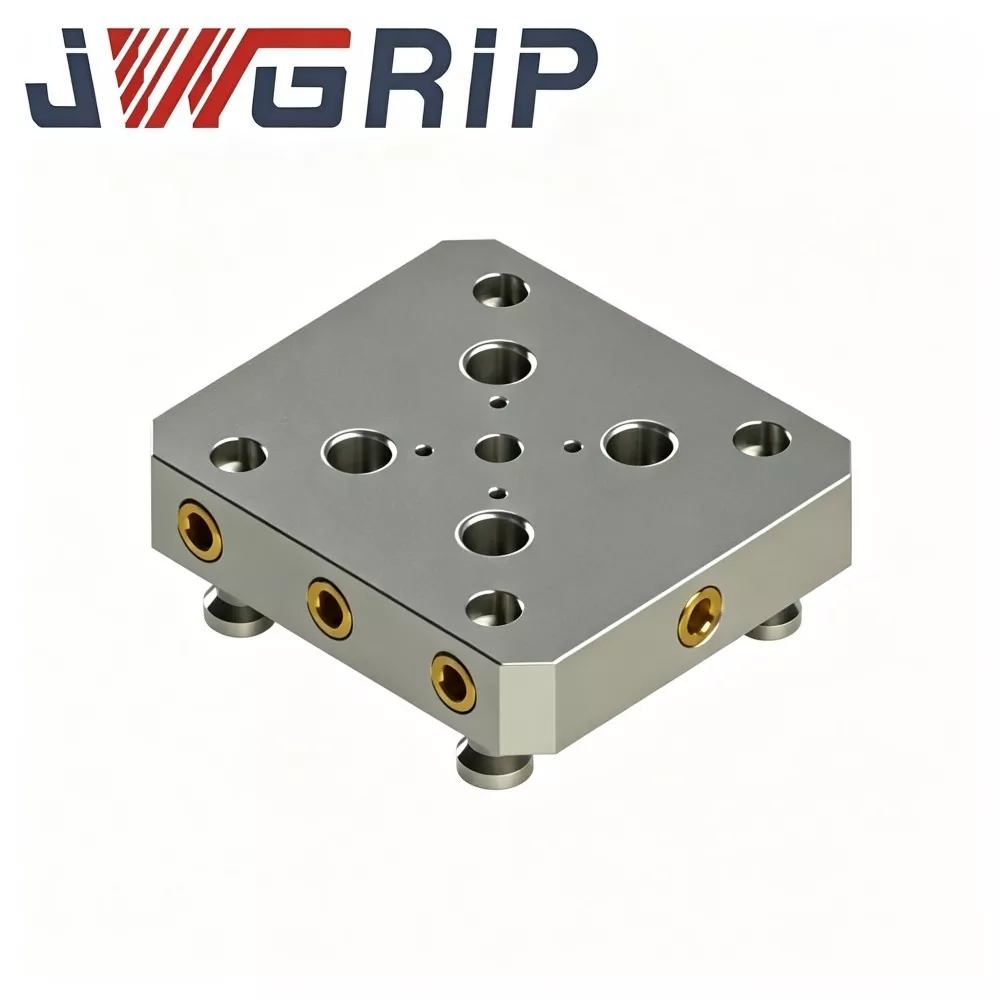
96 to 52 Quick Change Fixture Base Adapter
JWGRIP is the professional manufacturer and supplier of Customized 96 to 52 Quick Change Fixture Base Adapter in China, with standard models fully in Stock for global factory direct procurement and project order cooperation. It is a professional integrated fixture conversion adapter tailor-made for CNC workstation quick-change system compatibility upgrading. It perfectly integrates 96-size base positioning benchmark and 52-size fixture matching interface into a single unit, realizing seamless dimensional conversion between two different specifications of zero-point quick-change systems.
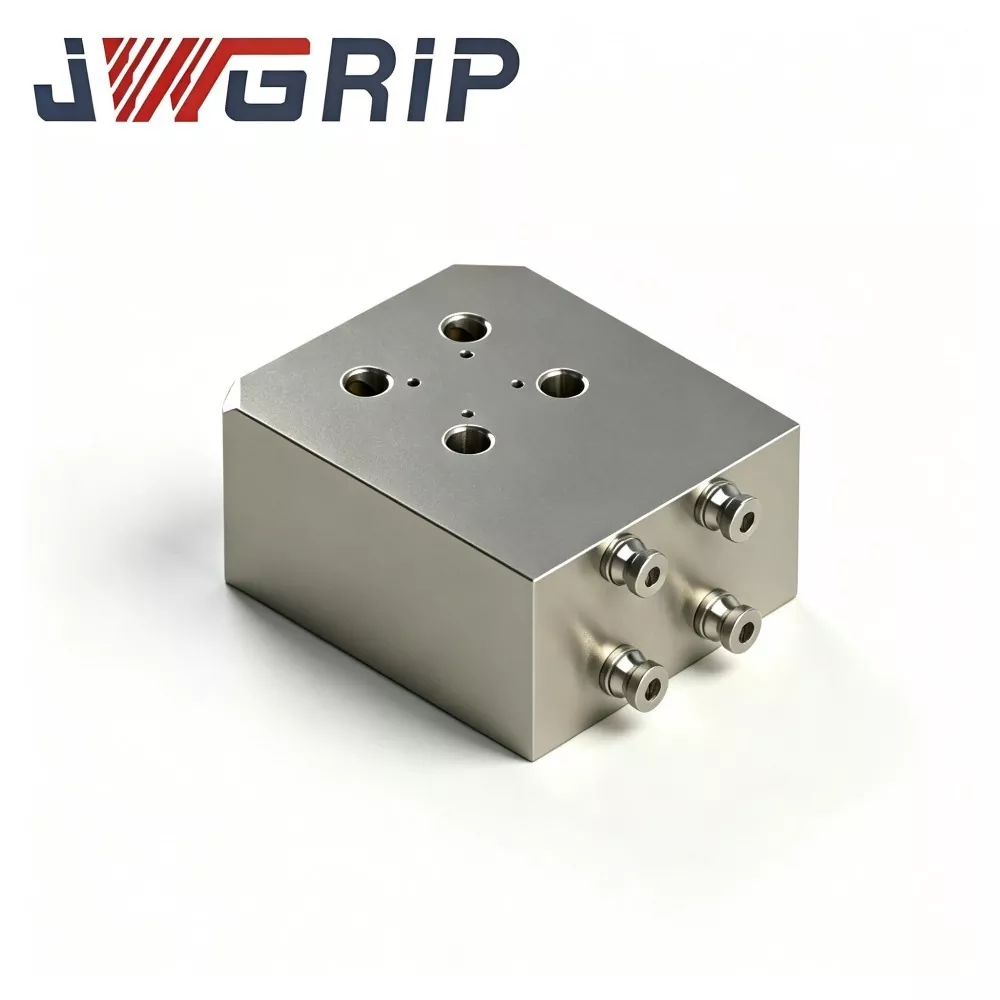
Double-Sided Swivel Quick Change Fixture Base
JWGRIP is the trusted wholesaler and exporter of Double-Sided Swivel Quick Change Fixture Base in China, supporting Factory Direct procurement with standard products fully in Stock to meet global industrial project demands. It is a high-performance integrated rotary positioning fixture base specially optimized for multi-process and multi-surface CNC machining scenarios. It integrates double-sided mounting function and 360-degree free rotation capability into a single unit, adopting integral hardened alloy steel structure and integrated quick-change positioning design. It eliminates repeated disassembly and re-alignment work for the base, and can be directly installed and fixed on CNC machine tool worktables, supporting OEM and customized modification to adapt to special workpiece sizes and machine tool installation interfaces.
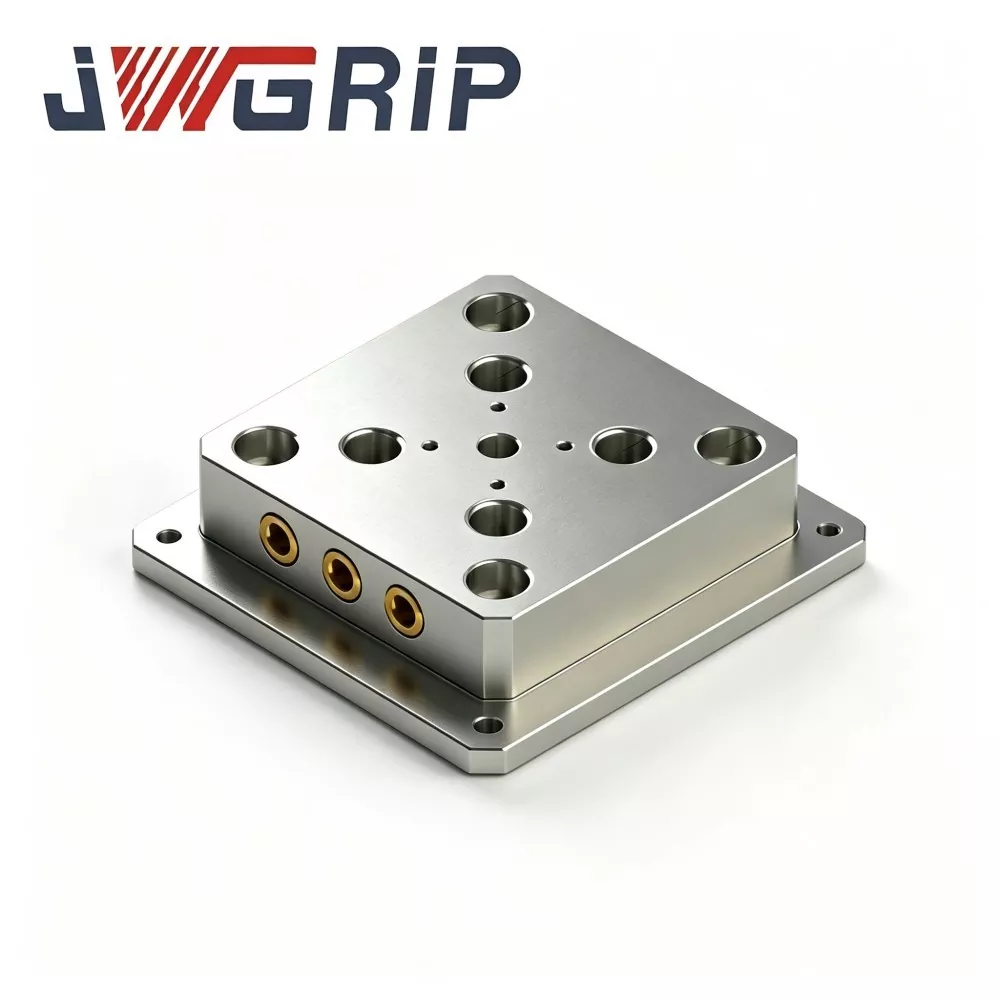
52 Quick Change Fixture Plate for CNC Workholding
JWGRIP is the professional manufacturer and supplier of Factory Direct & Customized 52 Quick Change Fixture Plate for CNC Workholding in China. It is a high-performance integrated upper tooling component specifically designed and matched for 52-series zero-point positioning systems in CNC workholding. It integrates the fixture bearing platform, pull-stud mounting datum and auxiliary workpiece positioning structure into a single unit, realizing rapid fixture swapping for multi-variety and variable-batch CNC machining tasks while eliminating repeated datum calibration and scattered transitional tooling combinations.
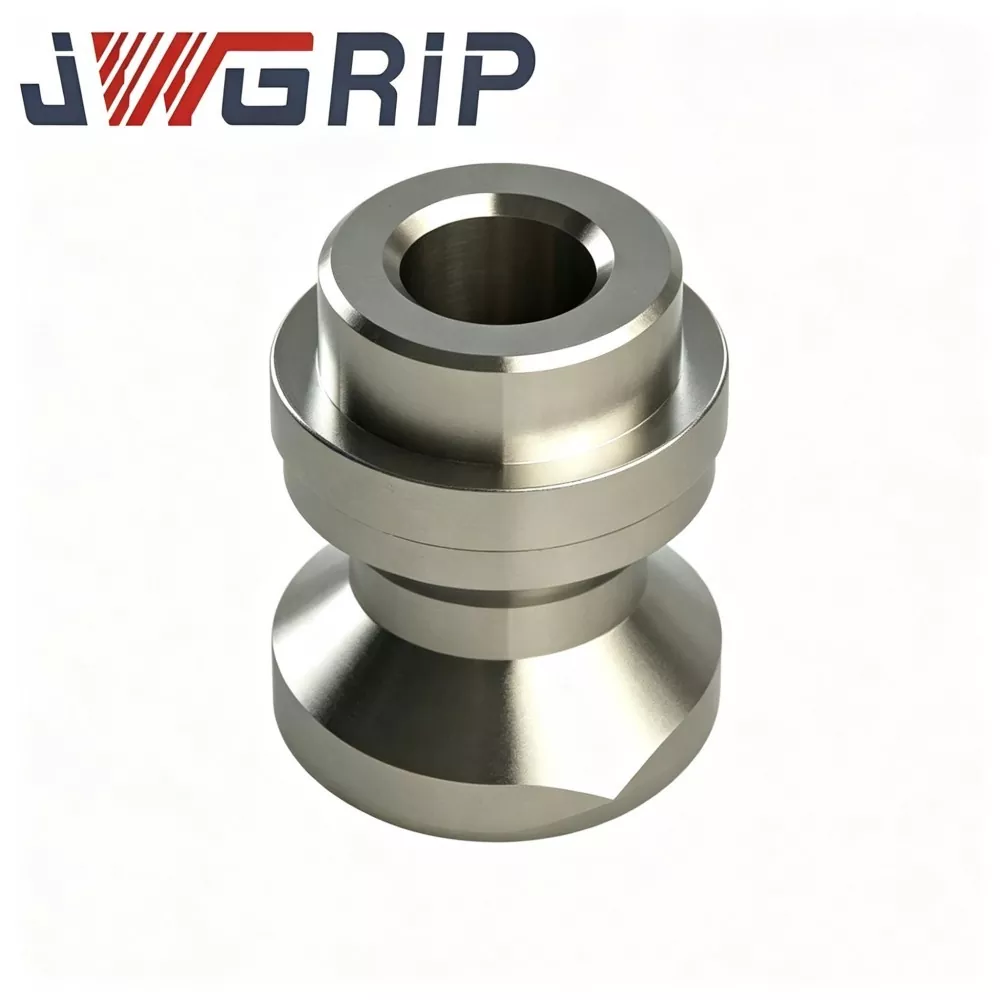
Precision D20 Zero Point Pull Stud for CNC Fixture
JWGRIP is the professional manufacturer and supplier of Precision D20 Zero Point Pull Stud for CNC Fixture in China, providing Factory Direct sales service with standard models fully in Stock to serve global fixture integrators, CNC machine shops and tooling maintenance departments. It is a high-performance core load-bearing positioning component specially designed and matched for D20 series zero-point clamping tooling systems. Integrating benchmark positioning, locking force transmission and anti-rotation constraint functions into a single optimized structural unit, it perfectly adapts to high-speed milling, drilling and multi-axis composite cutting processes.
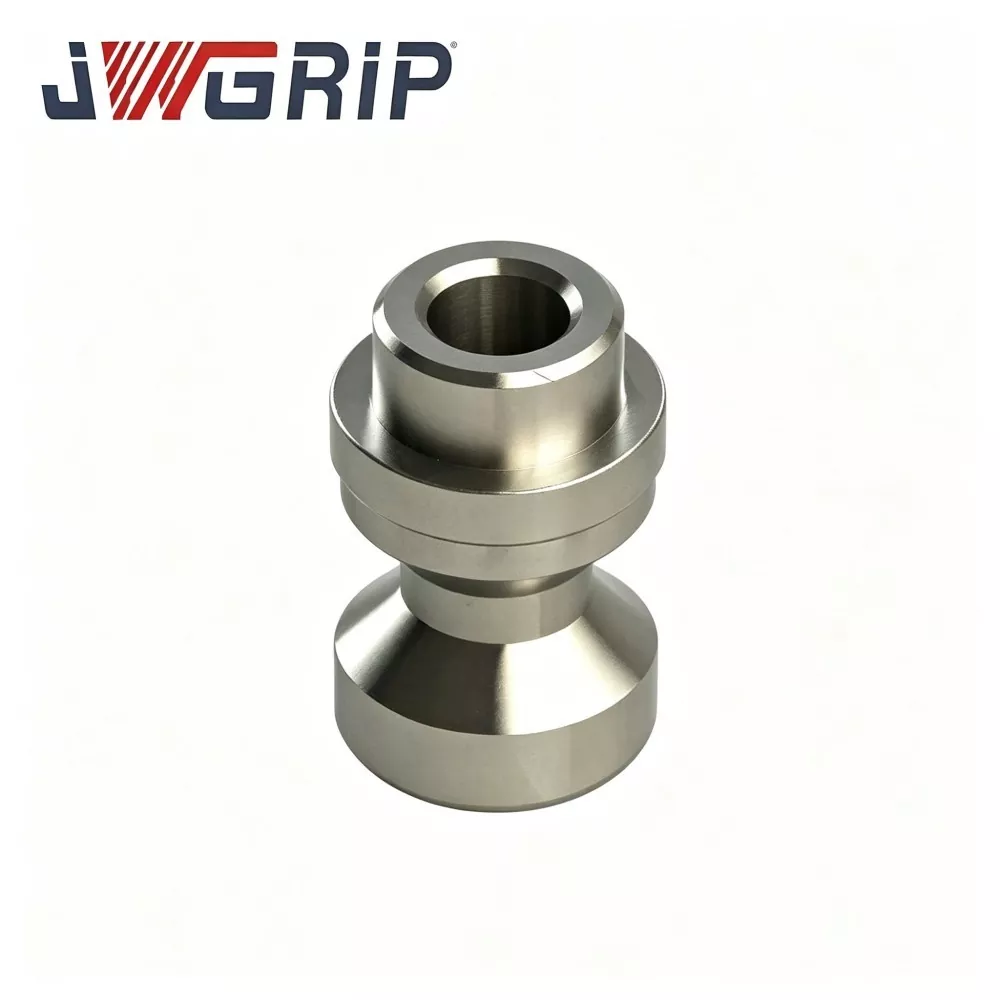
Precision D16 Zero Point Pull Stud for CNC Workholding
JWGRIP is the professional manufacturer and supplier of Precision D16 Zero Point Pull Stud for CNC Workholding in China, with standard specifications fully in Stock and accepting global Bulk Order for CNC machining factories, fixture integrators and tool room maintenance teams. It is a high-precision core positioning and locking component professionally matched for D16 series zero-point clamping systems in CNC workholding. Integrating the high-precision positioning benchmark and stable force transmission structure into a single unit, it undertakes core functions of fixture positioning, locking force transmission and repeated positioning benchmarking during high-speed machining.
JWGRIP is a professional Quick Change Workholding System manufacturer and supplier in China. We warmly welcome you to wholesale high quality products at competitive price from our factory.