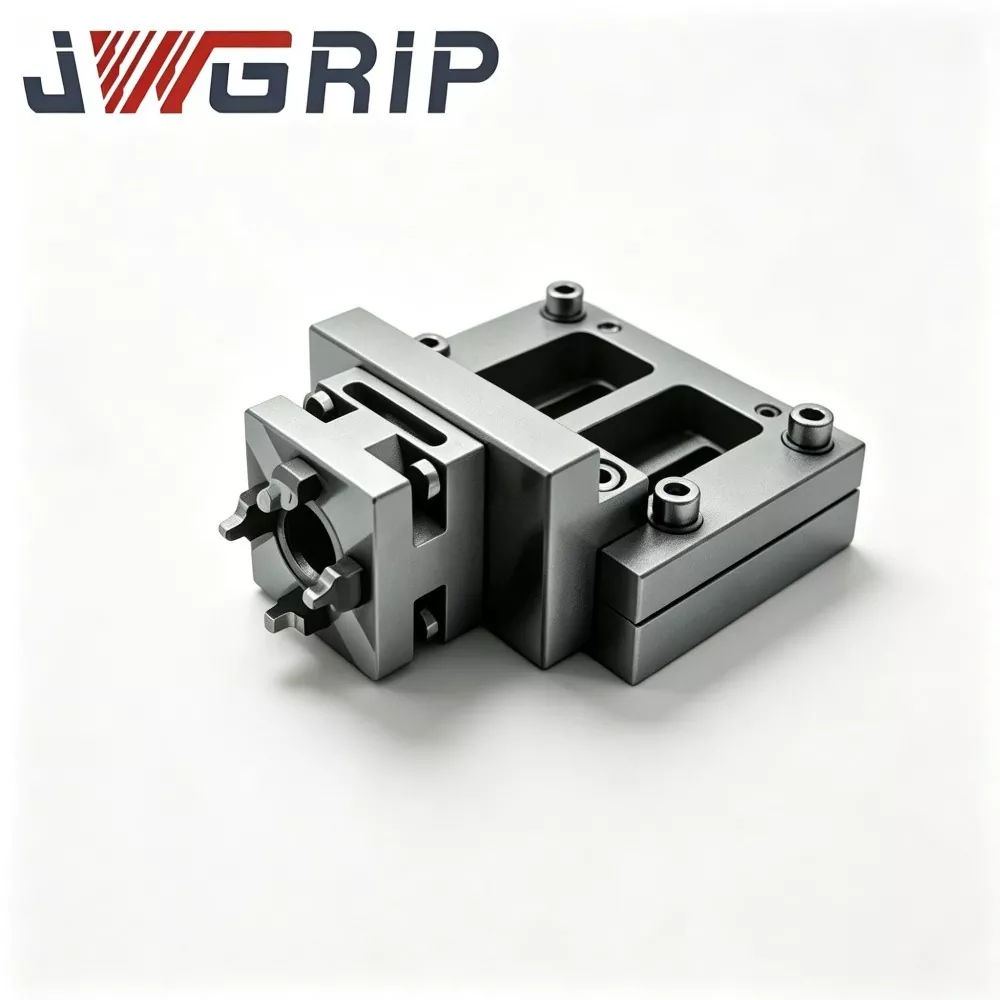
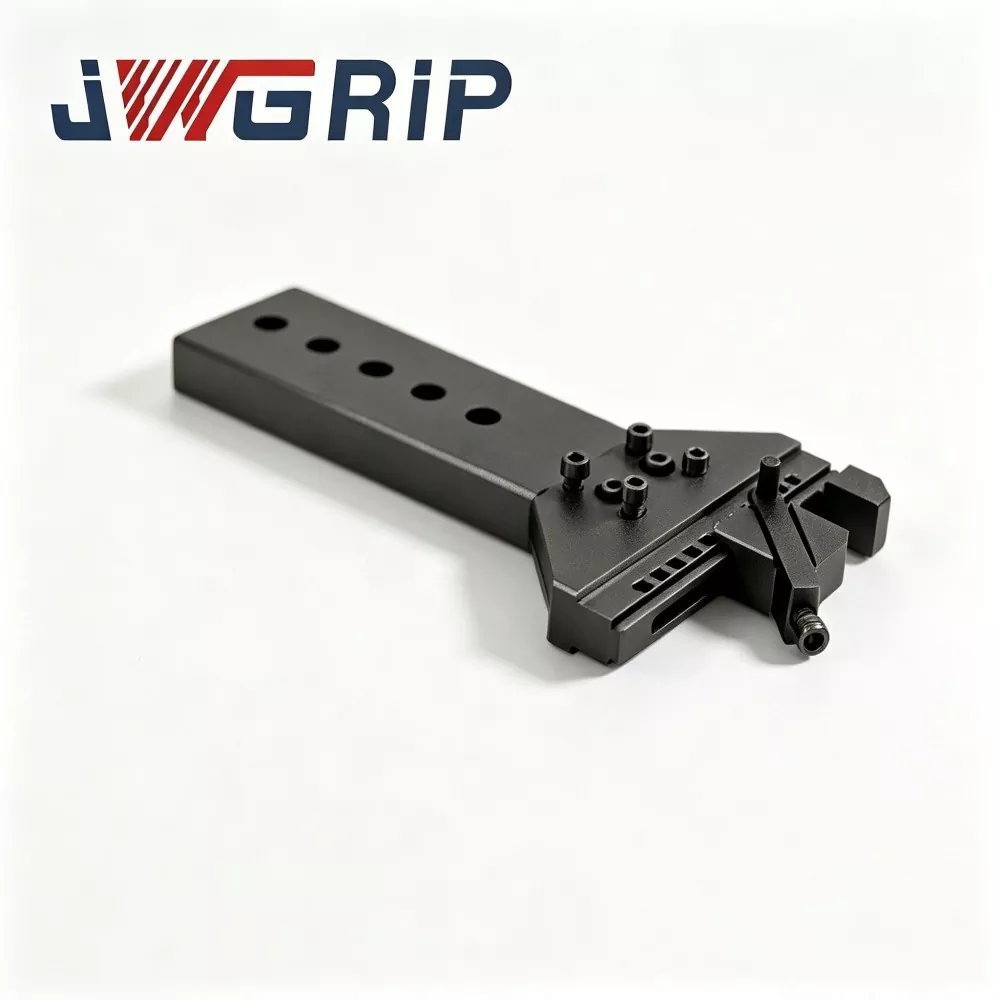
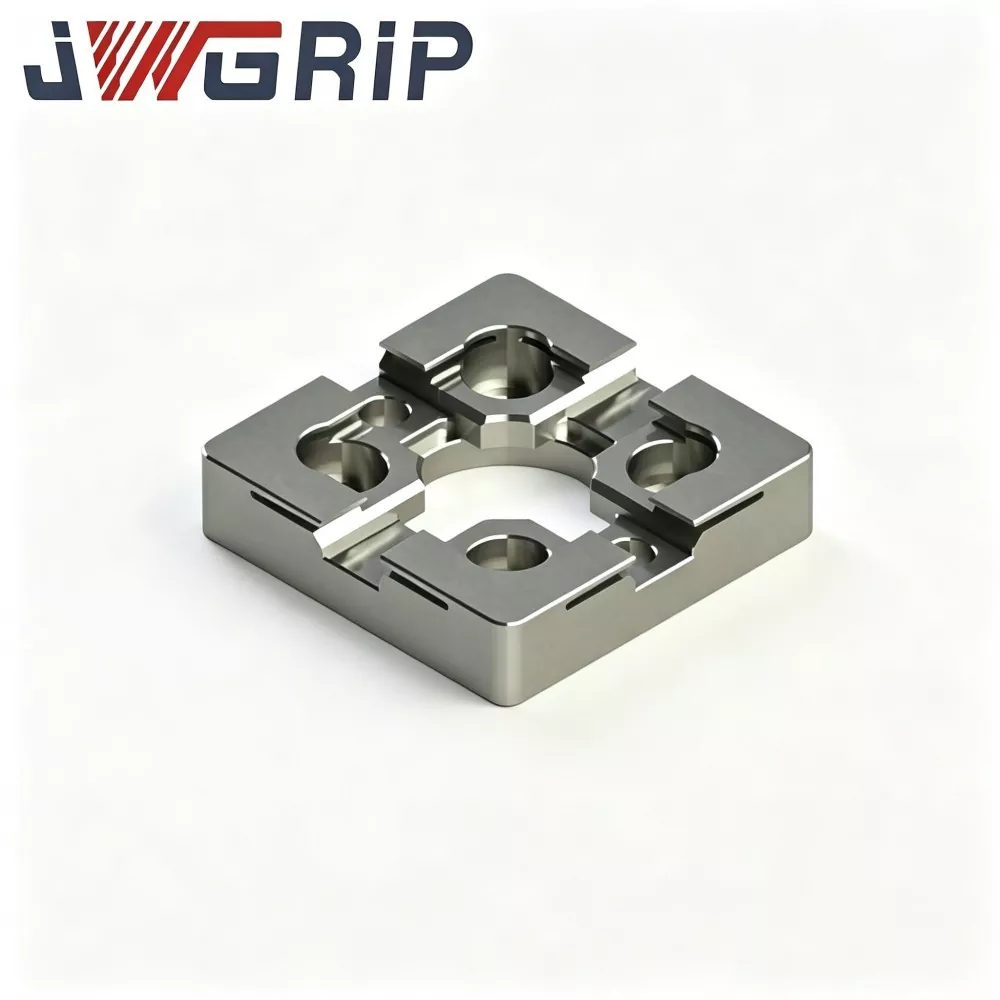
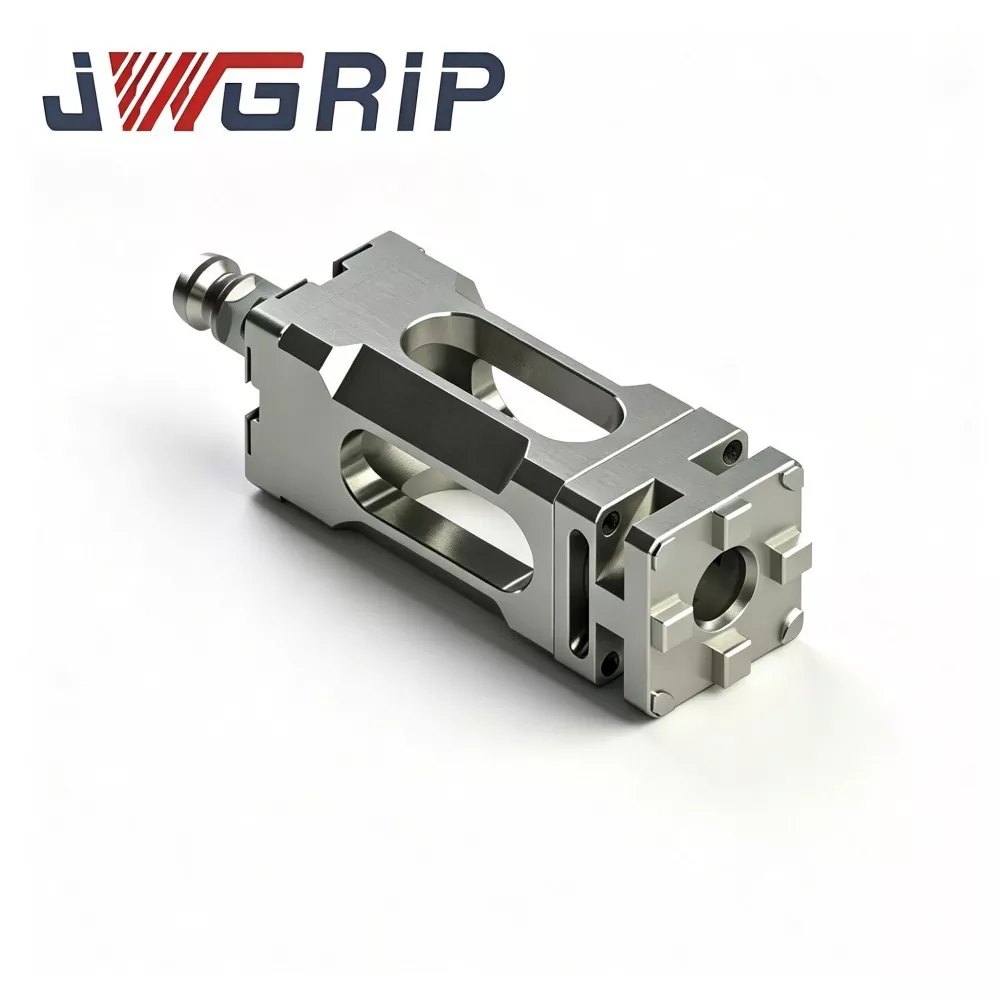
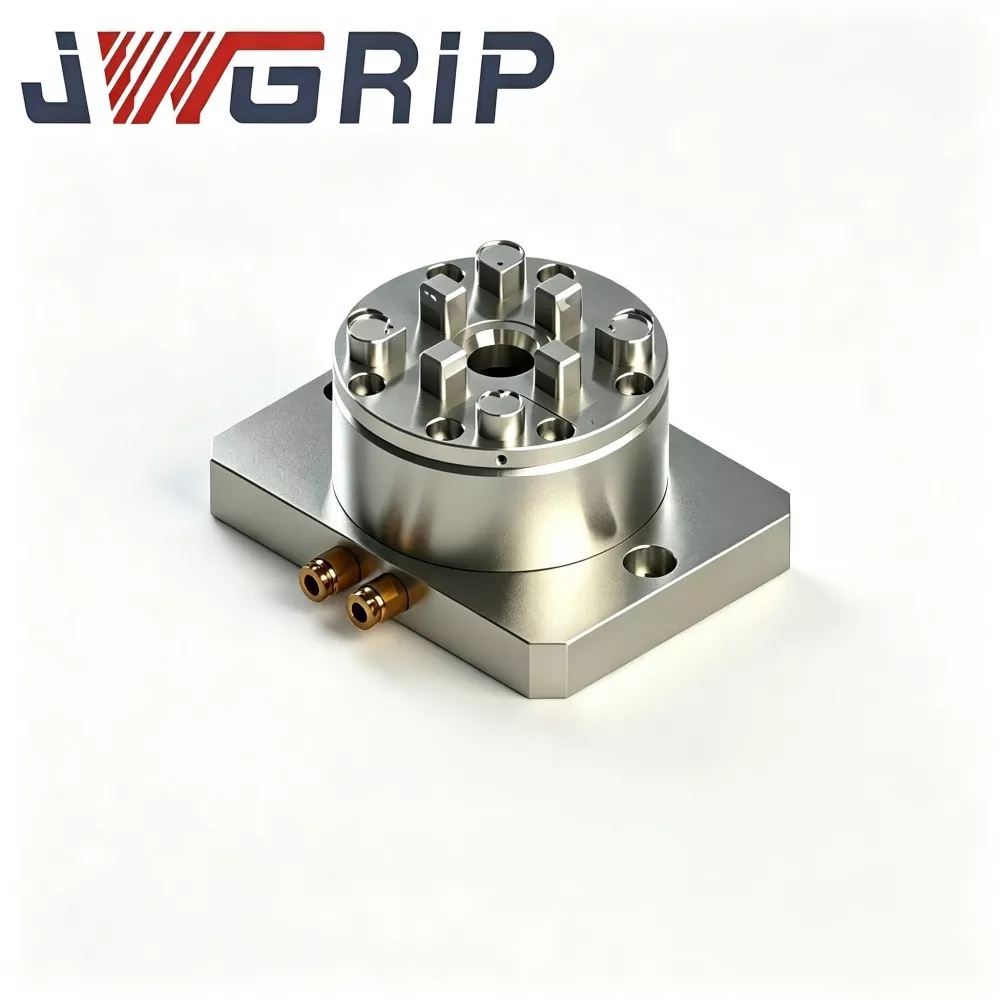
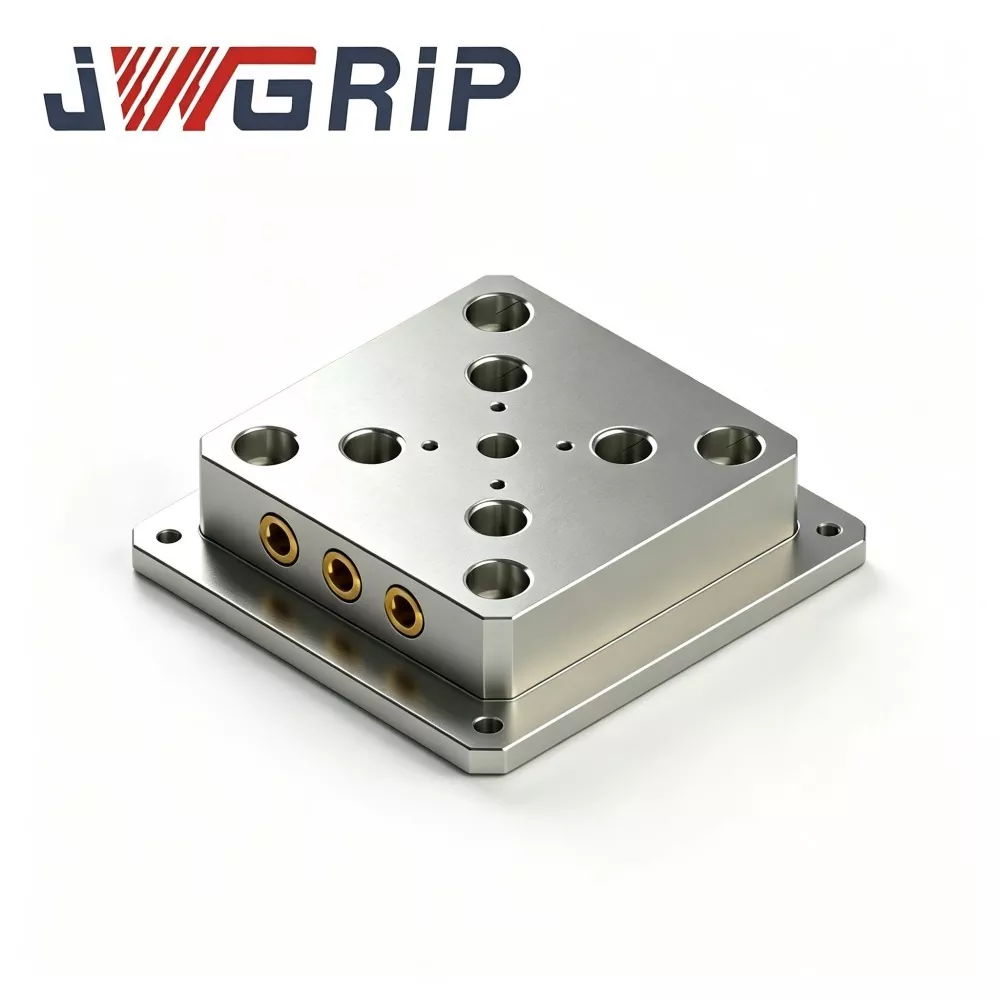
52 Quick Change Fixture Plate for CNC Workholding
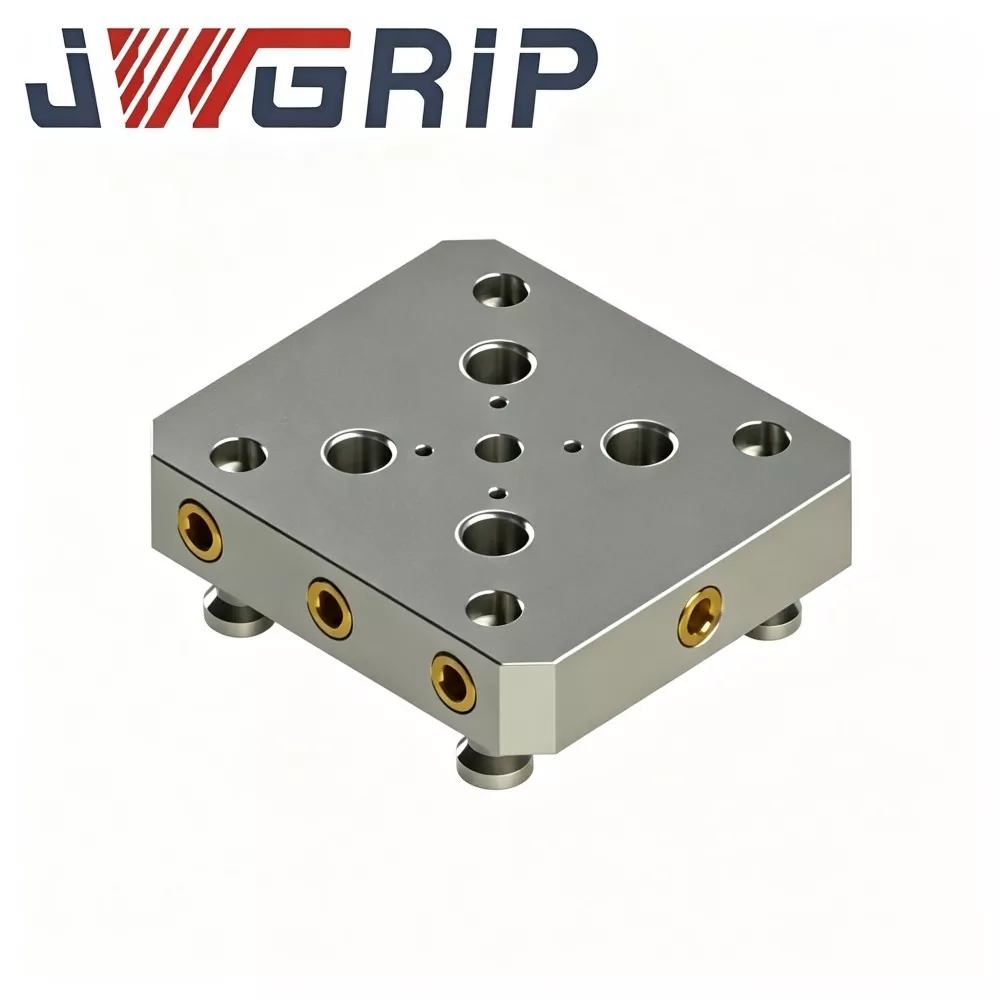
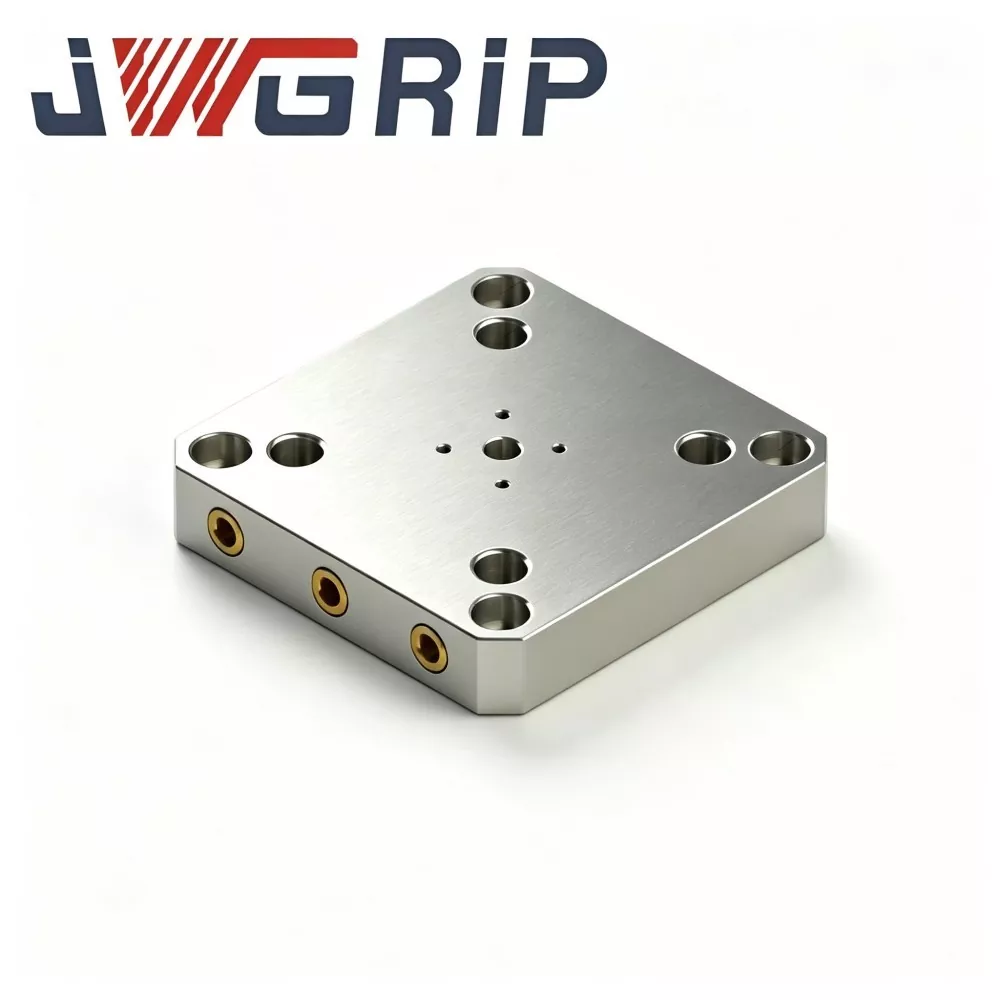
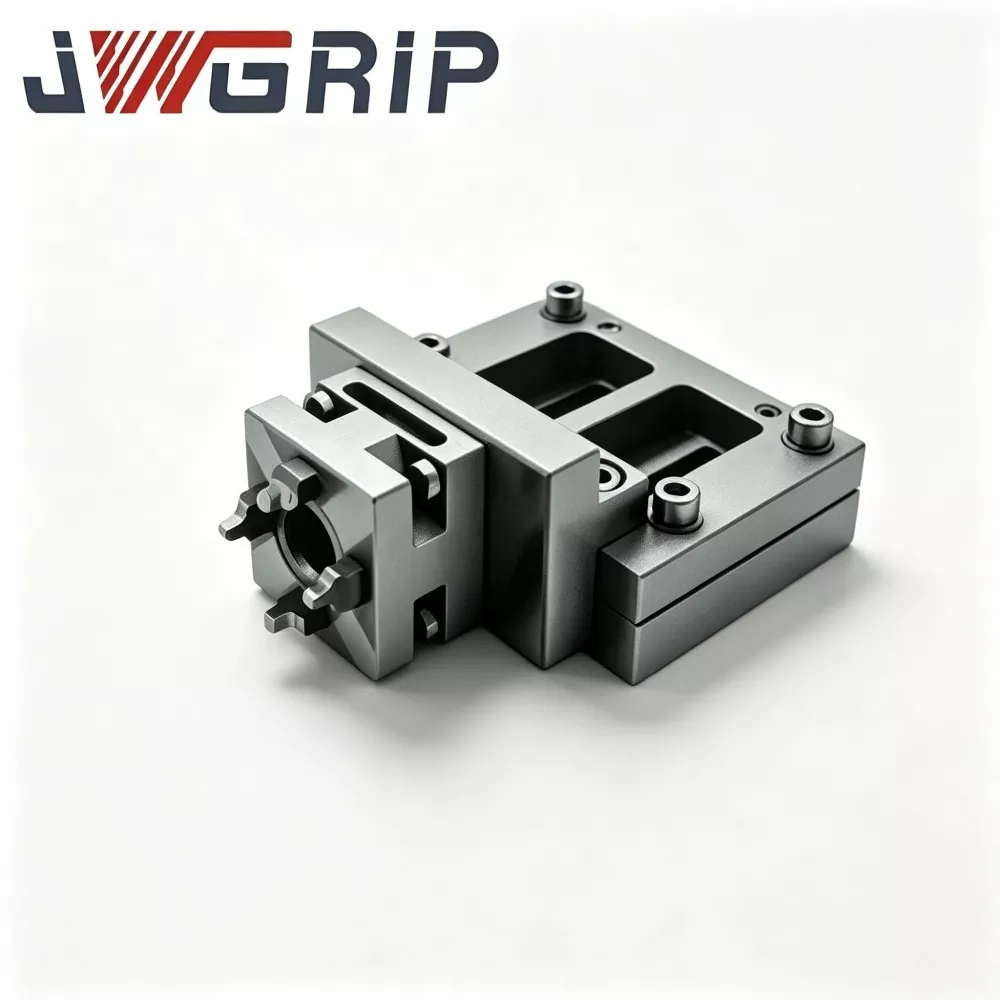
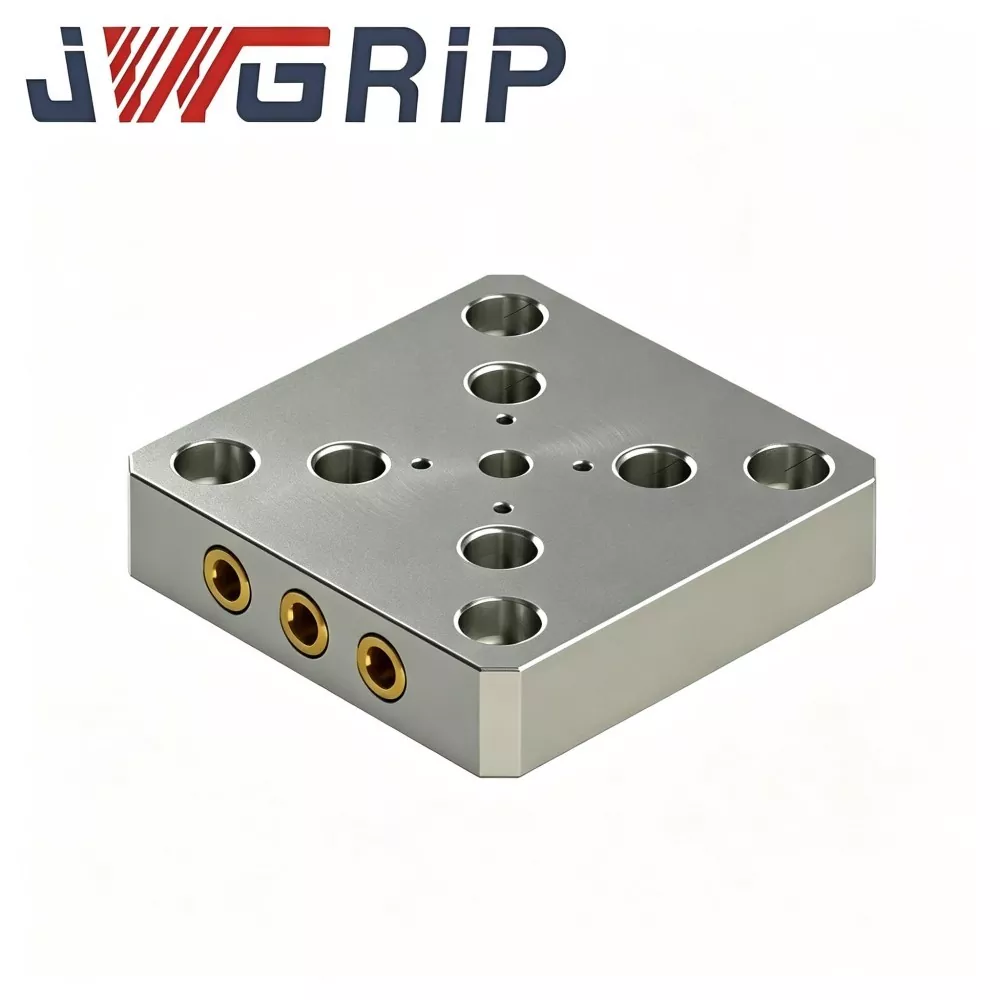
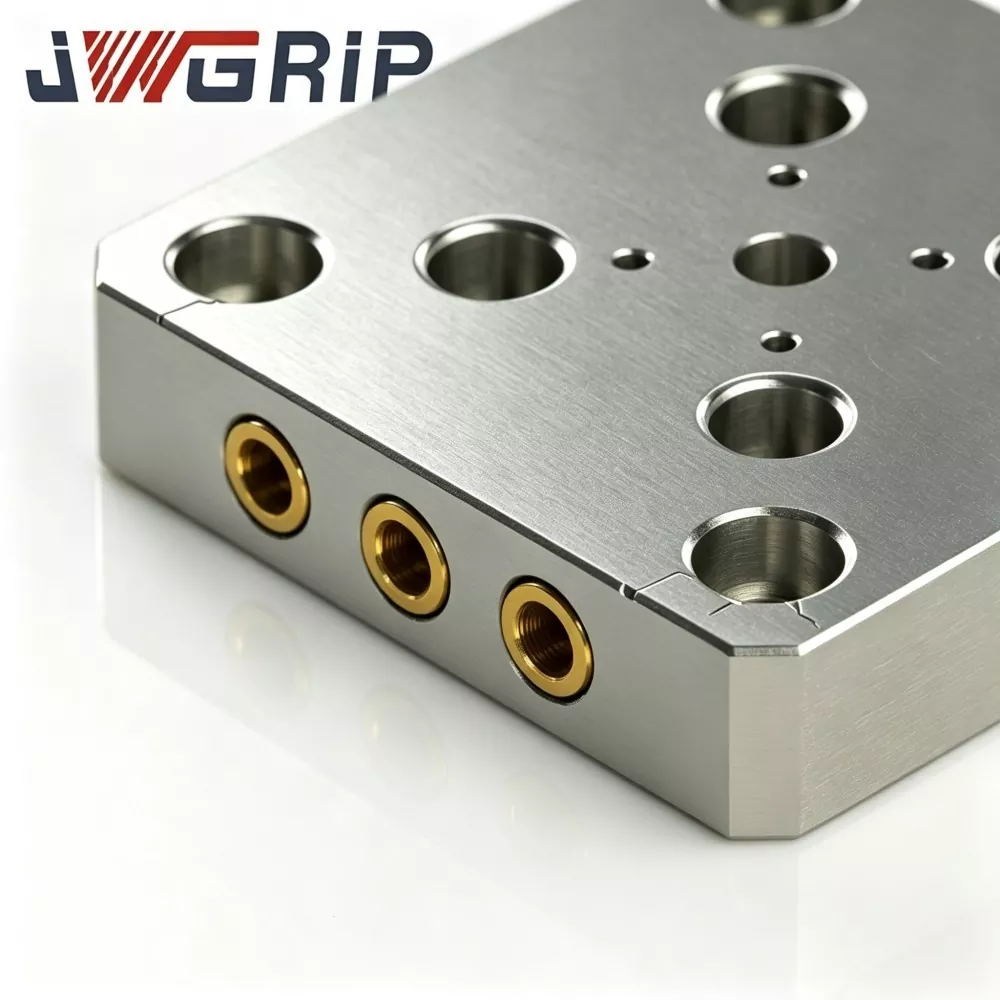
JWGRIP is the professional manufacturer and supplier of Factory Direct & Customized 52 Quick Change Fixture Plate for CNC Workholding in China. It is a high-performance integrated upper tooling component specifically designed and matched for 52-series zero-point positioning systems in CNC workholding. It integrates the fixture bearing platform, pull-stud mounting datum and auxiliary workpiece positioning structure into a single unit, realizing rapid fixture swapping for multi-variety and variable-batch CNC machining tasks while eliminating repeated datum calibration and scattered transitional tooling combinations.
This advanced 52 Quick Change Fixture Plate adopts high-density cast aluminum alloy or high-strength steel material selected according to actual load grades, processed through compound stress-relief aging treatment, multi-pass precision milling and ultra-precision surface grinding. Different from ordinary untreated milled fixture plates, it completely releases internal residual stress and effectively restrains flatness deformation under long-term alternating clamping stress in high-frequency batch production. Featuring stable flatness and lasting datum accuracy after repeated quick-change cycles, this durable fixture plate fully complies with CE industrial machinery safety standards.
Every batch undergoes strict raw-material composition testing, multi-process precision machining, flatness & position-tolerance inspection and simulated cyclic-swap verification. 52 Quick Change Fixture Plate for CNC Workholding is widely applicable for new CNC workstation tooling configuration and replacement of deformed & datum-drifting old fixture plates on production lines. Supporting standard stock supply and customized optimization of outline size, hole layout, material grade and surface anodizing treatment, it provides stable, high-precision and flexible quick-change tooling solutions for global CNC processing factories, fixture integrators and tooling engineering departments.
Functional Positioning
Zero-point fixture technology drastically cuts fixture change-over time for multi-variant CNC jobs and has become the mainstream tooling solution for modern multi-axis workshops. The 52 Quick Change Fixture Plate is the upper tooling platform that sits on top of 52-series zero-point chucks; pull studs pre-mounted under the plate engage the internal clamping collets, locking the whole plate onto the chuck in seconds on one repeated-positioning datum.
The plate undertakes three key functions simultaneously:
1. Upper bearing platform: flat top datum for mounting vises, custom fixtures or direct workpiece clamping.
2. Pull-stud mounting interface: pre-drilled and tapped holes on the bottom locate pull studs to the 52 zero-point chuck pattern.
3. Auxiliary workpiece datum: side edges and dowel-pin holes provide secondary locating reference for repeat loading.
Common failure cascade triggered by an out-of-tolerance fixture plate:
1. Top-surface flatness loss / warpage → datum deviation under clamping
2. Pull-stud mounting-hole position drift → pull studs no longer enter chuck collets smoothly
3. Bottom locating surface wear / dent → plate sits unevenly on the chuck
4. Consequence: repeat-positioning drift, unstable clamping force, batch-part dimension fluctuation, hidden high-speed-cutting safety risks.
JWGRIP standard 52 fixture plates keep interchangeable mounting patterns with mainstream 52-series zero-point systems. They fit both new-build workstation projects and on-site replacement of datum-drifting old plates on running production lines. OEM custom modification is available for non-standard outline size, special grid hole layout, higher load rating and corrosion-resistant working conditions. Small-batch trial orders and large-volume matching orders from global clients are both supported.
Structure & Performance
JWGRIP 52 Quick Change Fixture Plate for CNC Workholding consists of five functional sections, each contributing to positioning accuracy and load capacity during repeated swap cycles:
1. Top datum surface (workpiece mounting plane)
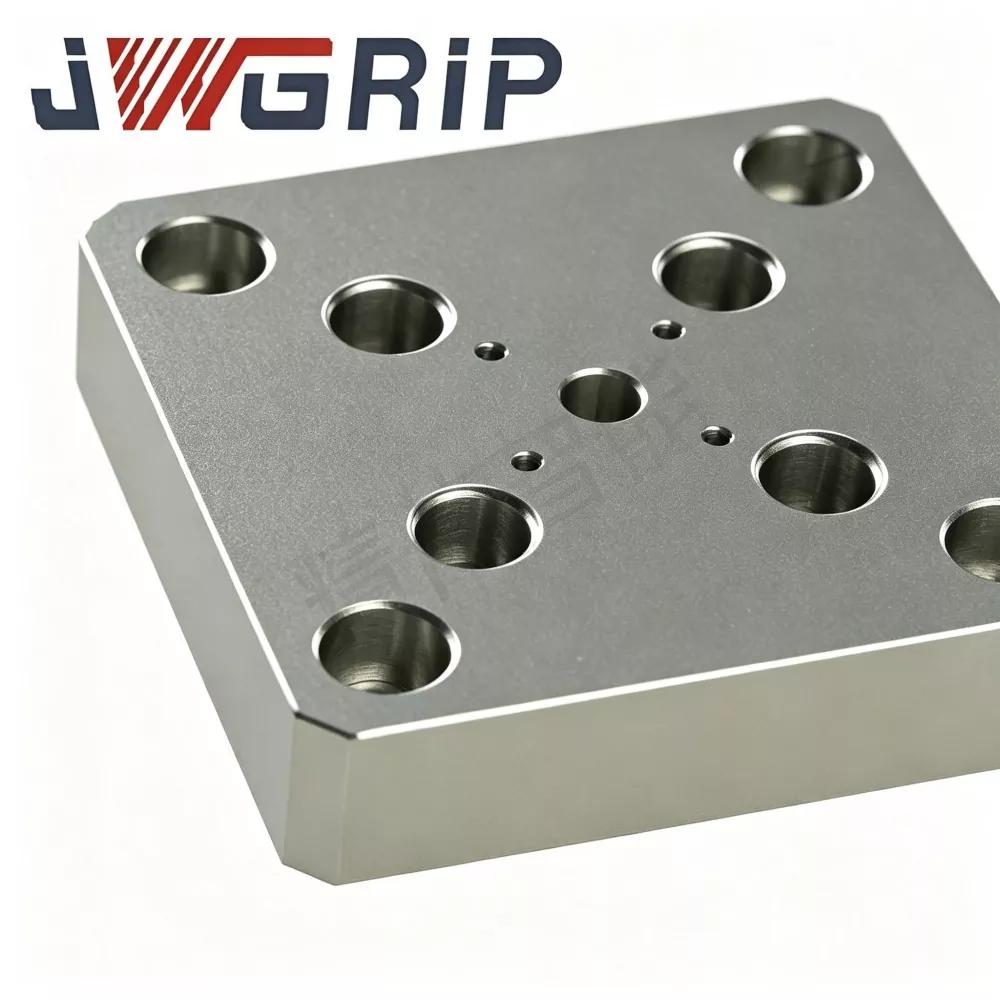
Ultra-precision ground flat plane, drilled with a standardized grid of threaded holes (and/or dowel-pin holes) for mounting vises, soft jaws, custom fixtures or workpieces directly. Flatness and parallelism against the bottom datum are the decisive indexes of overall machining accuracy.
2. Bottom locating surface (chuck mating plane)
Precision-machined flat surface that sits directly on the 52-series zero-point chuck reference face. Its flatness and cleanliness directly determine whether the plate repeats within the required tolerance after each swap.
3. Pull-stud mounting holes (tapped holes on plate bottom)
Predrilled and tapped to match the 52 zero-point chuck pull-stud pattern, used with matched pull studs. Hole-position tolerance strictly follows the 52-system pitch; pull studs are threaded in from the bottom and locked at the specified torque.
4. Side datum edges / peripheral reference faces
Precision-milled side edges provide peripheral alignment reference for loading the plate onto a pallet or for edge-finding during setup; some versions include hardened dowel-pin holes for secondary location.
5. Rigidity structure (material-dependent)
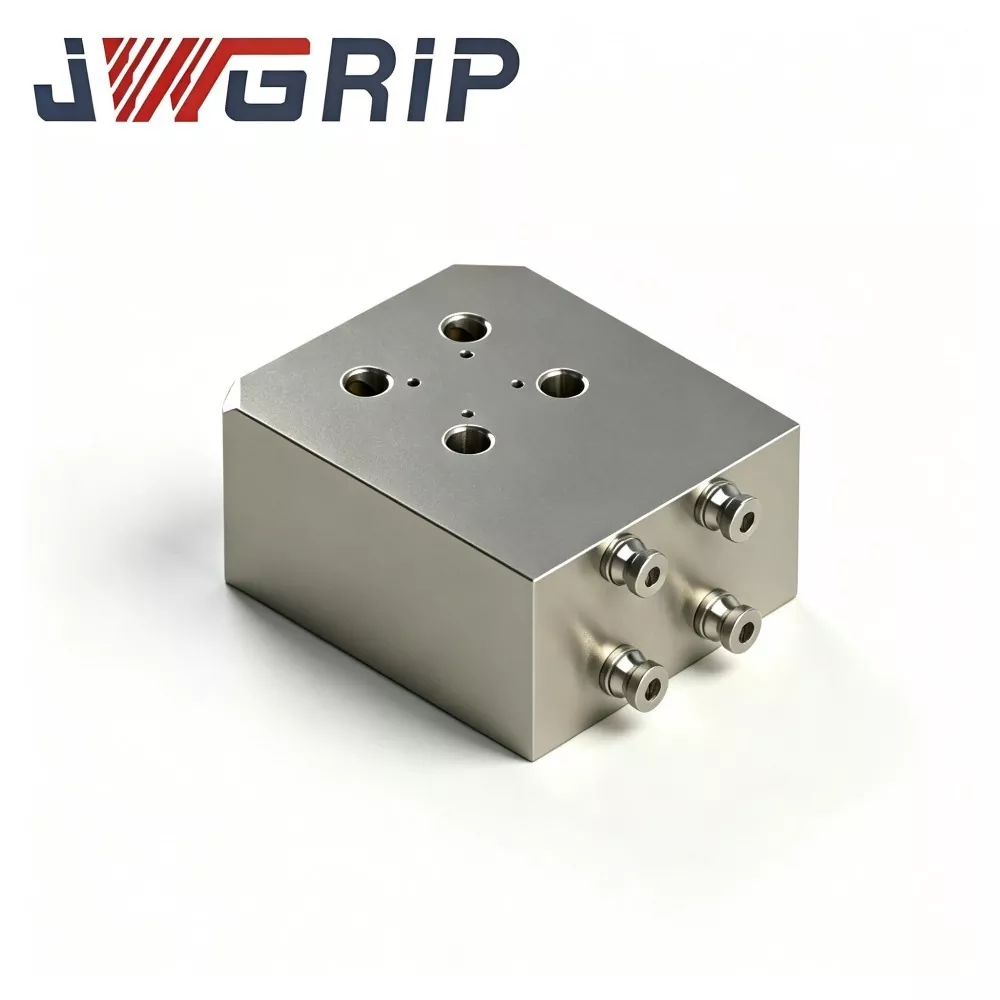
Cast-aluminum versions adopt a ribbed web structure to cut weight without losing rigidity; steel versions use solid or pocketed design for heavy-duty cutting. Both designs undergo stress-relief aging to resist long-term flatness drift.
Many low-cost market alternatives are simply raw milled plates without stress relief. Internal residual stress releases slowly after installation, causing weeks of flatness drift and repeated recalibration. JWGRIP cast plates go through compound stress-relief aging before finish machining, so flatness stays stable after thousands of swap cycles. When outline size, grid layout or load rating differs from standard specs, OEM service can re-adjust dimensions, material grade and surface treatment.
Quality-Control Workflow
Every production batch goes through sequential inspection steps before goods leave factory. Non-conforming plates are rejected and never enter finished-goods inventory.
1. Raw-material spectral / composition analysis to verify aluminum-alloy or steel grade compliance.
2. Casting or forging blank forming, plus non-destructive inspection for internal defects.
3. Compound stress-relief aging heat treatment to release residual stress.
4. Rough milling on both sides to remove surplus stock.
5. Semi-finish milling of grid holes, pull-stud tapped holes and side datum edges.
6. Finish surface grinding of top datum plane and bottom locating plane.
7. Precision inspection: flatness, parallelism, hole-position tolerance, thread-gauge check.
8. Sampling simulated cyclic swap-and-clamp verification under rated load.
Fault-Troubleshooting Table
|
Fault Phenomenon |
Probable Root-Cause |
Recommended Solution |
|
Plate repeat-positioning drifts after swap |
Bottom locating surface warped/dented; pull-stud hole position shifted; chuck collet wear |
Inspect plate flatness and datum surface; check pull-stud pattern; service or replace chuck collet |
|
Pull studs cannot enter chuck collets smoothly |
Tapped-hole position drift; bent or oversized pull studs; chips in holes |
Verify hole-position tolerance; inspect pull studs; clean all holes before seating |
|
Plate rocks / sits unevenly on chuck |
Chips trapped between bottom and chuck; warped bottom plane; missing datum cleaning |
Fully clean chuck reference face and plate bottom; re-grind or replace plate if flatness fails |
|
Obvious cutting vibration or chatter |
Plate not fully seated; uneven pull-stud torque; plate overloaded for its material grade |
Re-seat and re-torque all pull studs evenly; confirm load rating vs. cutting parameters |
Installation Specification
1. Clean the 52-series zero-point chuck reference face and the plate bottom locating surface thoroughly; remove all chips, coolant residue and burrs before seating.
2. Thread matched pull studs into the plate bottom holes to the official recommended tightening torque; over-torque distorts the tapped hole and plate datum, under-torque causes loosening under cutting vibration.
3. Lower the plate squarely onto the chuck; ensure all pull studs enter the collets without forcing. Actuate clamping, then verify the plate sits fully flat with no rocking.
4. Never place shims, paper or adhesive between the plate bottom and the chuck reference face; any sandwich layer destroys repeat accuracy.
5. During mass production, regularly check top-surface flatness and datum edges; replace or re-grind the plate once flatness falls out of tolerance or datum surfaces show dent/wear.
6. For OEM custom plates, strictly follow drawing requirements regarding outline dimensions, grid hole layout, pull-stud hole positions and datum flatness.
Packaging & Shipment
JWGRIP 52 Quick Change Fixture Plates — standard stocked SKUs support fast global order dispatch.
Each plate gets independent anti-rust / anti-corrosion protection and surface-protective film on ground datum faces before packing.
Small-lot orders: anti-rust bag plus heavy-duty carton, with edge-corner protection.
Bulk export orders: fumigation-free shock-resistant solid-wood crate with separating padding, preventing datum-surface scratch and deformation during long-distance sea-land logistics.
OEM custom-modified orders follow mutually-confirmed lead time.
Batch inspection datasheet and flatness / dimension test record are enclosed within every shipment package.
After-Sales Support Services
1. Warranty terms: Under correct installation, matched pull-stud selection and rated working conditions, the non-consumable plate main body enjoys 1-year warranty. Damage caused by overload cutting, improper clamping torque, chip-induced abrasion of datum surfaces, man-made impact and out-of-spec chemical corrosion is excluded from warranty scope.
2. Remote online technical guidance for installation and fault analysis. Global customers can send technical inquiries by email; engineers reply within 24 working hours.
3. Full-set dimension drawings and material-performance documentation are supplied for every purchasing order.
4. Engineering-level technical consultation for OEM demands: outline-size adjustment, grid-hole layout modification, material-grade upgrade, special anodizing / surface-treatment options.
5. Stable spare-part batch supply for both standard and custom-spec fixture plates for repeat orders.
Procurement & Technical Evaluation
Core value: compound stress-relief aging casting/forging, ultra-precision double-sided grinding, strict multi-phase in-house quality control, hole pattern interchangeable with mainstream 52-series zero-point systems, flexible OEM size / material / surface-treatment customization.
52 Quick Change Fixture Plate for CNC Workholding solves typical upper-tooling bottlenecks of zero-point fixture systems: top-surface flatness drift, pull-stud hole position shift, bottom datum warpage, and short service life of raw-milled untreated plates.
Evaluation reminders:
1. Confirm matching zero-point-system specification and verify the pull-stud hole-pattern compatibility before placing a purchase order.
2. Clarify required outline size, grid hole layout, actual maximum cutting load and workshop ambient conditions (normal / high-corrosion), and choose cast-aluminum light version or steel rigid version accordingly.
3. Stock-standard items enjoy short delivery lead time; select OEM custom-engineering for special outline, hole layout or surface-treatment requirements.
Factory-direct from JWGRIP. Preferred upper tooling plate for mold, auto-parts and general-precision-machining 3-axis / 5-axis 52-series zero-point fixture sets.
FAQ
Q1: Can standard 52 fixture plates directly match other-brand 52-series zero-point chucks?
Standard versions are interchangeable only with 52-series zero-point systems having a fully-matched pull-stud hole pattern and datum interface. If the pattern differs, an OEM-customized plate shall be adopted.
Q2: What signals indicate that a fixture plate needs replacement or re-grinding?
Replace or re-grind once top-surface flatness falls out of tolerance, bottom datum shows dent/warpage, or repeat-positioning cannot be restored after thorough cleaning of the chuck and plate.
Q3: Can shims or paper be placed under the plate to adjust height?
No. Any sandwich layer between the plate bottom and the chuck reference face destroys repeat accuracy. Height adjustment must be done by precision grinding of the plate datum itself.
Q4: Cast-aluminum plate or steel plate — which to choose?
Cast aluminum is lighter, faster to swap and suits light-to-medium cutting; steel (or cast iron) versions offer higher rigidity and flatness retention for heavy-duty mold and die cutting. Choose by your cutting load and machine dynamic requirements.
Hot Tags: 52 Quick Change Fixture Plate for CNC Workholding
Send Inquiry
Contact Info
-
Address
No. 44, Daning Entrepreneurship Road, Humen Town, Dongguan City, Guangdong Province, China
-
Tel
-
Email
Welcome to send inquiry to JWGRIP. Our professional technical and sales team will provide free fixture selection, customized solution design and accurate quotation.