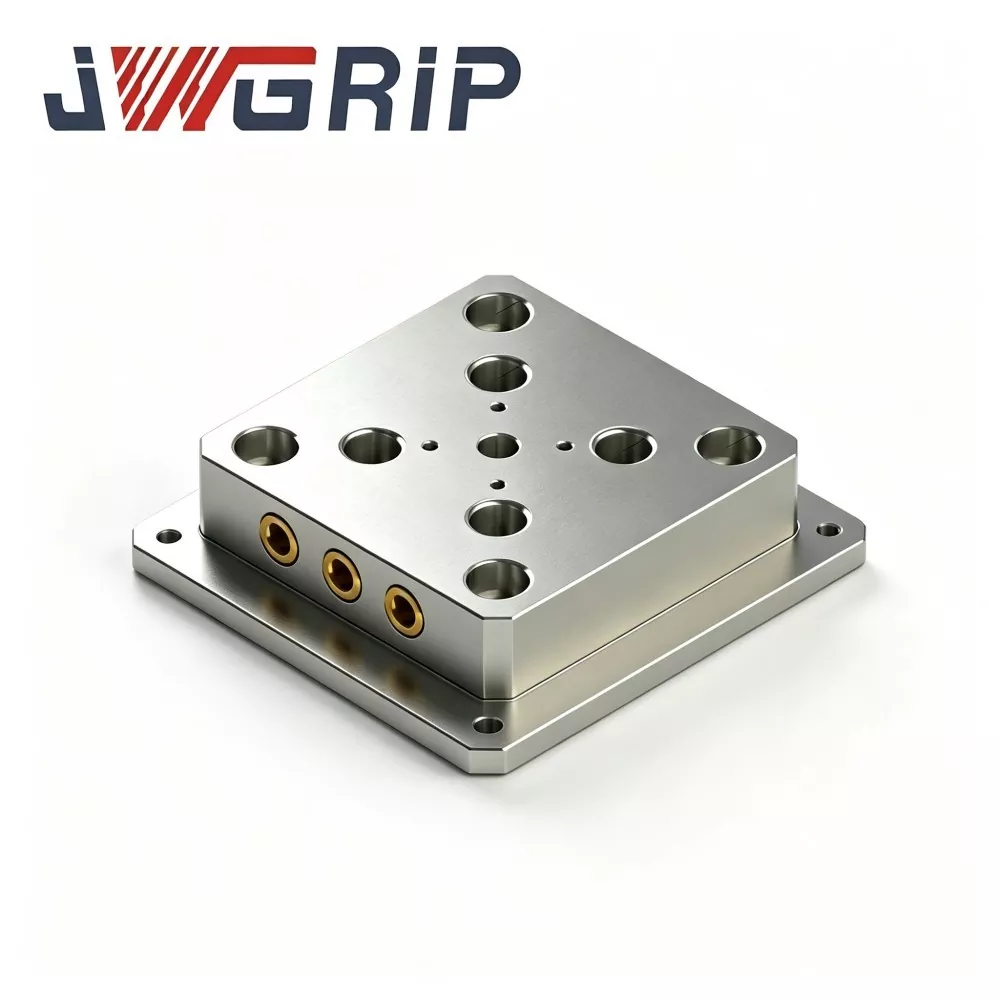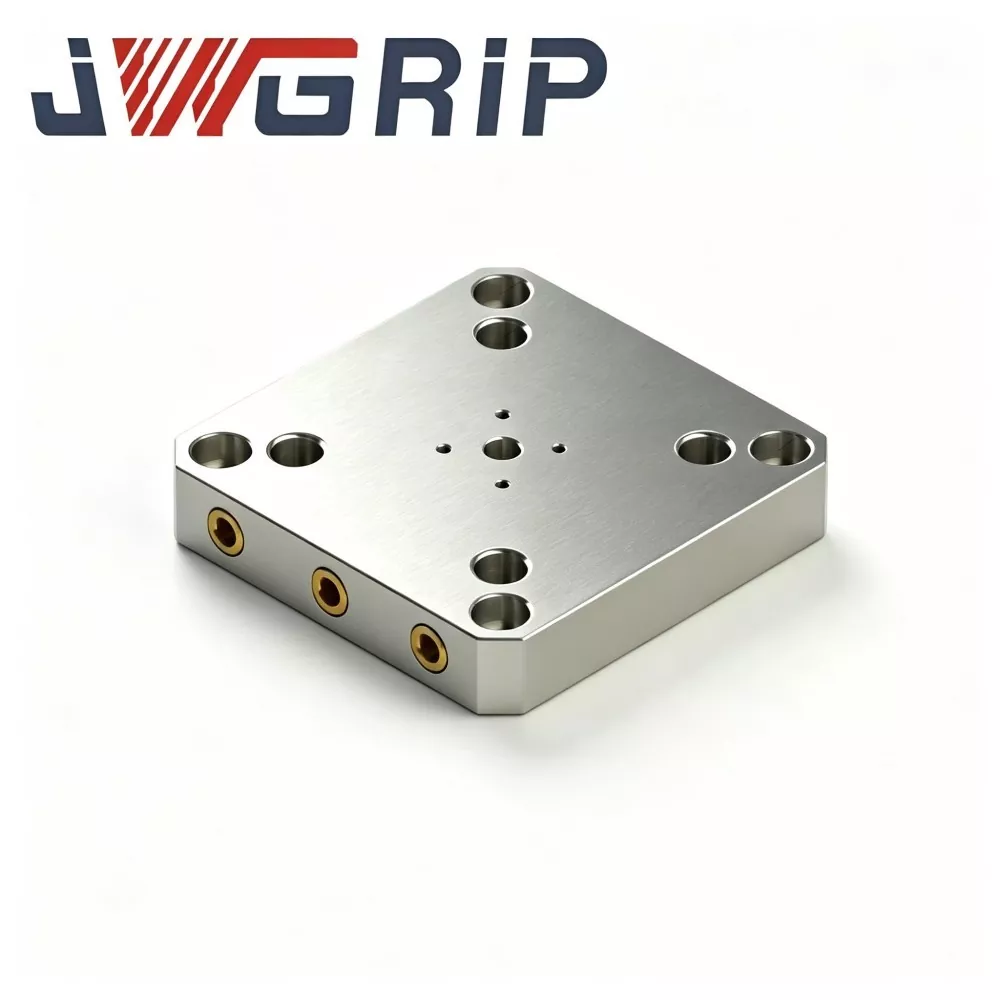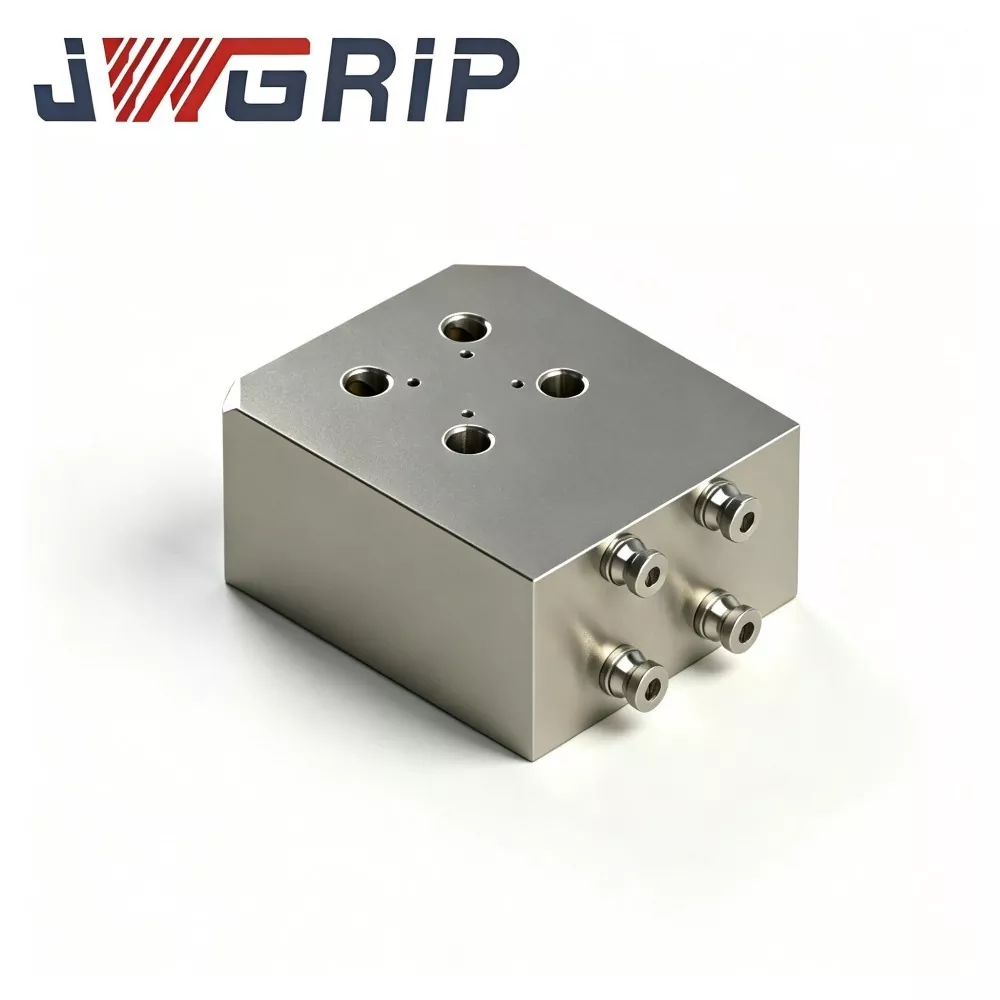
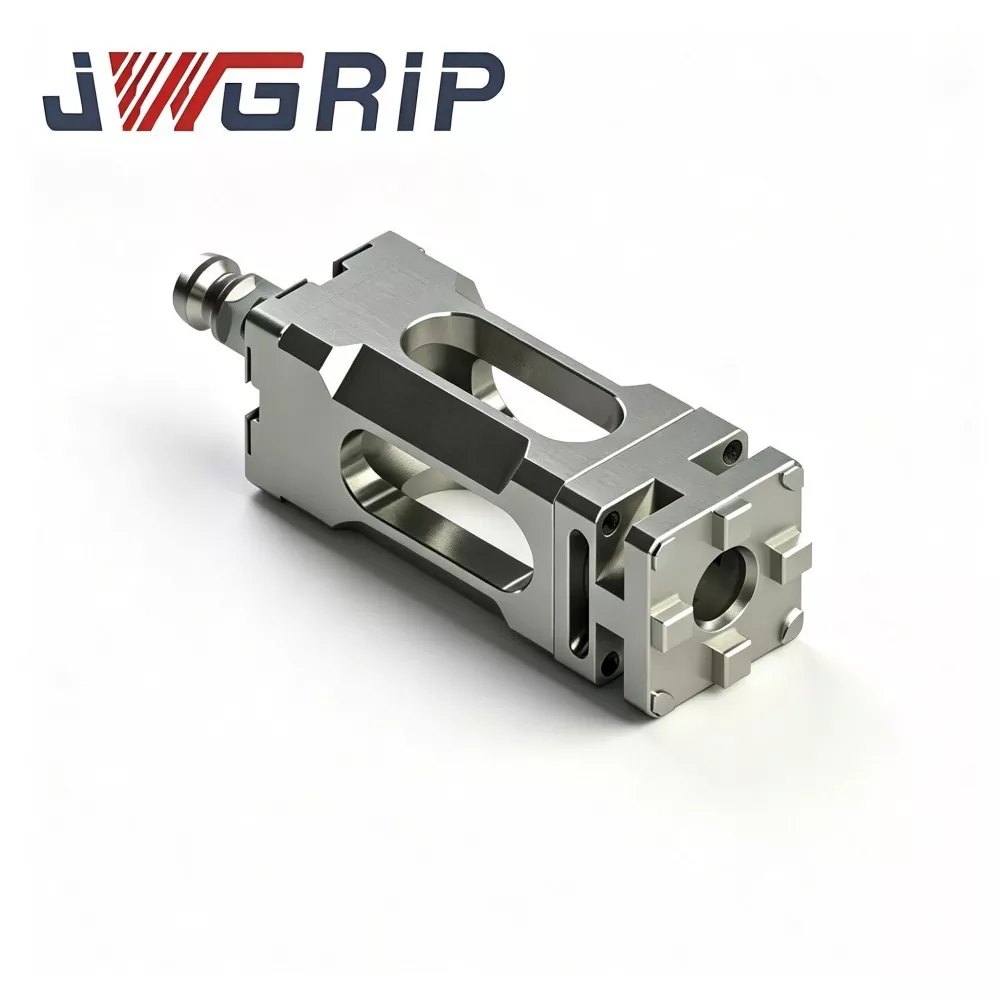
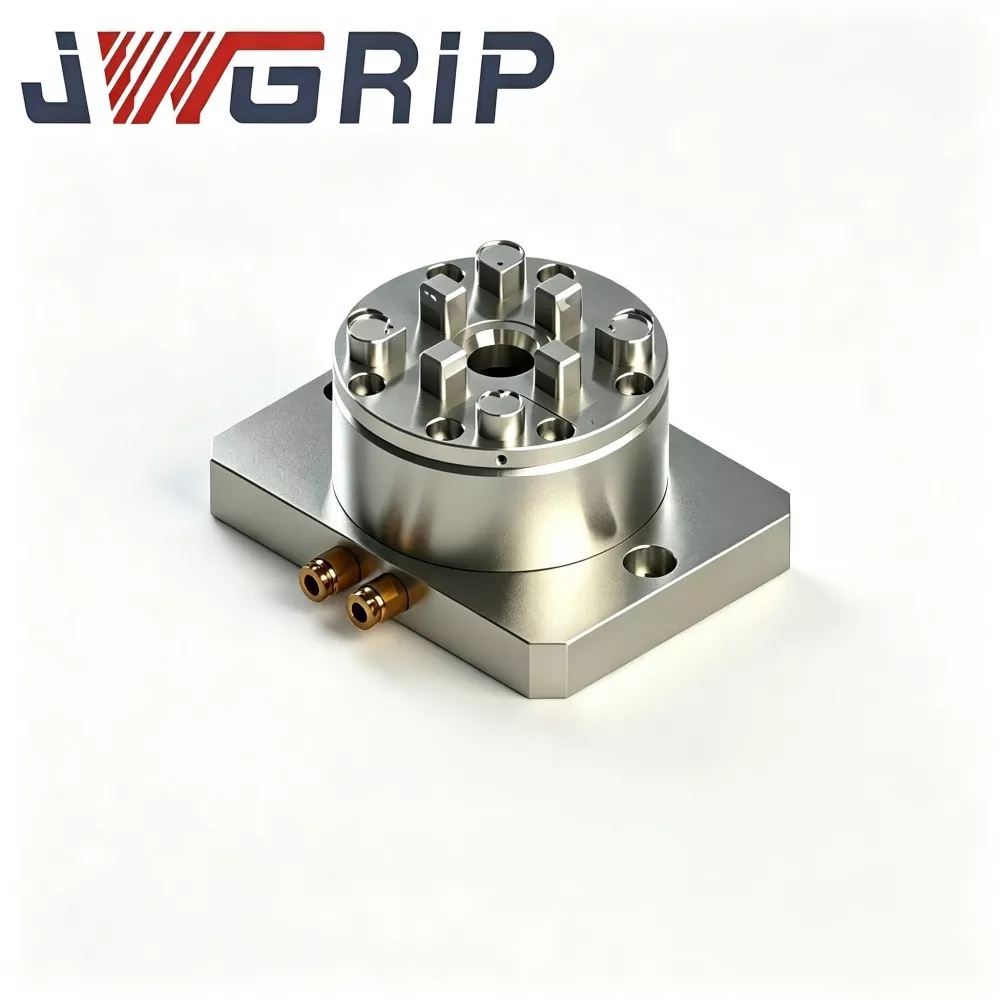
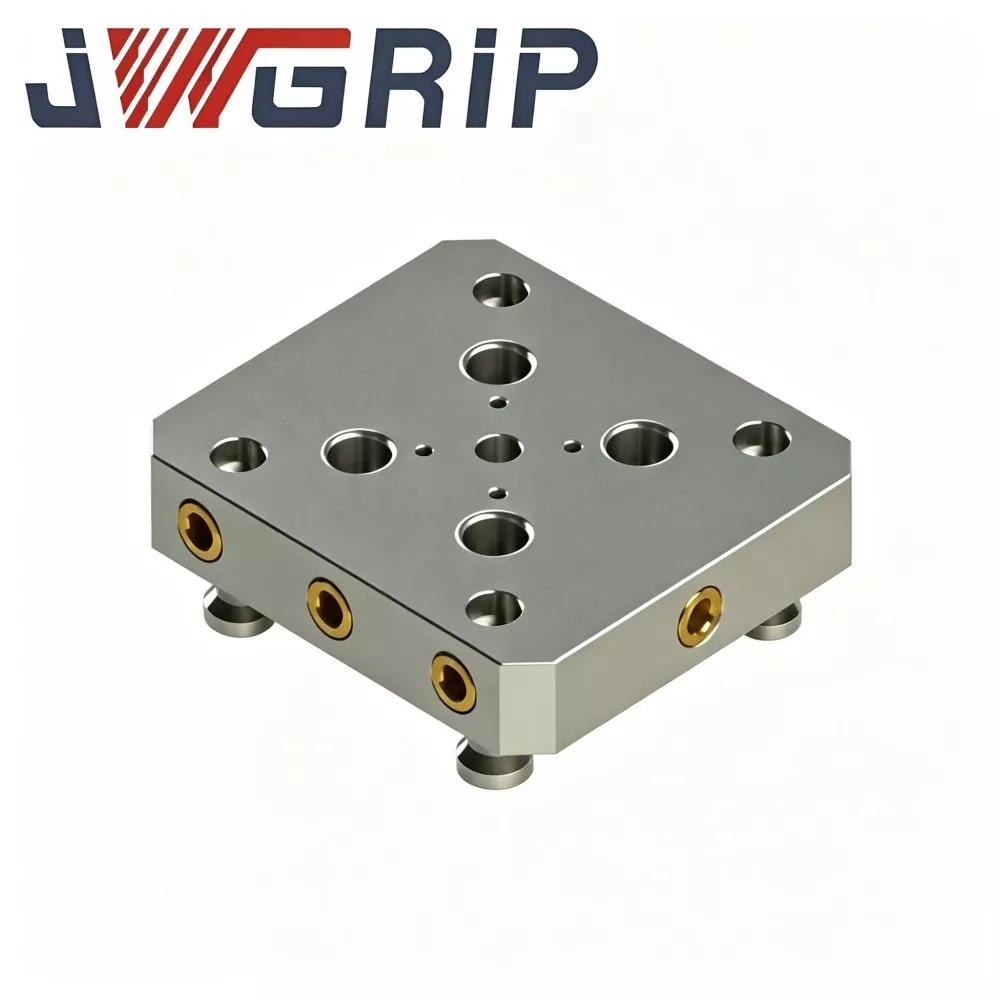
96 to 52 Quick Change Fixture Base Adapter
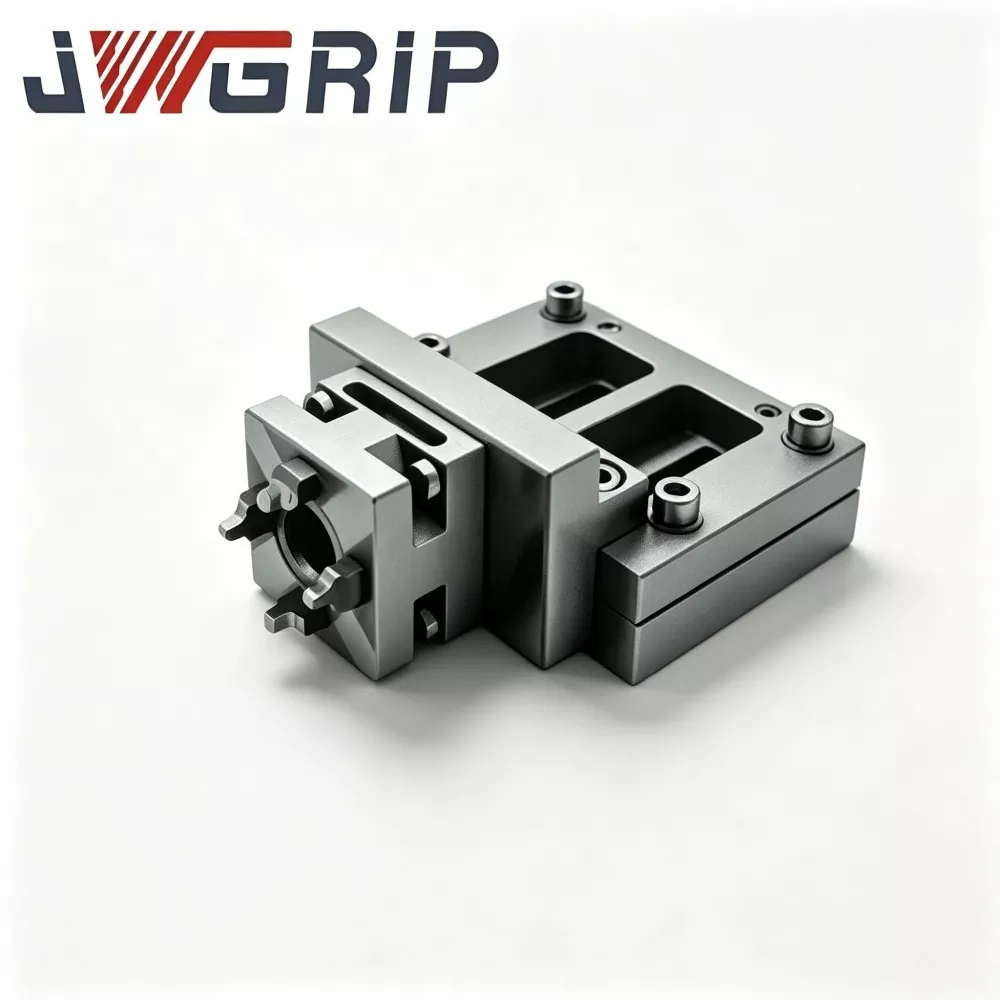
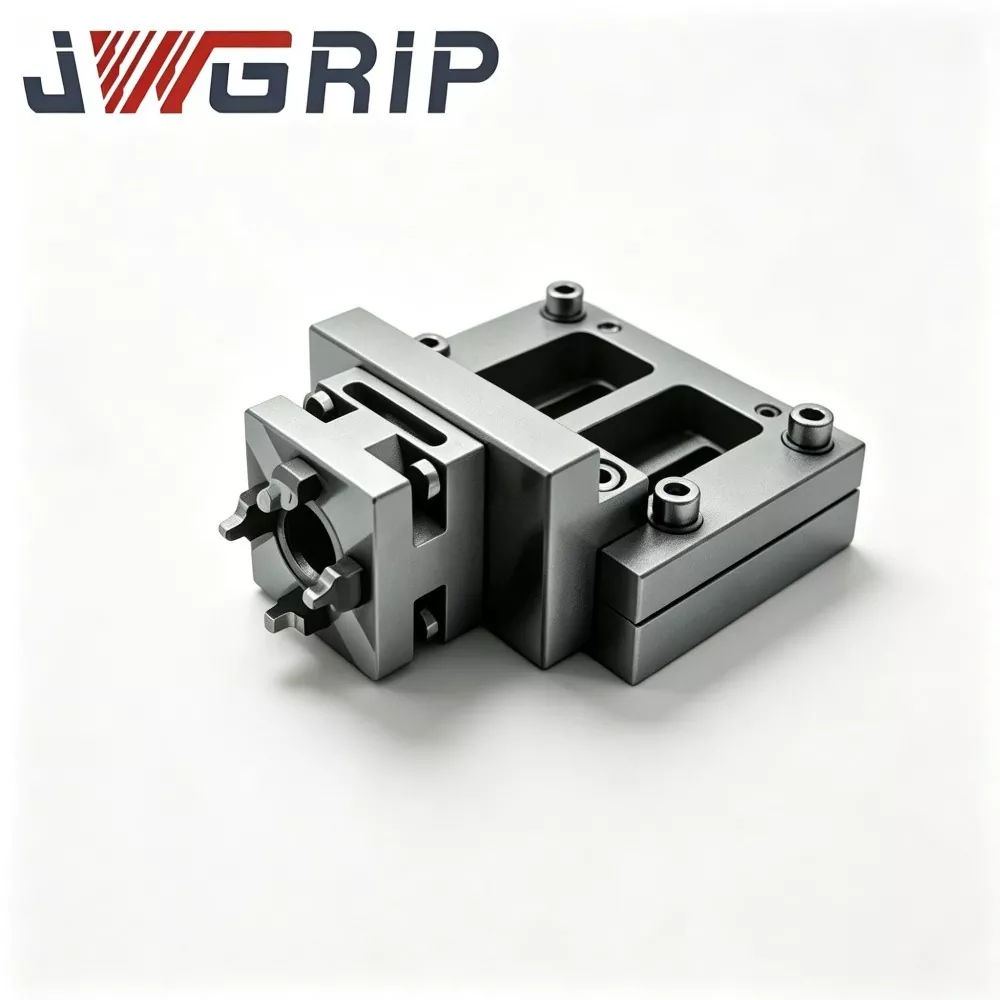
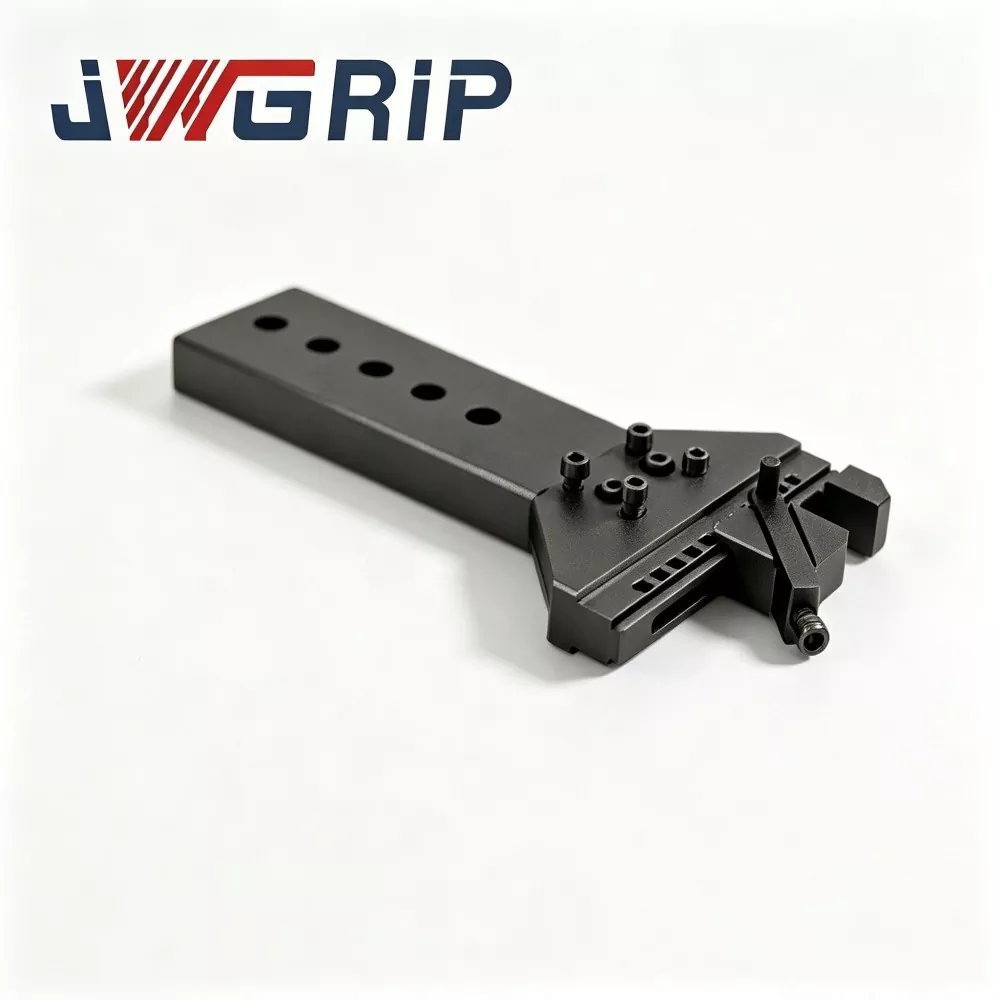
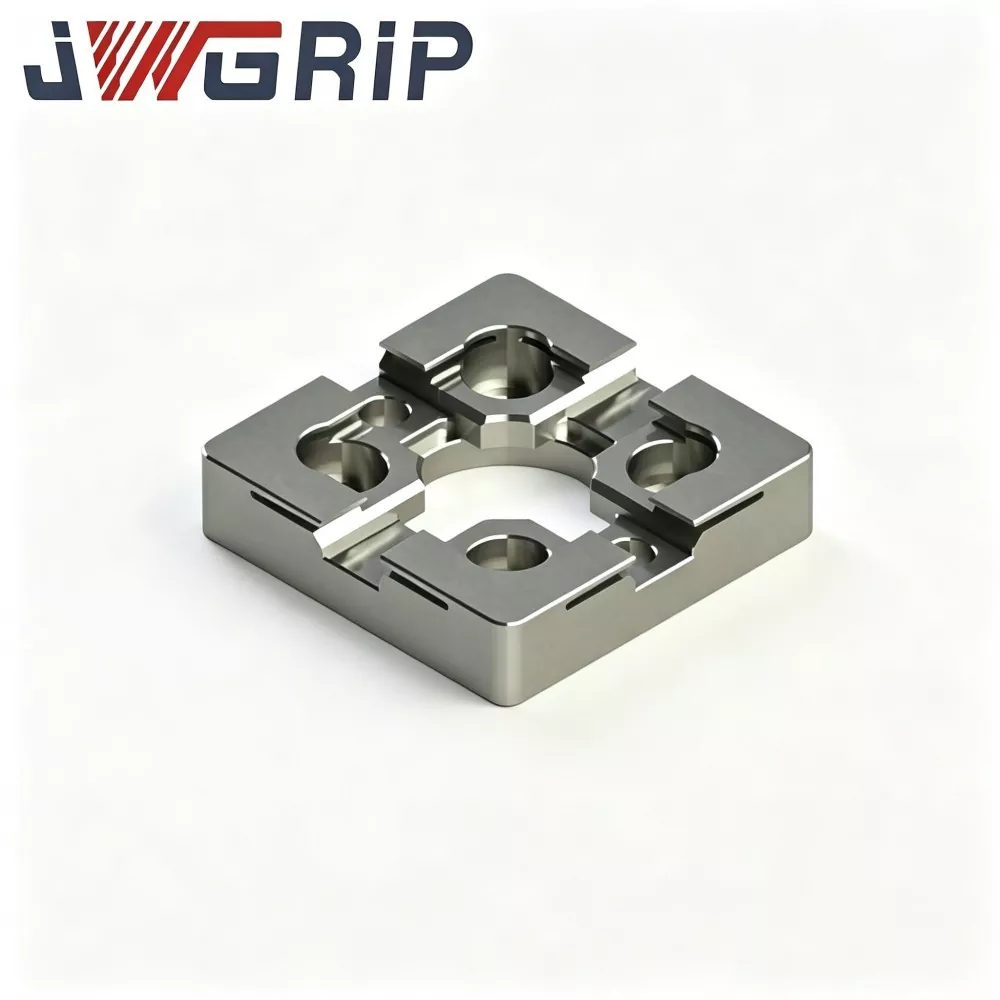
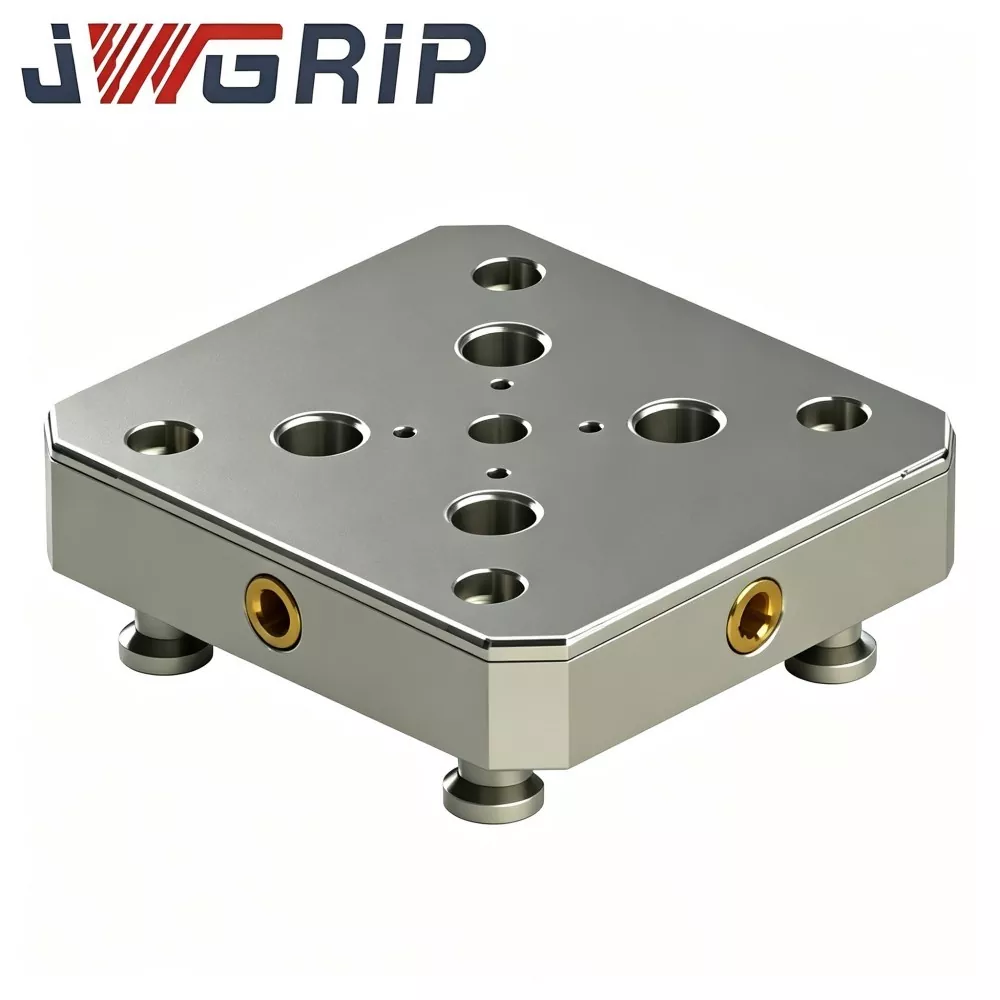
JWGRIP is the professional manufacturer and supplier of Customized 96 to 52 Quick Change Fixture Base Adapter in China, with standard models fully in Stock for global factory direct procurement and project order cooperation. It is a professional integrated fixture conversion adapter tailor-made for CNC workstation quick-change system compatibility upgrading. It perfectly integrates 96-size base positioning benchmark and 52-size fixture matching interface into a single unit, realizing seamless dimensional conversion between two different specifications of zero-point quick-change systems.
This high-precision 96 to 52 quick-change adapter is made of high-quality quenched alloy steel, featuring durable anti-deformation structure, stable repeated positioning accuracy and high-efficiency tooling conversion performance. Adopting one-time clamping integral machining technology for upper and lower positioning reference surfaces, the alloy steel blank undergoes strict stress-relieving aging treatment after rough machining to completely eliminate internal residual stress. Key matching positioning surfaces are finished by ultra-precision grinding process, ensuring long-term stable and consistent positioning performance during frequent pallet swapping and cyclic tool change.
Effectively solving the system mismatch problem of mixed-specification quick-change fixtures on CNC production sites, it greatly reduces enterprise fixture renewal investment and equipment modification downtime. Widely applicable to mold processing workshops, precision hardware production and automated fixture production lines, it provides economical, efficient and reliable fixture compatibility transformation solutions for global CNC precision machining enterprises.
Design Background
Many manufacturing plants have built-in 96-series large-format zero-point quick-change base platforms, while a large number of existing offline fixtures, sub-plates and tooling are built according to the 52-series zero-point standard. Direct replacement of all original 52-spec tooling will generate high procurement cost and long production stop-over cycle. Ordinary simple transition gaskets or split stacked adapter plates will introduce accumulated positioning tolerance, flatness deviation and vibration risk during heavy-feed cutting.
Common pain-points caused by mismatched zero-point system specifications:
1. Two sets of independent zero-point systems coexist, resulting in duplicated fixture investment and tooling resource waste.
2. Stacked multi-layer transition shims produce accumulated positioning error, leading to unstable batch workpiece dimension.
3. Simple non-stress-relieved transition parts deform gradually under long-term cyclic clamping, triggering positioning datum drift.
4. Lack of unified locating benchmark, cannot realize unified offline preset for 96-base and 52-fixture mixed production mode.
JWGRIP 96 to 52 Quick Change Fixture Base Adapter solves the above-mentioned practical bottlenecks. It realizes one-piece conversion from 96-size zero-point base to 52-size fixture interface. No multi-layer stacking is required. Existing mature 52-series fixtures can be directly reused on 96 zero-point platforms. Custom modification is available for special mounting height, multi-station layout and limited installation space on site.
Structural Composition
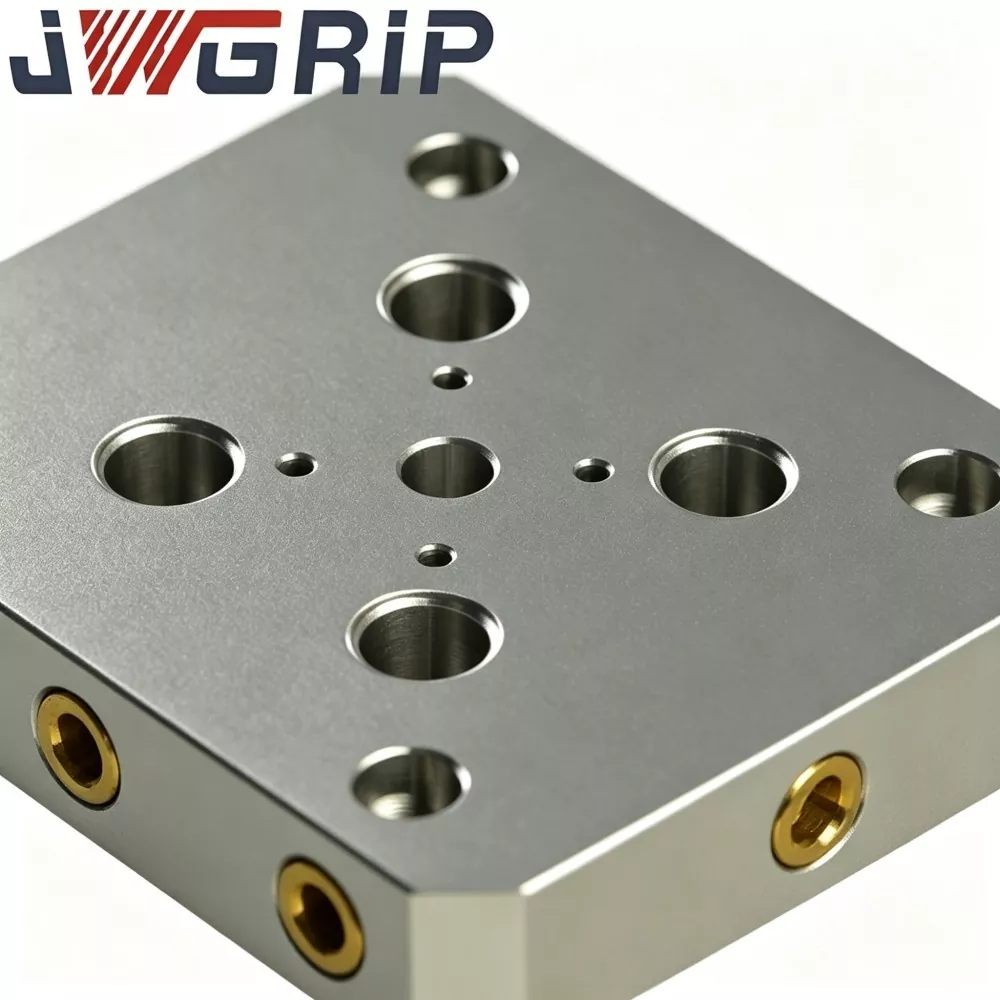
JWGRIP 96 to 52 Quick Change Fixture Base Adapter integrates multiple functional regions in one monolithic adapter body. Main functional modules include:
1. Bottom 96-series zero-point positioning mating zone Precision ground bottom datum surface and 96-spec pull-stud mounting hole array. Fully matches standard 96-size zero-point quick-change base, undertakes overall adapter positioning and locking force transmission. Hole-position tolerance directly determines the overall repeat-positioning accuracy after being mounted onto 96 base. Multi-station hole layout can be customized according to customer project requirements.
2. Upper 52-series fixture locating functional zone Upper-side datum plane and 52-spec zero-point mounting hole array, which can directly mount 52-size pull studs and accept original 52-series fixtures / fixture plates. The flatness, parallelism and hole-position accuracy of upper datum are critical indexes for reusing 52 tooling. Quantity and distribution of 52-spec stations support OEM customization.
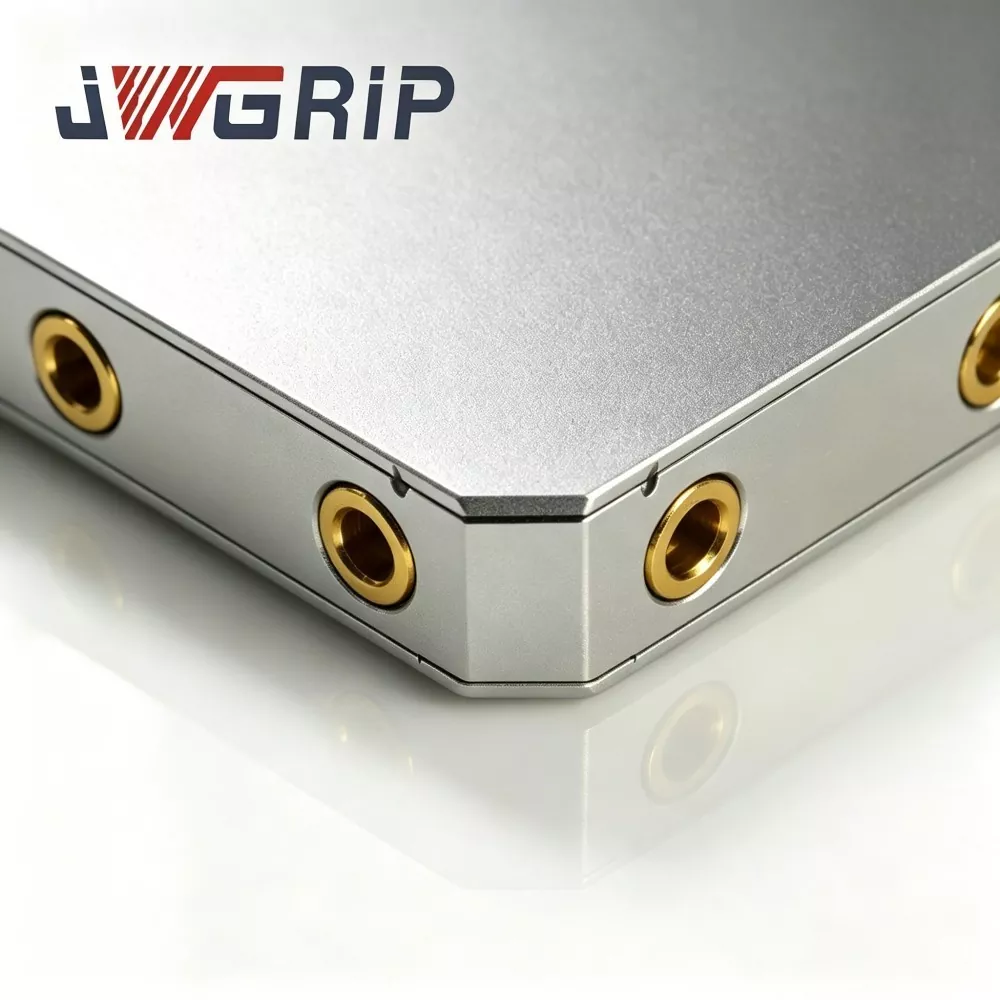
3. Integral adapter main body & rigidity reinforcement zone Monolithic quenched alloy-steel substrate. Local thickened rib-reinforced structure is adopted for force-bearing transition area to resist bending deformation under cutting load. All blanks go through multi-cycle stress-relief aging before finish machining, restraining flatness drift caused by residual-stress release in long-term cyclic clamping.
4. Auxiliary process feature zone Including hoist threaded holes for handling, anti-rotation locating pin holes and datum edge for dial-indicator calibration. It brings convenience for on-site installation, handling and initial benchmark setting.
Key Performance Indicators
1. Parallelism between bottom 96 datum and upper 52 datum:≤0.008 mm / 400 mm
2. 96-series & 52-series zero-point hole-position tolerance:±0.010 mm
3. Repeat-positioning accuracy (with qualified pull studs and zero-point bases):≤±0.005 mm
4. Max rated bearing load:Follow standard / custom engineering parameter
Material-selection Guidance
1. Pre-hardened quenched alloy-steel version Advantages: High rigidity, anti-deformation, excellent anti-vibration performance for heavy-feed milling. Application suggestion: Recommended for mold-steel heavy cutting, long-time continuous mass-production environment.
2. High-strength cast-aluminum alloy version (optional OEM custom) Advantages: Light self-weight, convenient manual handling and fixture swap. Application suggestion: Suitable for medium-light cutting scenarios with frequent manual tool-changing operation.
Production Flow
1. Raw-material incoming inspection:check material certificate, blank flatness and internal-stress status.
2. Rough-machining:complete large-margin material removal, reserve finish-machining allowance.
3. Multiple-cycle stress-relief aging:release residual stress generated by blank forging/casting and rough cutting.
4. Semi-finish machining.
5. Secondary stress-relief treatment.
6. Precision finish-machining:96-spec bottom hole array, 52-spec upper hole array, datum surface and auxiliary feature processing.
7. Surface-treatment:anti-rust passivation for steel version; hard anodizing for aluminum alloy custom version.
8. Full-item dimensional inspection:parallelism, flatness, hole-position accuracy measured by coordinate measuring machine and height gauge.
9. Anti-rust protection and finished-goods warehousing.
Inspection Checklist
1. Adapter body upper & lower datum surface flatness test
2. 96-series and 52-series zero-point hole-position dimensional detection
3. Parallelism inspection between upper-lower locating datum
4. Thread hole and pin-hole thread go-no-go gauge verification
5. Visual appearance inspection for scratch, crack and machining defect
Installation Tips
1. Before mounting the 96-to-52 adapter onto 96-size zero-point base, fully clean pull-stud spherical surfaces, adapter bottom datum plane and zero-point-base locating cavity; eliminate chips and foreign particles. Tiny impurities will cause adapter tilting and positioning deviation.
2. Install 96-spec pull studs onto adapter bottom according to official recommended tightening torque. Excessive torque may lead to local adapter-body deformation.
3. After first-time installation, perform dial-indicator inspection for adapter upper datum flatness and hole-position reference; record baseline data for later periodic recheck.
4. Mount 52-size pull studs and original 52-series fixture plates on the upper side of adapter, complete fixture swap simulation test, verify smooth locking-unlocking action without interference.
5. In daily-production, keep adapter upper-and-lower datum surfaces clean. Avoid heavy-object striking on datum edges and zero-point hole peripheral zones.
6. Periodically reinspect adapter flatness and hole-position accuracy for long-term mass-production usage.
Common-Issue Troubleshooting
|
Phenomenon |
Possible Causes |
Suggested Solutions |
|
Dimension inconsistency when reusing original 52-fixture |
Bottom datum contaminated; pull-stud wear; adapter datum flatness drift |
Disassemble and clean mating surfaces; inspect pull-stud status; re-measure adapter flatness |
|
Lock-unlock jamming of upper-side 52-fixture |
Hole-position offset; chips trapped inside zero-point holes |
Clean zero-point hole cavities; verify hole-position tolerance; return for re-grinding if over-tolerance |
|
Thread slipping of zero-point mounting holes |
Over-torque installation; thread-hole fatigue damage |
Follow specified tightening torque; replace adapter or carry-out thread-hole repair |
Packaging & Shipment
JWGRIP-Customized 96 to 52 Quick Change Fixture Base Adapter
1. Standard-stock adapters support global fast order delivery.
2. Every adapter completes full-item dimensional inspection before dispatch; inspection report is enclosed in each package.
3. Single-piece order:anti-rust film wrapping + thick foam cushion + reinforced export carton.
4. Multi-piece bulk export-orders:fumigation-free solid-wood crate with separating foam padding, prevent scratch and knock-damage of adapter datum surface during long-distance sea-and-land transportation.
5. Custom-height / multi-station layout orders follow mutually-confirmed lead-time.
After-Sales Services
Warranty statement: Under correct installation and normal-cutting working conditions, non-consumable adapter main-body enjoys 12-month warranty for manufacturing-caused dimensional defects. Damage caused by collision, local welding heat-treatment, overload impact and man-made misuse is excluded from warranty scope.
Remote online-technical-guidance covering adapter selection, installation hints and fault-phenomenon analysis. Global customers can submit technical-inquiry by email, engineers reply within 24 working-hours.
Complete dimension drawings and inspection-record copies are provided for every purchasing-order.
Engineering-level custom-modification consultation:adapter mounting-height adjustment, multi-station 52-hole-grid relayout, material alternative evaluation, special-space limited contour modification.
Procurement & Project-Evaluation
Core value of JWGRIP-Customized 96 to 52 Quick Change Fixture Base Adapter:
Multi-cycle stress-relieved monolithic substrate processing, steel / optional cast-aluminum material selection, one-piece direct conversion between 96-base and 52-fixture, high-precision double-sided zero-point hole-grid, avoid multi-layer stacked accumulated tolerance, support OEM height, station-quantity and contour modification.
It solves typical mixed-spec zero-point-system workshop bottlenecks: Duplicated fixture procurement cost caused by two-spec zero-point coexistence, accumulated positioning error of stacked transition plates, datum flatness drift of simple non-stress-relieved transition parts, cannot reuse existing 52-series fixtures on 96 zero-point base.
Project-evaluation reminders:
1. Confirm 96-size zero-point-base specification and existing 52-fixture parameters before ordering, verify dimensional compatibility.
2. Evaluate actual cutting-force magnitude and overall bearing-load requirement, select proper material variant.
3. Sort out station-quantity requirement of upper-side 52 interface, confirm hole-grid layout demands.
4. Stock-standard-size adapters deliver quickly; adopt custom-engineering for special height, multi-station layout or limited-space contour requirements.
FAQ
Q1: Can this 96-to-52 adapter cooperate with other-brand 96-series zero-point bases and original 52-series fixtures?
Standard-version hole-grid matches mainstream 96 and 52 zero-point system dimensions. If third-party product hole-position deviates, custom hole-grid modification is required.
Q2: What production benefit can this conversion adapter bring?
It enables existing mature 52-series fixtures to be directly reused on 96-size zero-point platforms. No need to scrap original 52 tooling, greatly reduces fixture re-investment and shortens production-line transformation cycle, and supports offline preset under mixed-spec production mode.
Q3: Is local welding permitted on the adapter body?
Not allowed. Local welding introduces concentrated heat input, destroys internal-stress balance and causes irreversible flatness distortion of upper-lower locating datum.
Q4: Which material version should I choose?
Pre-hardened quenched alloy-steel version is recommended for heavy-feed mold-steel cutting; select OEM customized high-strength cast-aluminum version for medium-light cutting scenarios requiring frequent manual handling.
Hot Tags: 96 to 52 Quick Change Fixture Base Adapter
Send Inquiry
Contact Info
-
Address
No. 44, Daning Entrepreneurship Road, Humen Town, Dongguan City, Guangdong Province, China
-
Tel
-
Email
Welcome to send inquiry to JWGRIP. Our professional technical and sales team will provide free fixture selection, customized solution design and accurate quotation.