Round Base Self-Centering Vises Manufacturer for Precision Workholding
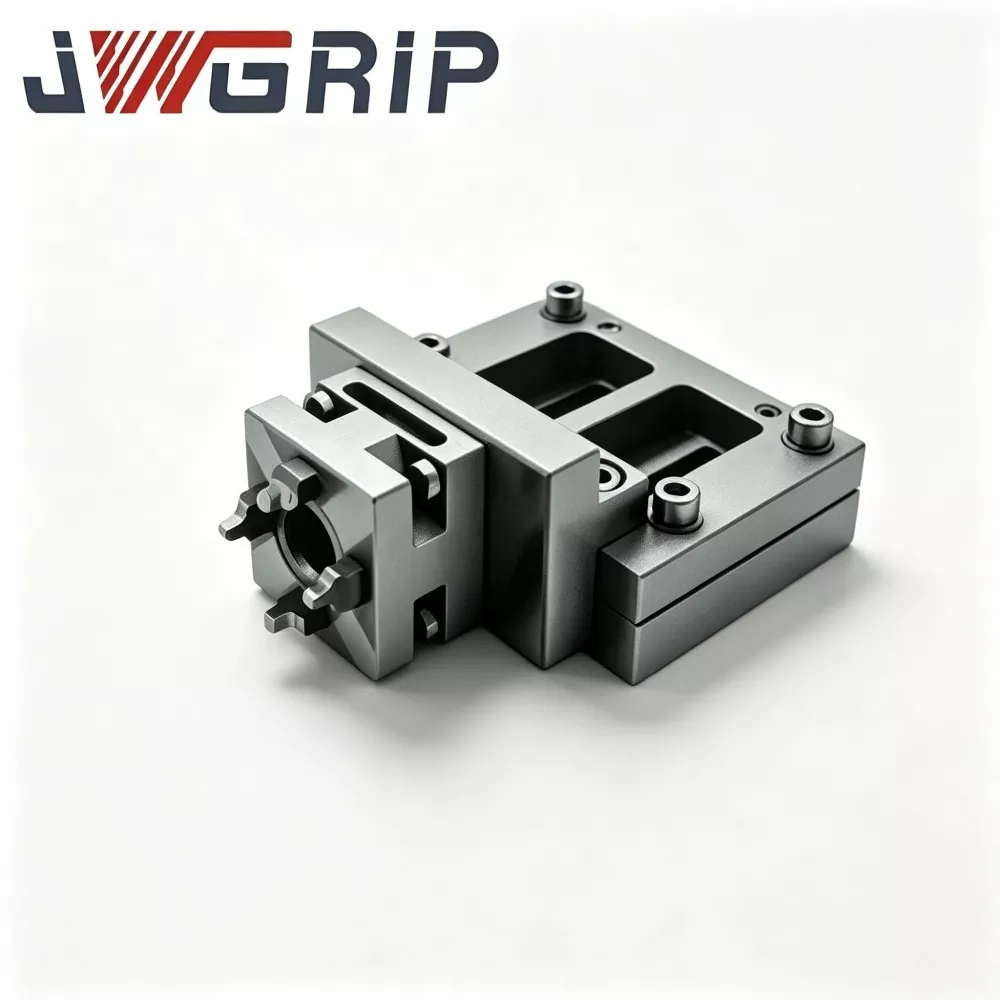
As an original-equipment supplier of Round Base Self-Centering Vises, JWGRIP produces circular base cast-forged bodies, wide-opening jaw assemblies and rotary-compatible zero-point connection flanges with rotational repeatability validation for five-axis machining workshops and fixture integrators with frequent angular workpiece indexing. This circular-base clamping hardware enables workpiece re-orientation without removing parts from fixtures.
It can form multi-purpose clamping stations paired with H125 Series Heavy Duty Self-Centering Vise and Zero Point Pallet Series, covering fixed-orientation heavy milling and indexed angular multi-surface machining. Strict circular-run-out and jaw-synchronization dimensional controls are enforced during production.
Common fixture shortcomings
Many five-axis workshops rely on square-base vise units for angular indexing work. Square-base vises require operators to unclamp, re-rotate and re-dial-indicate the whole fixture whenever a new workpiece angle is needed. This repeated readjustment consumes large amounts of valuable machine runtime and manual labor.
What risk will manual re-indexing bring to batch-produced components?
Every time you release and reposition a fixture, new positioning error may be introduced. Cumulative angular deviation will make multi-surface features misalign, resulting in non-conforming parts that cannot meet drawing geometric-tolerance requirements.
How can shops reduce manual dial-gauge work for angular positioning?
Some factories try rotary tables paired with ordinary flat-base vises. This combination increases overall stack-up height dramatically. Excessive total height raises tool-collision probability and reduces effective Z-axis travel available for actual material removal.
Is circular-base clamping only useful for fully-rotational continuous machining?
Quite the opposite. Most practical production scenarios use discrete index-and-lock operations. The circular base allows operators to set several fixed working angles, lock the structure rigidly, and execute stable milling or drilling without continuous spinning during cutting cycles.
The Functional Differences
Wide Clamping Range Round Base Self Centering Vise: Delivers an extra-broad jaw opening span while retaining circular-base rotary capacity. It suits diverse blank dimensions, from small compact blanks to relatively wide profile workpieces. Operators can handle varied part sizes without frequently swapping out the whole vise assembly.
Heavy Duty Round Base Self Centering Vise for 5 Axis Machining: Built with thickened circular base structure and reinforced internal locking mechanism. It sustains powerful cutting forces generated during heavy-stock-removal five-axis milling. After angle indexing, the locking structure eliminates micro-vibration that would otherwise degrade surface finish.
High Accuracy Round Base Self Centering CNC Vise: Optimized for high-precision tolerance-critical jobs. Strict circular-run-out control and finely-finished jaw synchronous components keep centering deviation minimal even after dozens of indexing-and-locking cycles. It fits mold-related parts and precision mechanical component manufacturing.
Operation Guidelines
How do you balance rotary flexibility and static-state rigidity after indexing? Free-rotating capability means nothing if the unit cannot lock firmly once you reach the target angle. Always complete full locking torque application before starting any cutting pass. Partial locking will produce tiny angular drift under cutting load.
What mistakes frequently occur when mixing circular-base hardware with zero-point tooling? Users sometimes confuse the rotary function of the vise itself with rotary motion from machine-table axes. The circular base provides manual fixture-level angular preset; it does not replace the native five-axis machine rotary axes. Misunderstanding this function will create wrong programming reference settings.
How should you select jaw configuration for rotary-base setups? Hard jaws work well for regular symmetrical solid blanks. When you grip irregular cast or forged parts, machinable soft-jaw inserts should be adopted to create matching contact contours, preventing partial point-loading during rotated clamping.
How to build mixed-mode clamping stations with complementary workholding hardware?
What application scenarios fit combined deployment alongside H125 Series Heavy Duty Self-Centering Vise?
Factories receiving mixed orders can equip some machine positions with circular-base units for multi-angle indexed jobs, and other stations with heavy-duty square-base vises for fixed-orientation high-force milling. This layout optimizes resource allocation for mixed-order incoming work.
What practical advantages come from pairing with Zero Point Pallet Series?
The circular-base vise can be mounted onto pallets outside the machine work envelope. Operators finish workpiece clamping and angle presetting on the bench, then transfer the whole assembly onto machine-side locating chucks. It greatly cuts down on-machine setup and indexing time.
What weight-related risks must be prevented?
The circular base adds extra structural mass. Calculate total combined mass of vise plus raw blank. Confirm that the machine rotary-table payload and pallet rated load are never exceeded. Over-loading will harm machine-table accuracy and accelerate mechanical wear.
Material and manufacturing highlights
The circular base body adopts integrated cast-forged alloy steel. Rotary mating surfaces go through multi-step precision grinding to control circular-run-out error. Internal index-locking components use carburized and quenched steel to resist wear from repeated angle adjustment cycles. Jaw synchronous transmission assemblies maintain stable self-centering performance regardless of base rotational position.
Every finished unit passes rotary run-out inspection, centering-accuracy testing and locking-strength verification before leaving the production workshop. Mounting flange dimensions maintain compatibility with mainstream zero-point pallet interfaces.
Customizable options cover modified jaw opening limits, special-height circular bases and non-standard mounting hole layouts to satisfy unique five-axis fixture requirements.
Operational Notes
Rotary mating gaps will gradually accumulate fine chips and coolant residue over production cycles. Residue trapped between rotating contact surfaces will introduce run-out error and weaken locking tightness. Routine disassembly-assisted cleaning of rotary interfaces cannot be omitted. Even well-manufactured circular-base hardware will suffer declining angular repeatability if debris builds-up inside rotary clearance spaces over long-term continuous production.
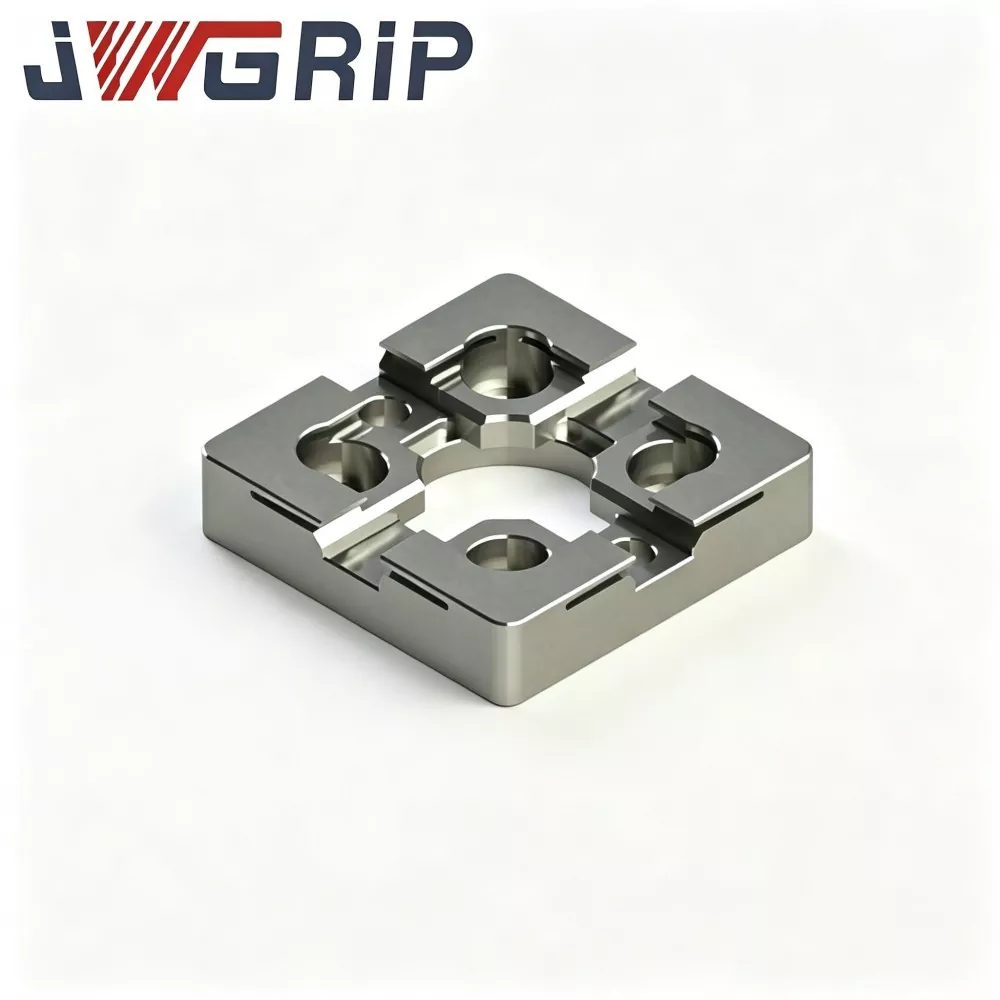
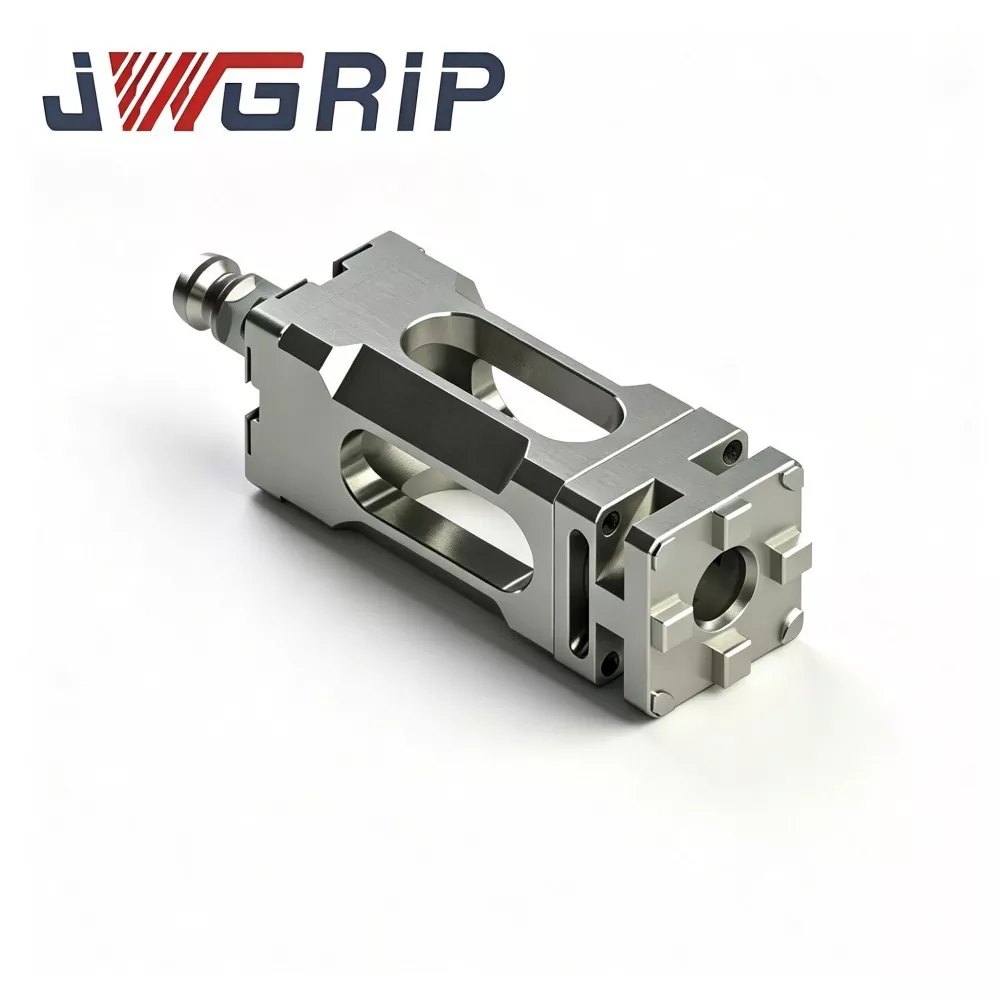
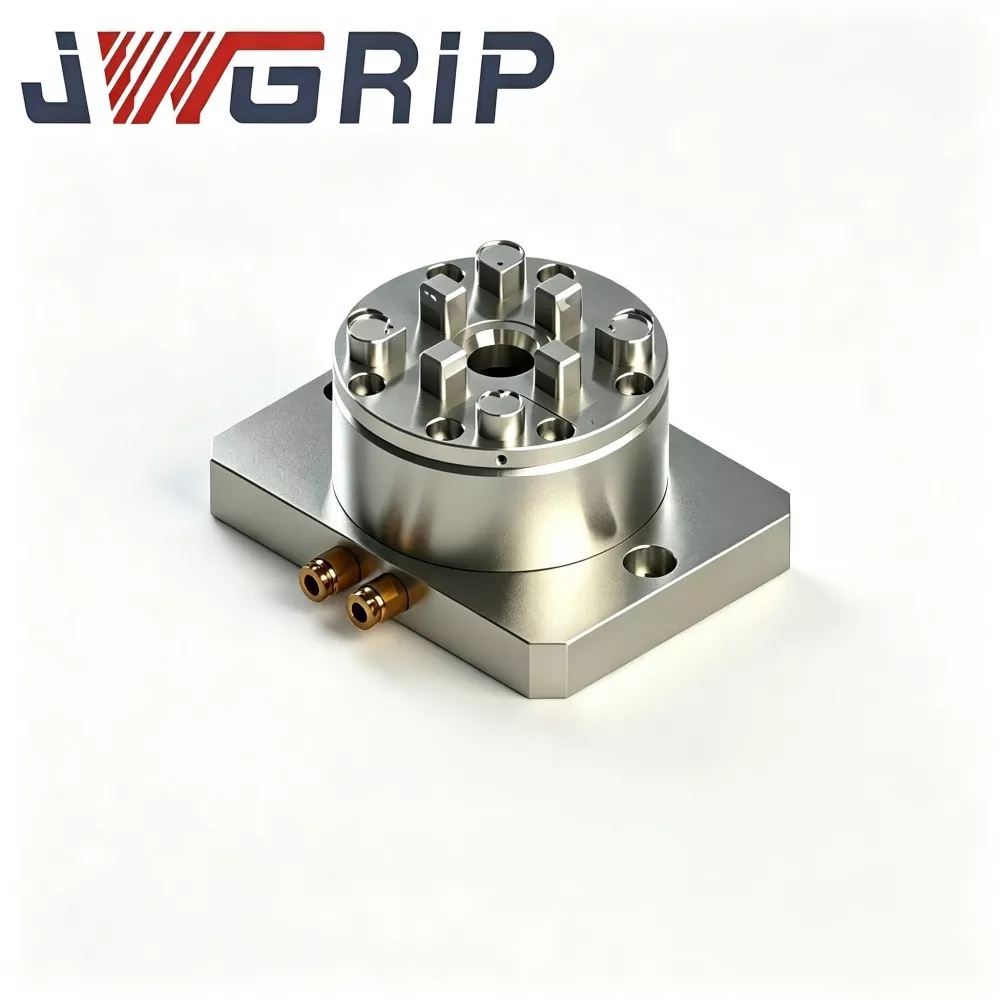
- View as
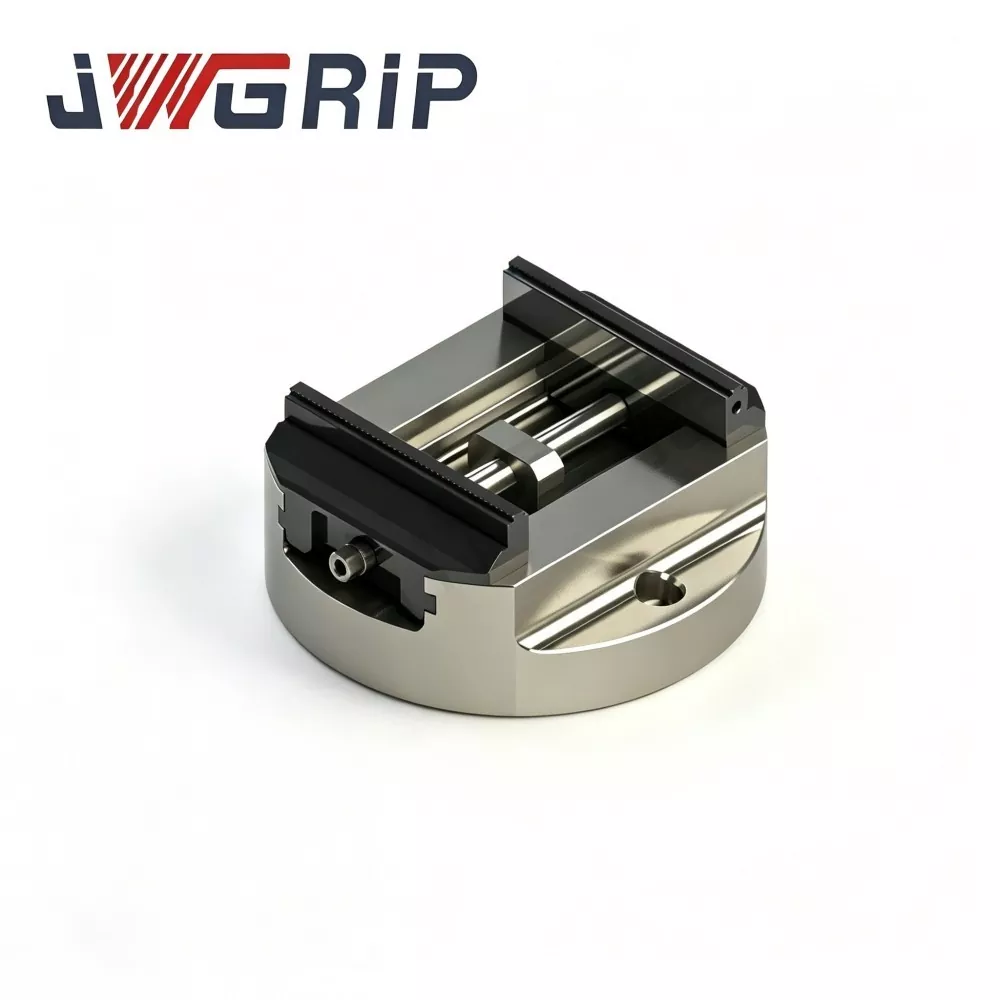
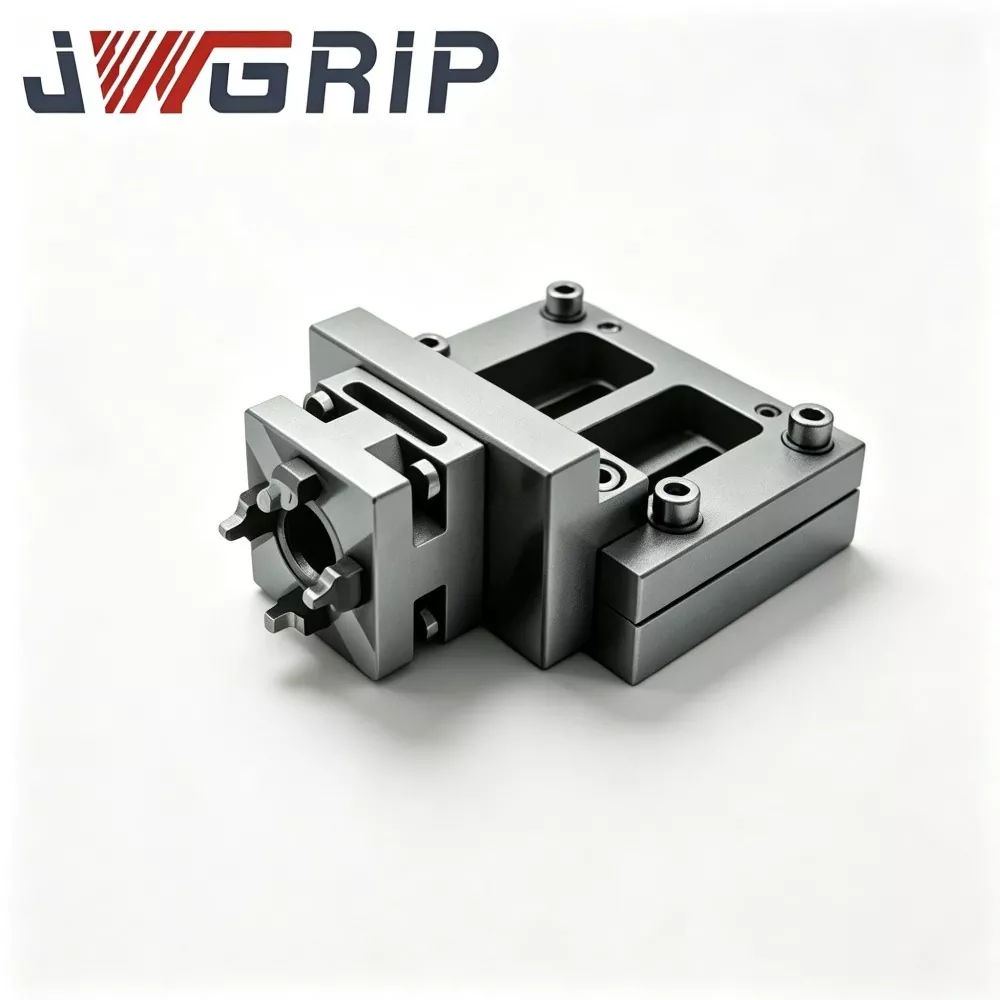
High-Accuracy Round Base Self-Centering CNC Vise
JWGRIP is the professional manufacturer and supplier of Customized High-Accuracy Round Base Self-Centering CNC Vise for 5 Axis Machining in China, with standard models fully in Stock for fast global delivery. It is a high-precision integrated CNC workholding fixture professionally engineered for 5-axis and complex multi-axis CNC machining operations. Adopting premium ductile iron body and induction-hardened guideway structure, it integrates ultra-high repeatable clamping performance, compact space-saving layout and high-rigidity cutting stability into a single integrated unit.
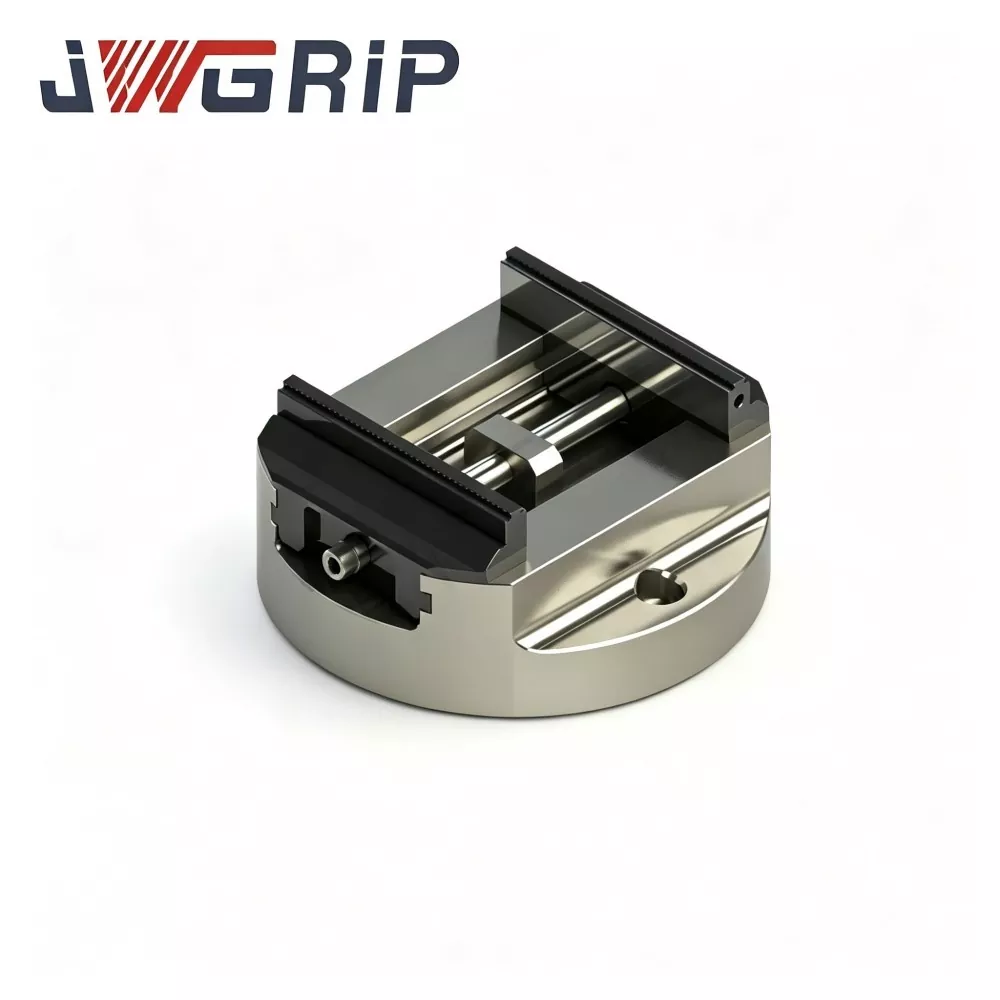
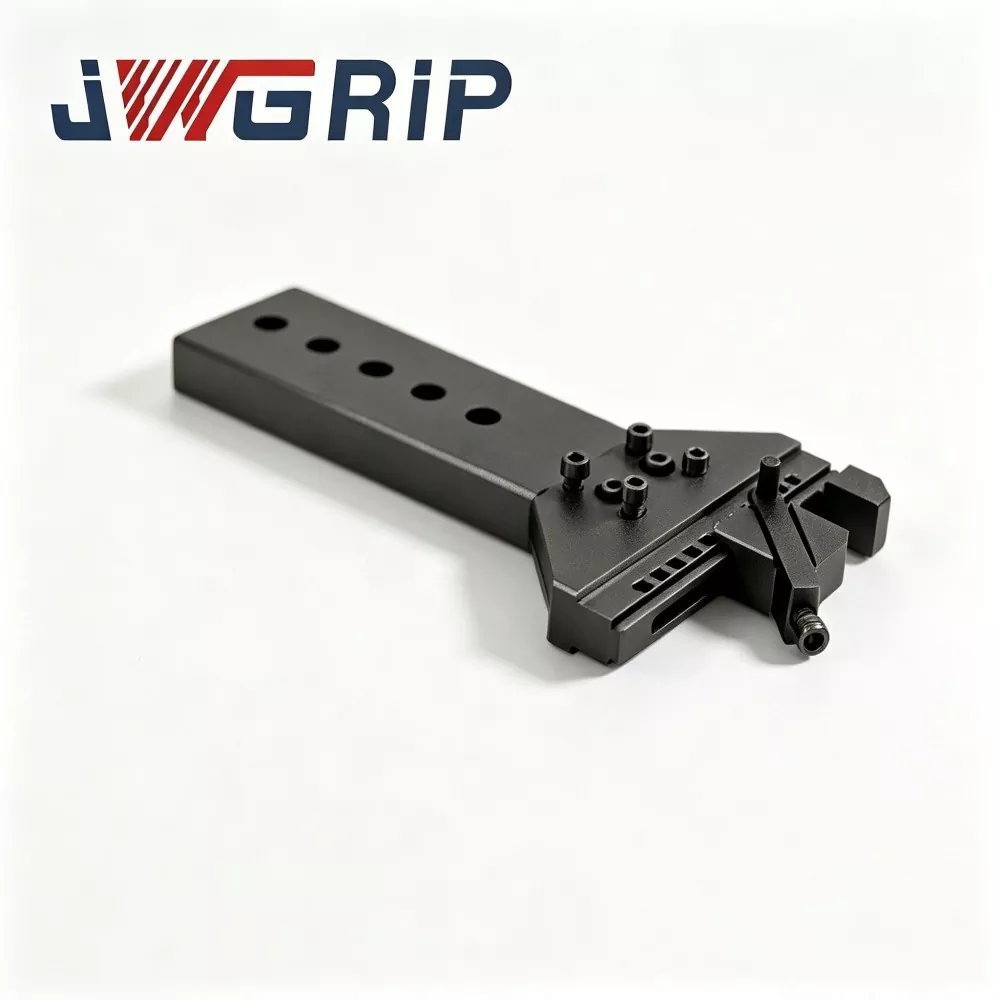
Heavy-Duty Round Base Self-Centering Vise for 5 Axis Machining
JWGRIP is the professional manufacturer and supplier of New Design Heavy-Duty Round Base Self-Centering Vise for 5 Axis Machining in China, with standard specifications fully in Stock for timely project delivery. It is a purpose-built integrated high-rigidity clamping fixture professionally optimized for high-load 5-axis simultaneous machining, cradle-type and rotary table processing scenarios. Adopting upgraded thickened round base structure and manufactured with high-quality materials and rigorous industrial production standards, it integrates strong anti-overturning rigidity, high-efficiency workpiece setup and durable modular structure into a single integrated unit.
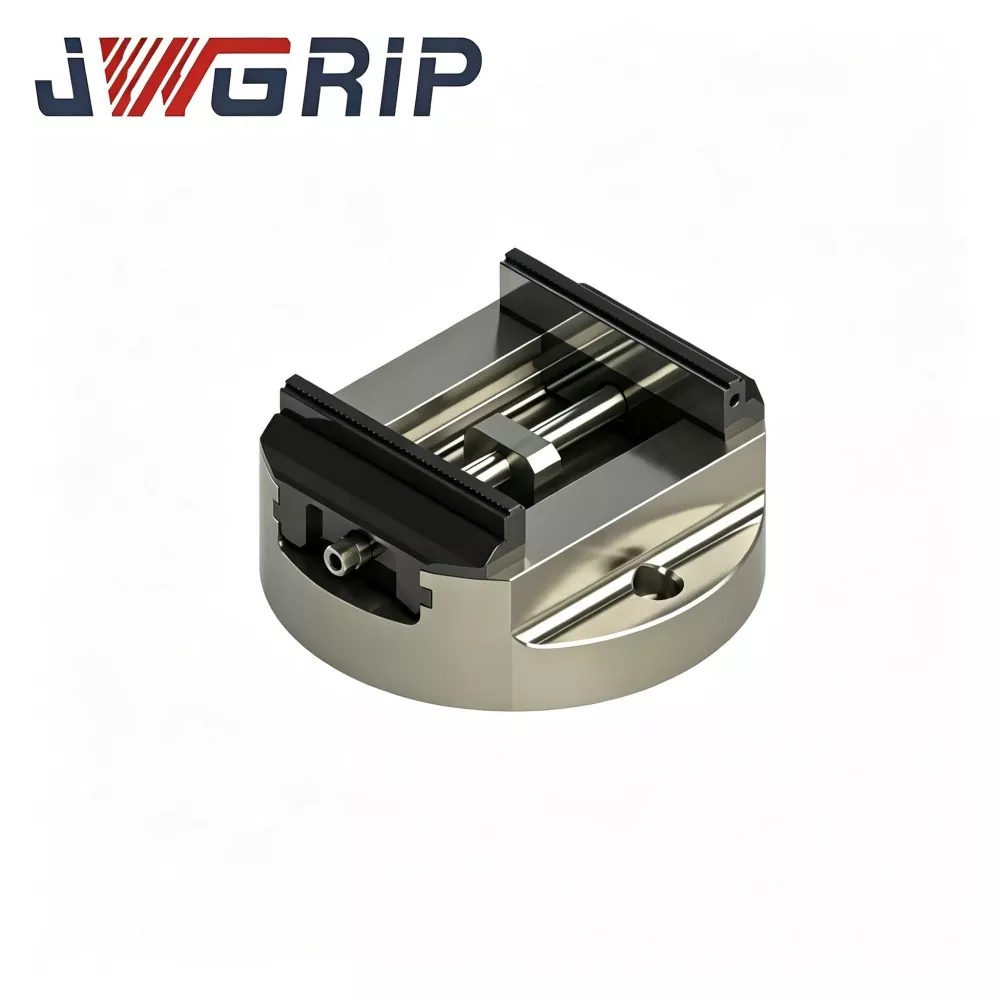
Wide Clamping Range Round Base Self-Centering Vise
JWGRIP is the Professional manufacturer and supplier of Wide Clamping Range Round Base Self-Centering Vise in China, with standard models fully in Stock to meet diverse project delivery demands. It is a newly engineered integrated precision clamping fixture specially developed for CNC rotary tables, 4-axis and 5-axis multi-axis machining workflows. Adopting optimized round base structural design and manufactured under strict high-quality industrial standards, it integrates wide-range clamping capacity and high-stability rotary positioning function into a single unit.
JWGRIP is a professional Round Base Self-Centering Vises manufacturer and supplier in China. We warmly welcome you to wholesale high quality products at competitive price from our factory.