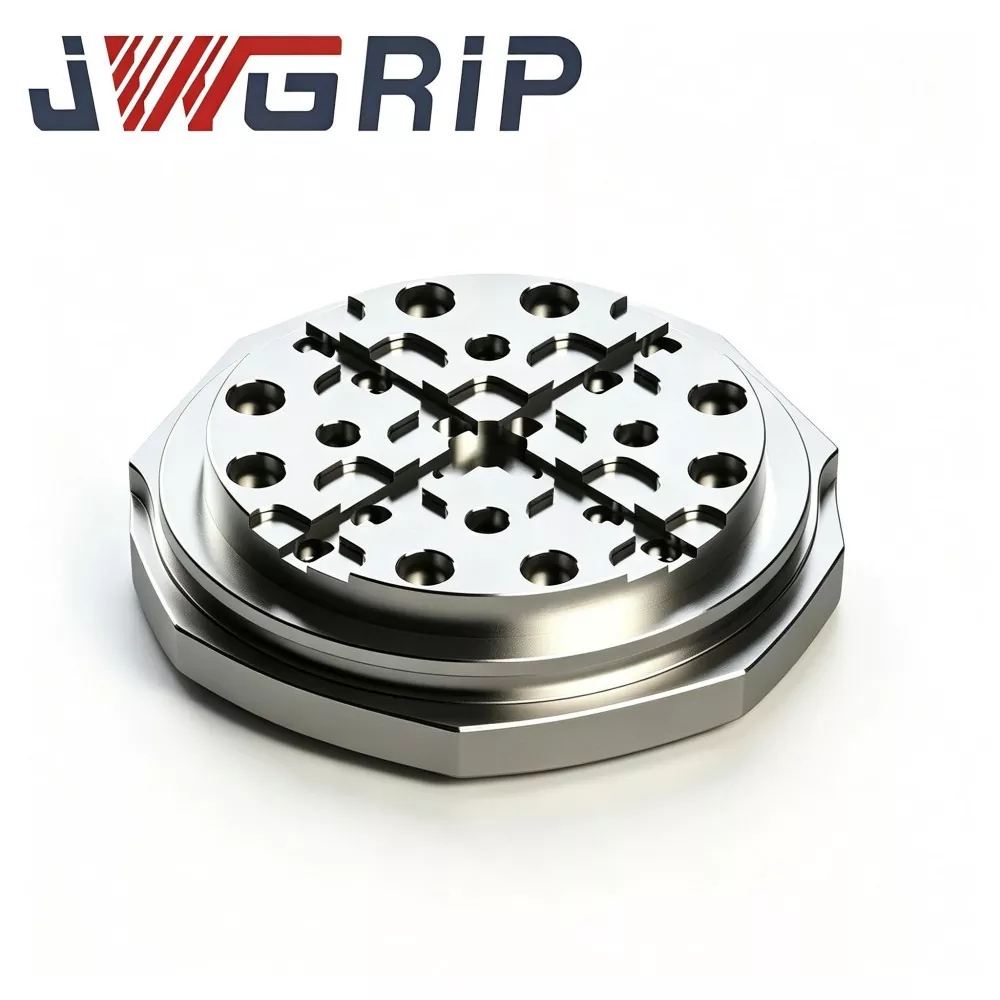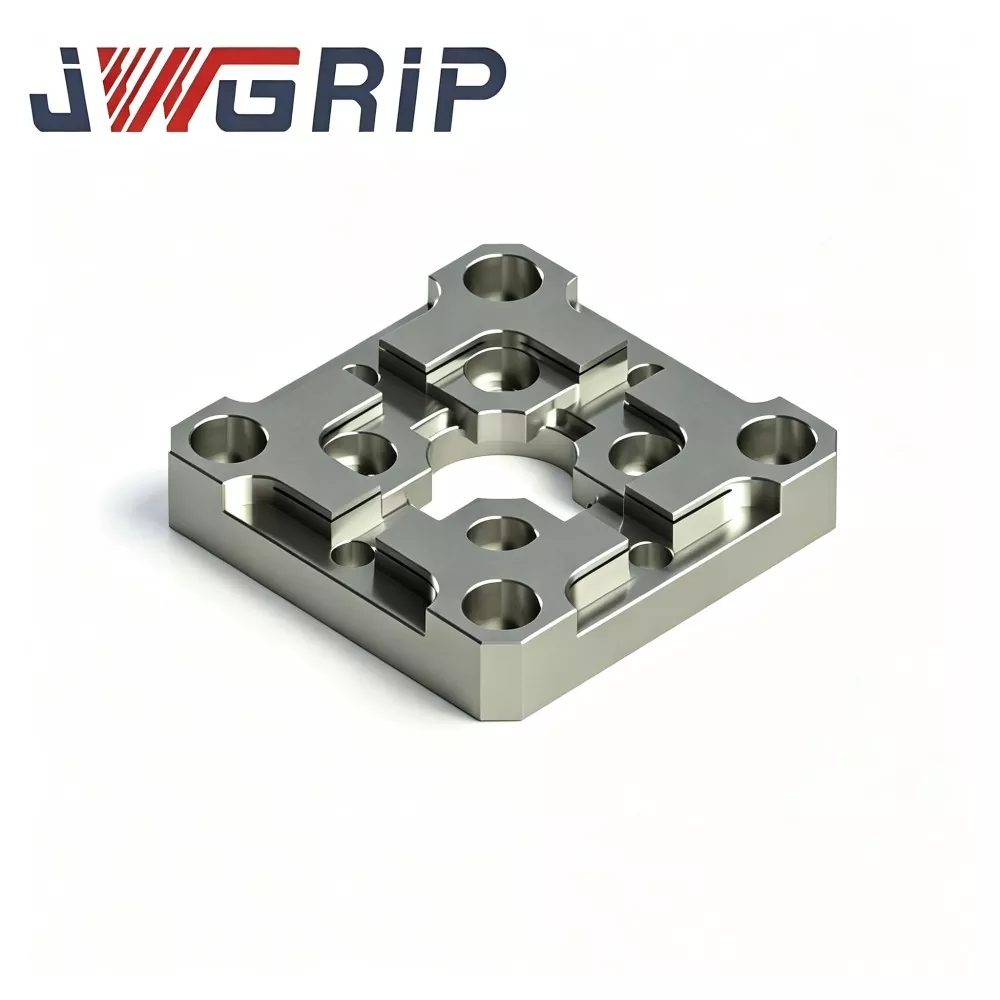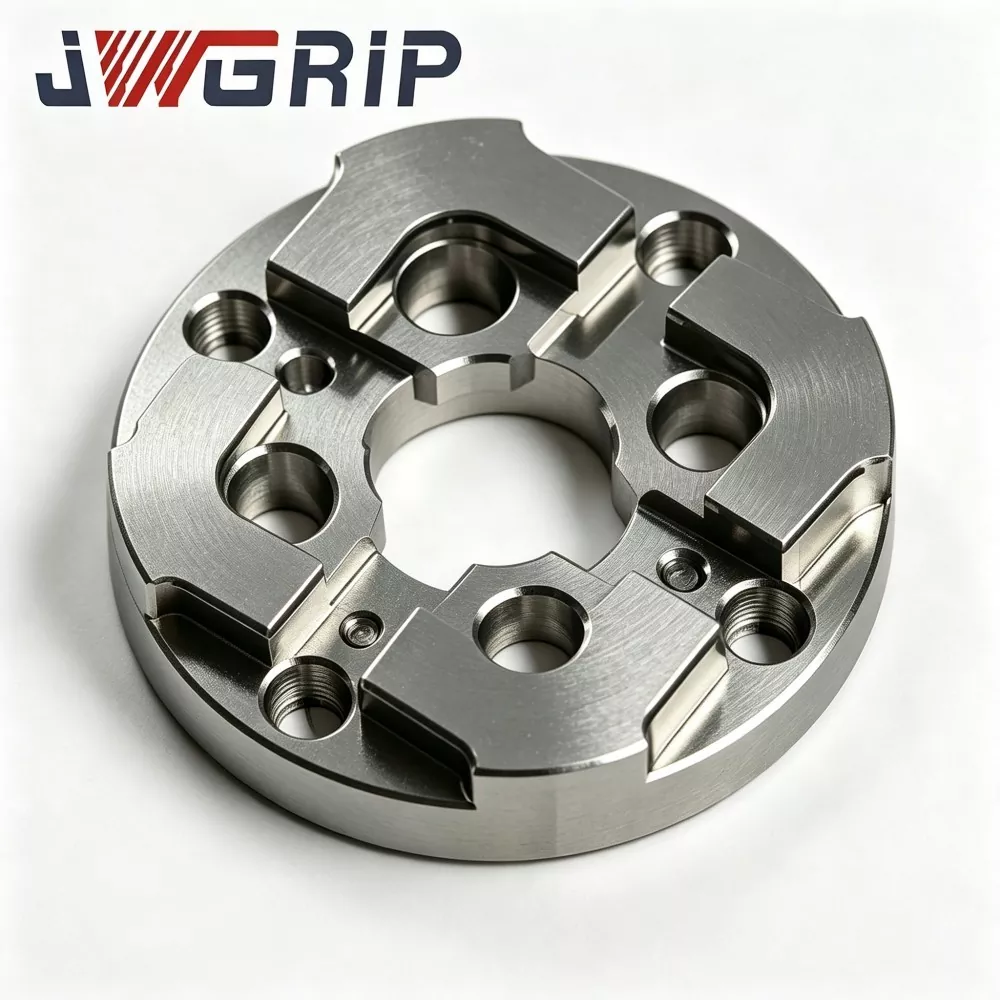
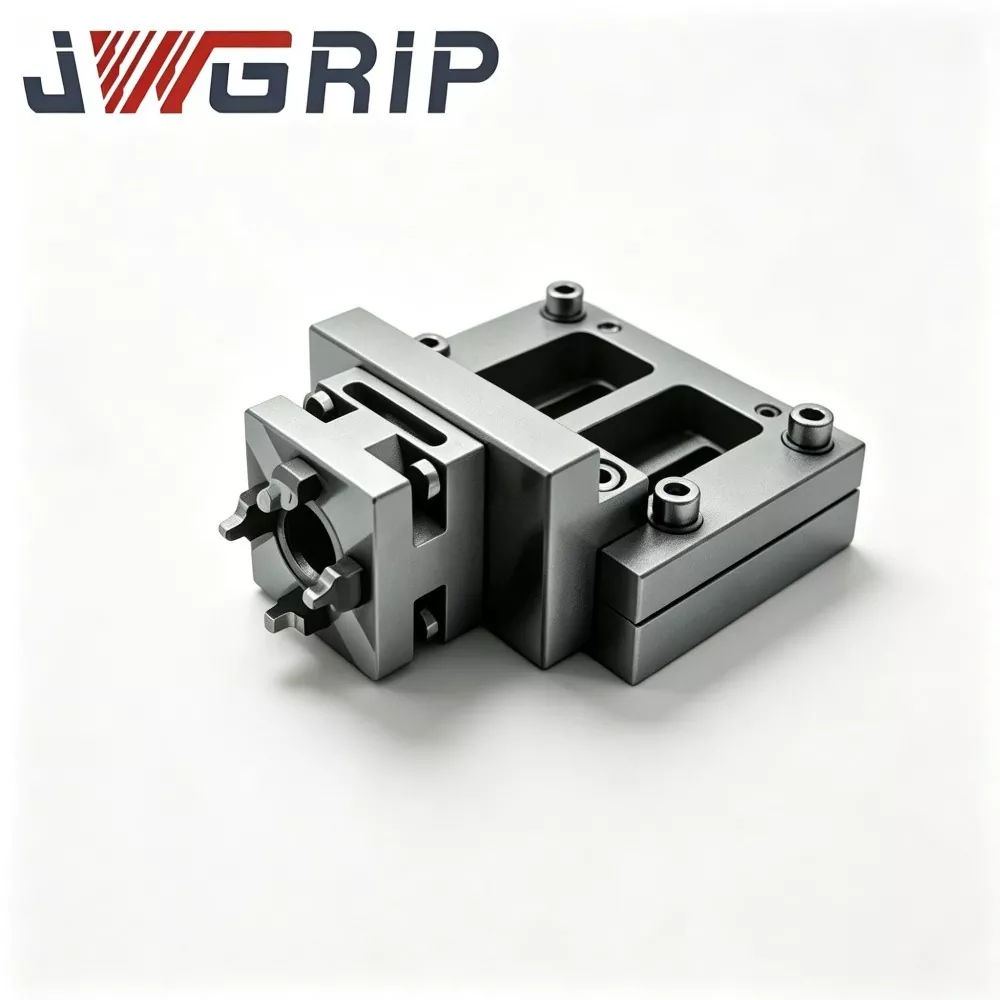
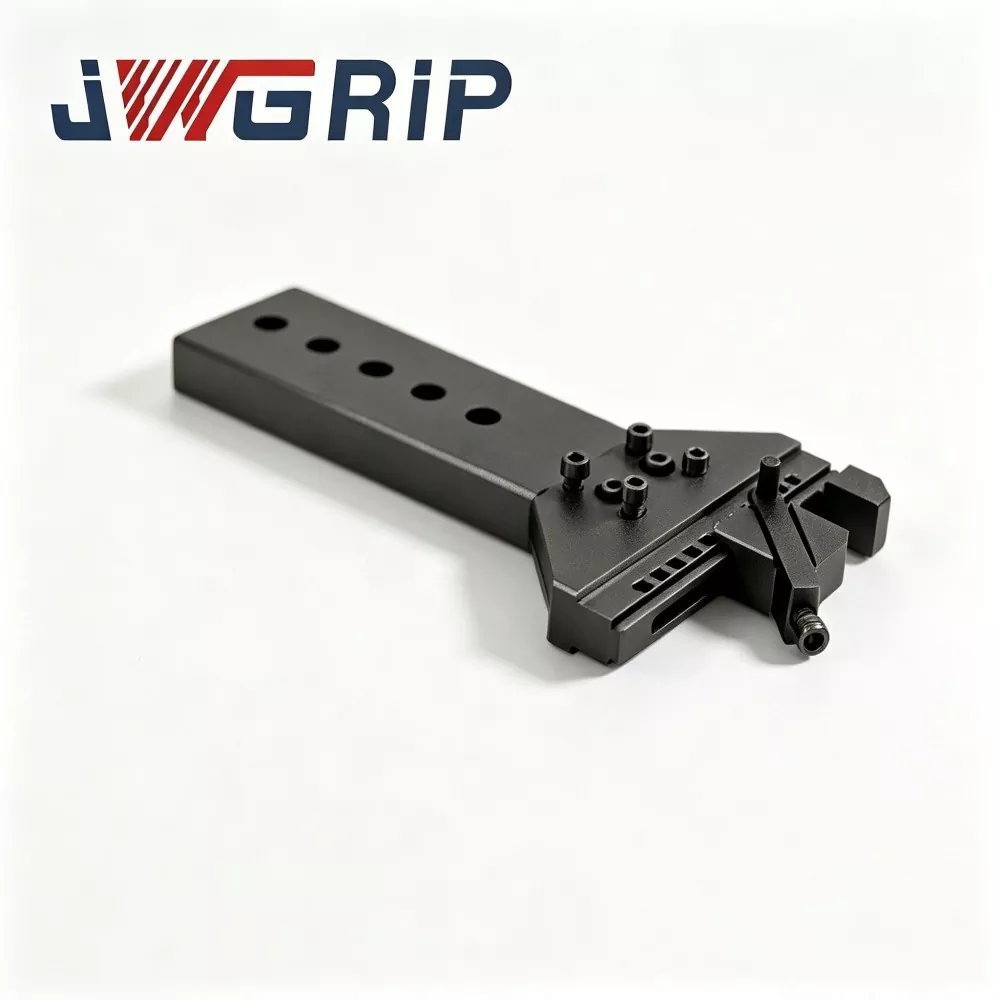
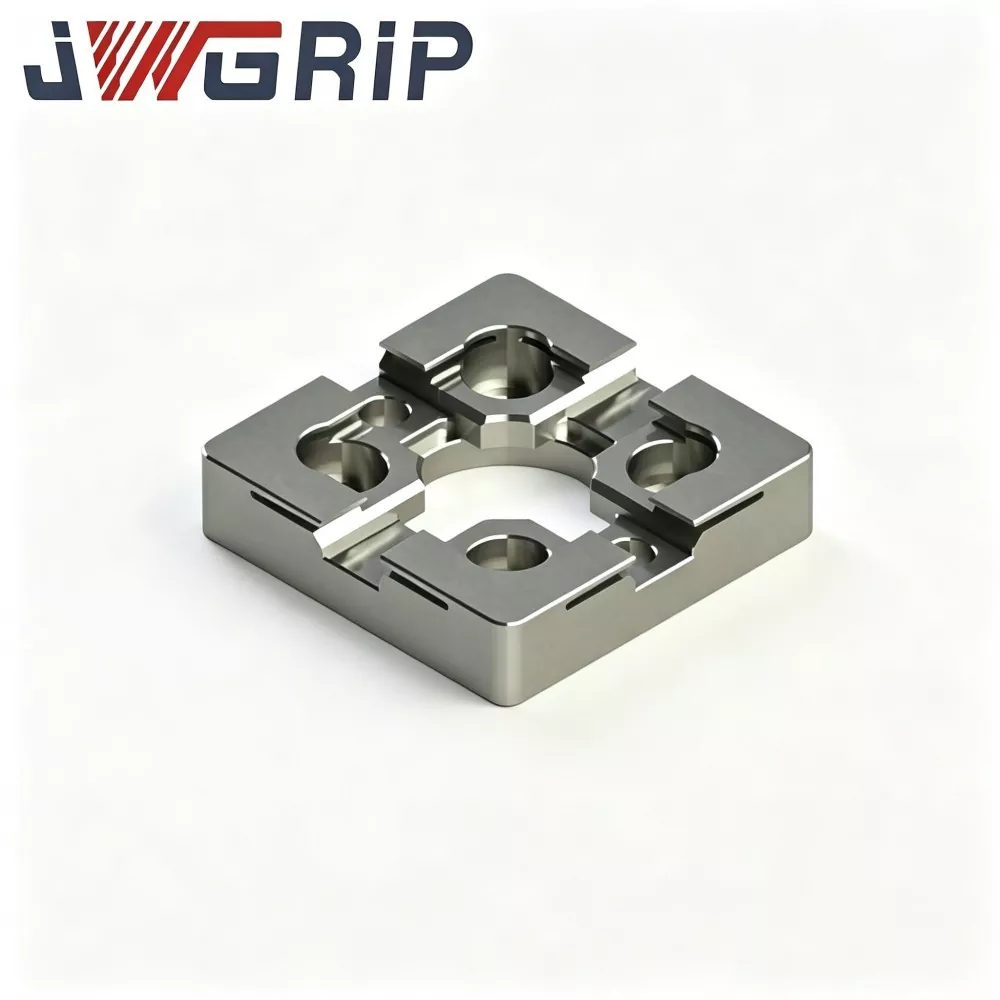
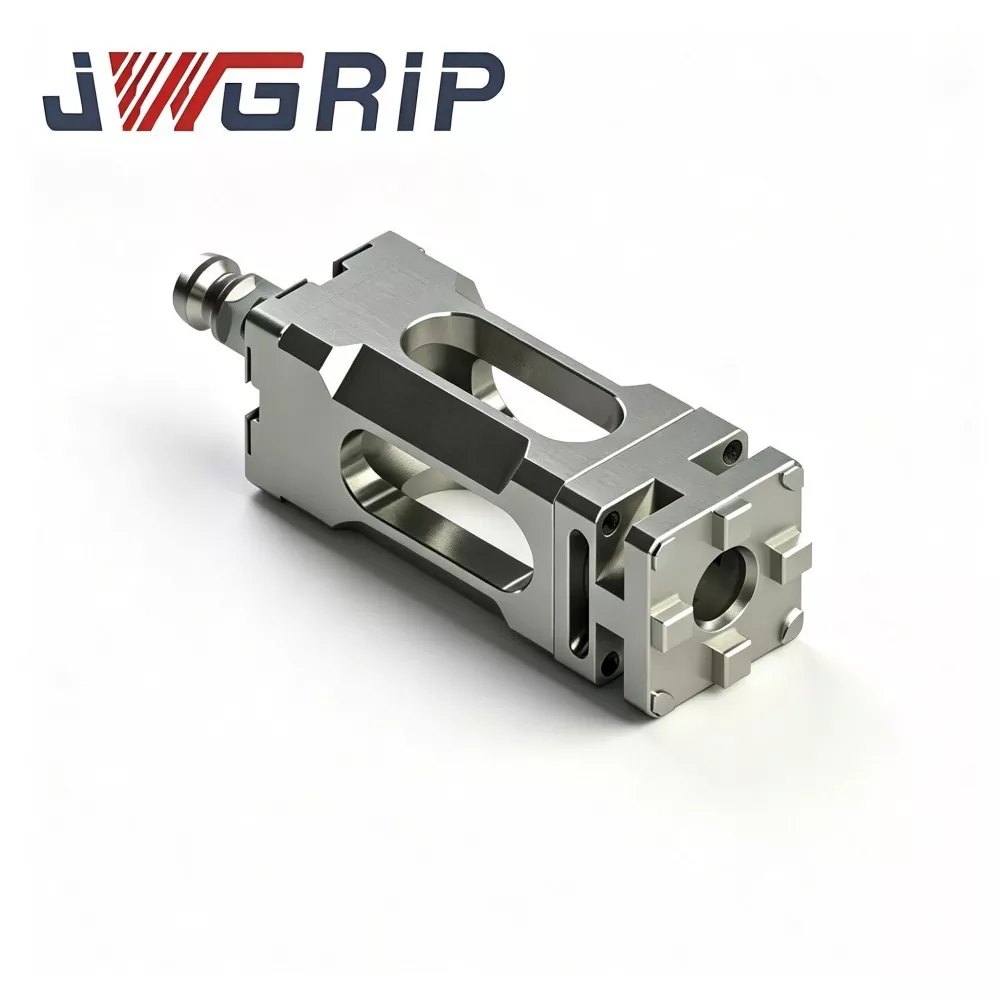
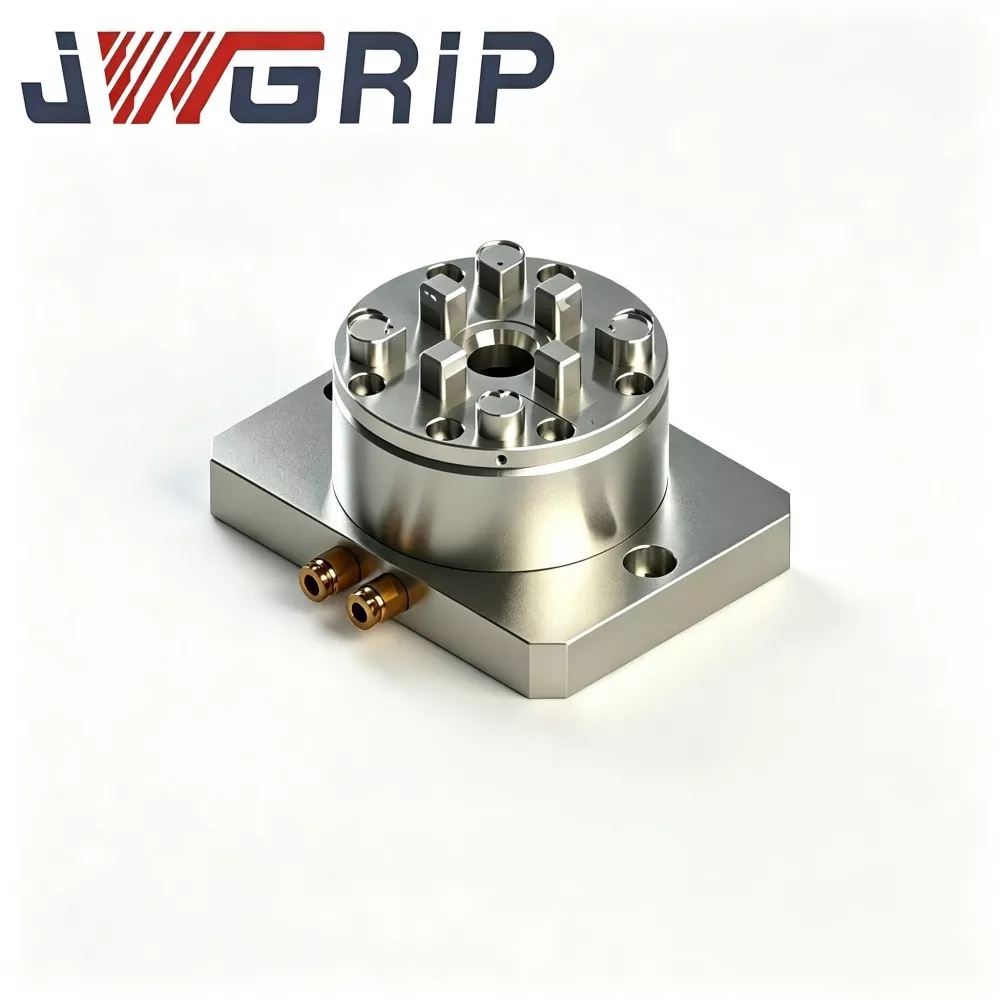
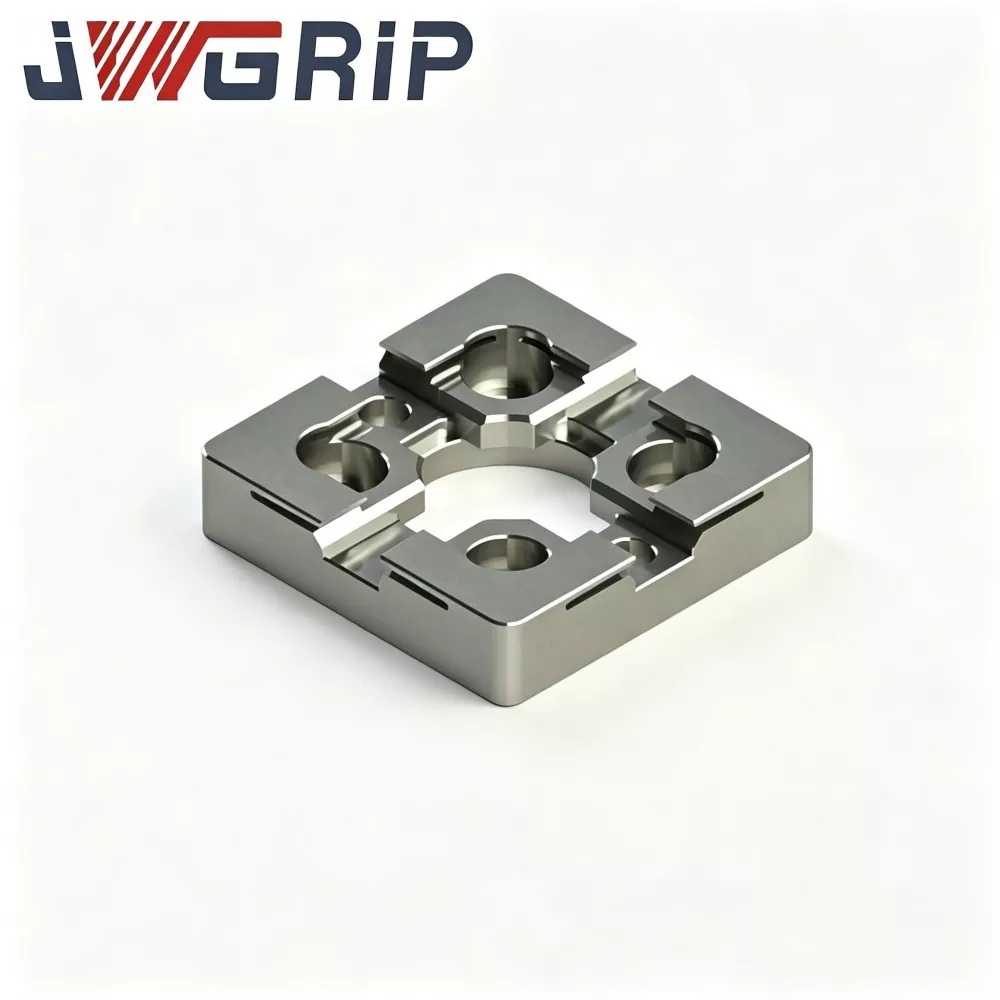
R-Type 54x54 EDM Centering Plate
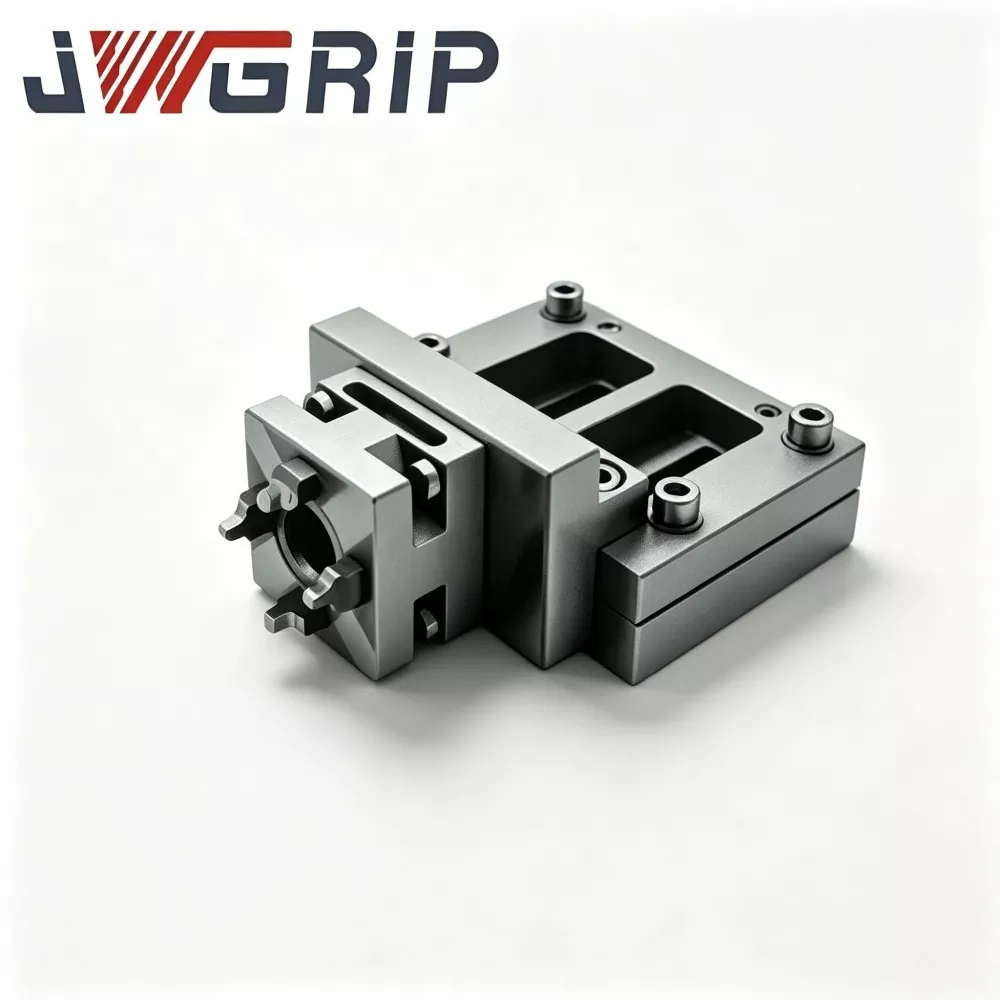
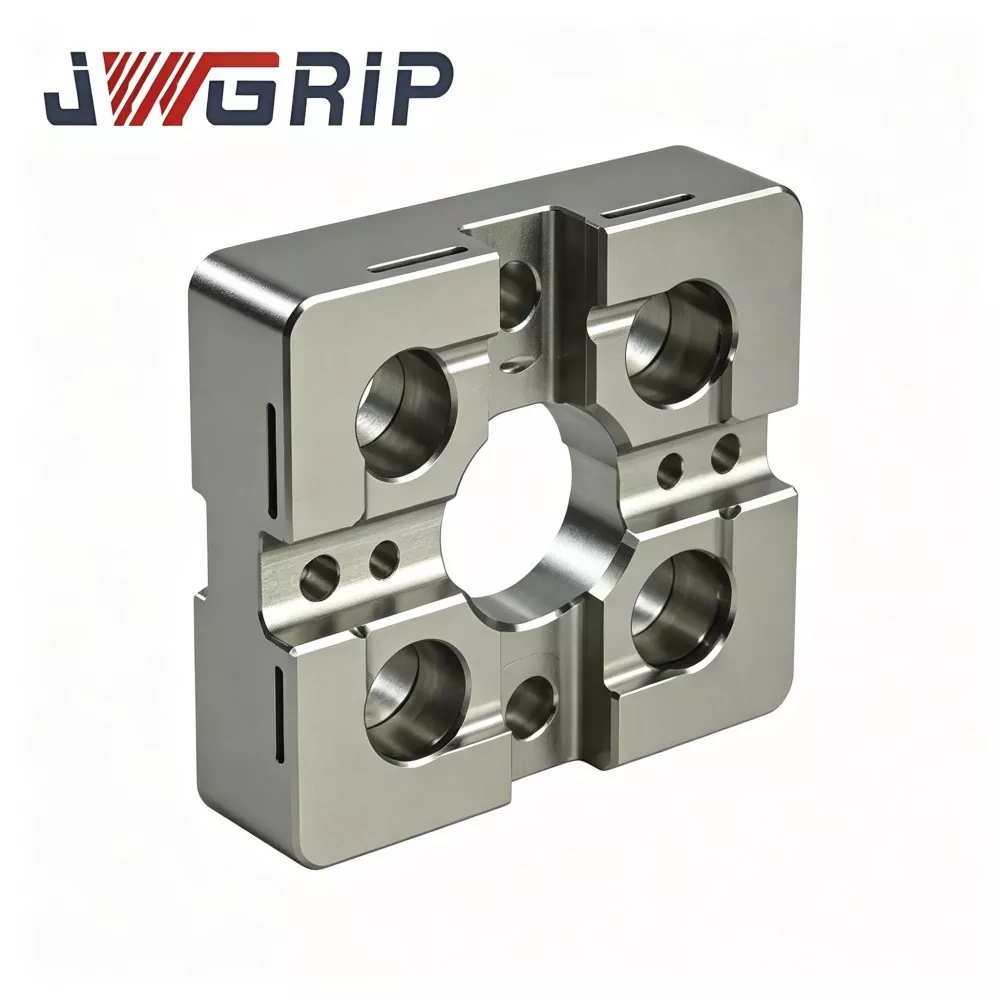
JWGRIP is the professional manufacturer and supplier of R-Type 54x54 EDM Centering Plate in China, with standard specifications fully in Stock and supporting global Bulk Order for compact EDM machine and precision mold workshop projects. It is a wear-resistant high-precision integrated positioning benchmark fixture specially engineered for small-size sinker EDM equipment, mini electrode jigs and multi-cavity precision mold processing scenarios. It integrates optimized R-type transitional positioning shoulder structure and thermally stable mechanical performance into a single unit, eliminating the defects of easy extrusion wear and corner chipping of traditional right-angle miniature centering plates.
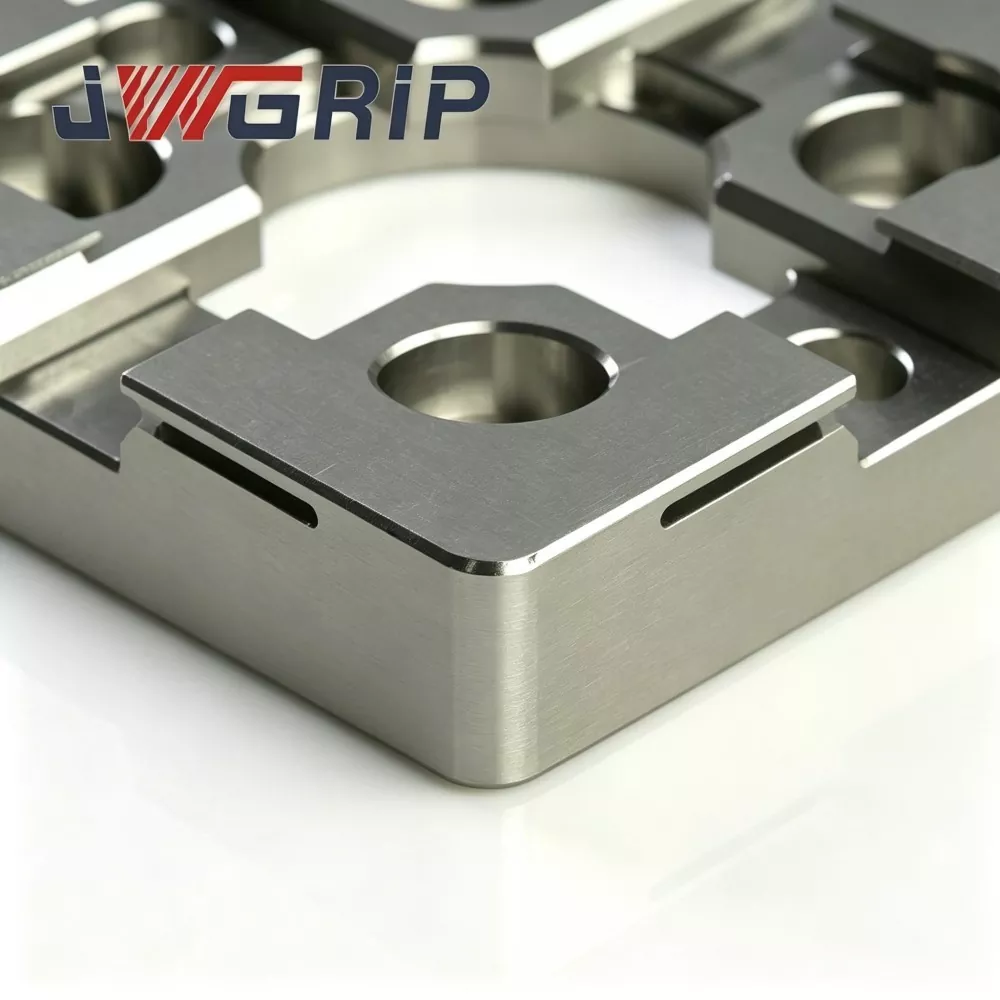
This high-stability R-Type 54x54 EDM Centering Plate adopts premium thermally stabilized alloy tool steel as raw material, processed through multi-cycle stress-relief aging treatment, local surface hardening and ultra-precision double-face grinding technology. The upgraded R-type transitional shoulder structure effectively disperses concentrated contact stress during repeated electrode-jig docking and frequent loading-unloading cycles, greatly reducing indentation damage and corner wear, and permanently retaining stable centering benchmark accuracy. The thermally stabilized steel body effectively avoids structural deformation and dimensional deviation caused by workshop temperature fluctuation, ensuring excellent flatness and long-term dimensional consistency in high-frequency batch production.
It perfectly adapts to the positioning demands of small-size copper, graphite and copper-tungsten electrodes, significantly shortens manual pre-centering time, eliminates accumulated manual calibration errors, and solves the industry pain points of unstable spark gap and defective tiny cavity details caused by worn benchmark. It supports standard stock supply and OEM modification of mounting hole layout and positioning boss profiles, providing reliable and repeatable high-precision positioning solutions for miniature insert and multi-cavity mold EDM batch processing.
Practical Pain Points
Compact sinker-EDM workshops processing micro-connectors and medical miniature molds face inherent drawbacks from conventional small-format centering plates:
Conventional small centering-plates use sharp-angle inner shoulders. Docking impact concentrates stress on narrow corner zones. Invisible micro-indentations are gradually generated, which cannot be detected by routine visual inspection.
Centering reference drifts silently during continuous production, resulting in inconsistent spark gap, uneven cavity side-wall erosion and scrap risk for high-value miniature mold inserts.
JWGRIP optimizes R-Type 54x54 EDM Centering Plate for above-mentioned pain-points:
1. Smooth R-type transitional positioning-shoulder redistributes docking contact stress and lowers micro-indentation & corner-chipping risk under frequent electrode-jig loading-unloading cycles.
2. Thermally-stabilized alloy-tool-steel substrate plus multi-stage aging restrains benchmark distortion triggered by cabinet ambient-temperature fluctuation of compact EDM machines.
3. Double-face ultra-precision grinding guarantees reliable flatness and parallelism for stable mechanical-centering datum.
4. Simplifies manual pre-centering workflow and reduces cumulative positioning error for tiny intricate mold inserts, improving repeat-accuracy for batch micro-mold EDM tasks.
5. Compact 54×54 footprint adapts limited table-space; OEM custom-modification for hole-pattern and positioning-boss is available for special compact automated-EDM-cell projects.
Operating Logic
JWGRIP R-Type 54x54 EDM Centering Plate is a compact mechanical reference fixture dedicated for pre-positioning and concentricity alignment of small-size EDM electrode jigs:
1. It installs between compact-EDM work-table / mini fixture-base and electrode-holding jig. It delivers repeatable mechanical centering datum during frequent swap of miniature copper, graphite or copper-tungsten electrode jigs.
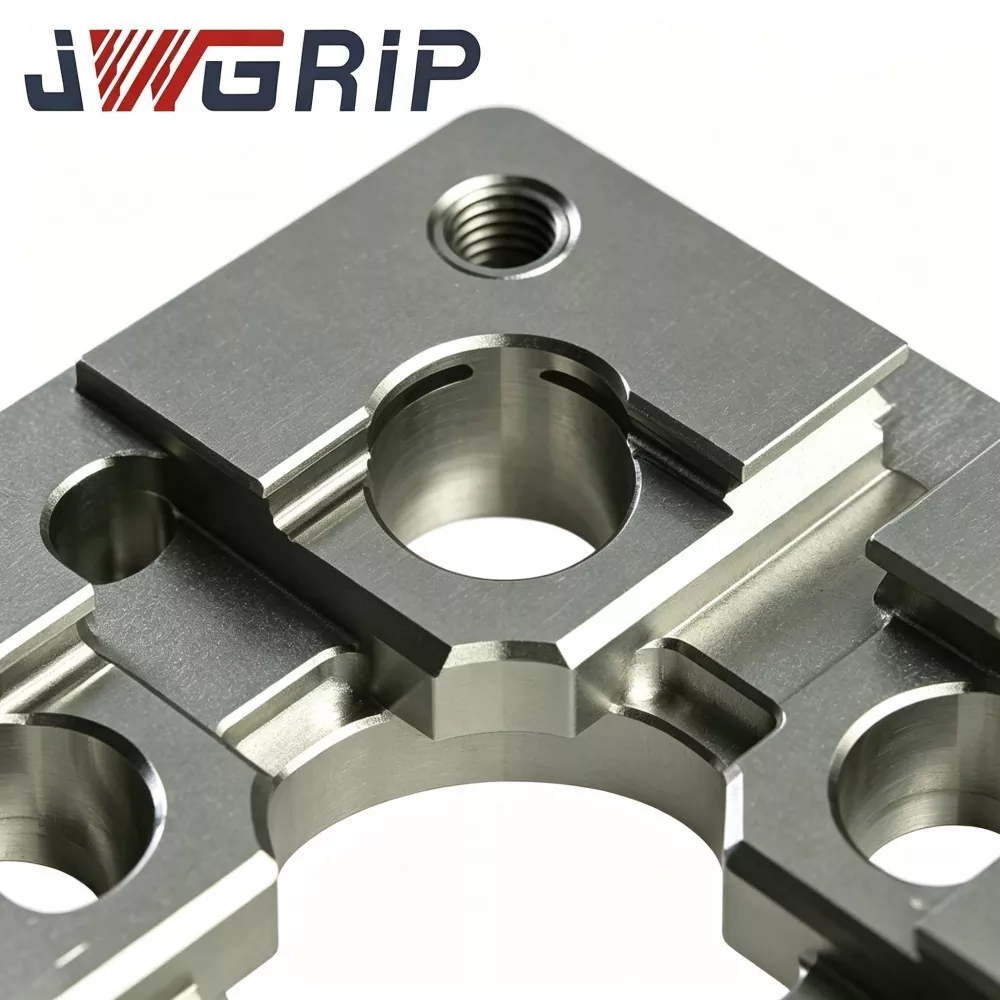
2. Conventional small-format centering-plates adopt sharp 90° inner shoulders. Docking-impact stress concentrates on narrow edge lines, producing local plastic micro-indentation after repeated pressing cycles.
3. Core structural improvement: continuous smooth R-type transitional profile on inner positioning shoulders enlarges effective contact area, spreads contact stress over broader surfaces instead of sharp corner lines. This slows indentation accumulation and delays reference-datum drift.
Important functional boundary reminder:
This unit only provides mechanical pre-centering, and cannot replace probe-based fine coordinate calibration. After mechanical docking, operators still need probe-measurement and coordinate compensation complying with standard EDM process specs.
Main application scenarios:
micro-connector mold, medical miniature-part mold, precision-gear-insert mold and small-size die-casting-insert EDM machining. It can mount on compact zero-point chucks, mini fixture-bases or small sinker-EDM work-tables.
Technical Performance
1. Compact-optimized R-type Shoulder Anti-wear Structure Comparative lab durability test shows, under equal docking-frequency & contact-force, JWGRIP R-Type 54×54 EDM Centering Plate cuts peak local contact-stress by approx.32 % versus traditional sharp-corner small centering plates, greatly lowering micro-indentation and inner-corner chipping risk in continuous batch cycles.
2. Dual-round Thermal-stabilization Aging Treatment Alloy-tool-steel blank undergoes two-stage high-temperature aging post rough-machining to eliminate most internal residual stress. Within workshop ambient-temperature 16-30 ℃, finished-plate flatness variation ≤0.0025 mm, preventing benchmark distortion caused by cabinet temperature drift of compact EDM equipment.
3. Double-sided Ultra-precision Grinding Top working reference-face and bottom mounting-datum are both ultra-precision ground. Top-surface flatness ≤0.002 mm; parallelism between upper-lower datum ≤0.003 mm. Good parallelism supports reversible installation for alternative-surface usage under space-limited compact machine condition.
4. Selective Local Surface-hardening Treatment Only inner R-type positioning-shoulder zones receive high-energy local hardening, surface hardness HRC 57-61. Strong scratch-resistance against carbon-powder & fine metal debris; non-stress-critical base zones retain substrate toughness to avoid whole-plate brittle fracture upon accidental impact.
5. Dielectric-fluid-resistant Passivation Anti-corrosion Finish Whole outer-surface passivation anti-rust treatment. Resists chemical corrosion from splashing dielectric-fluid and high-humidity atmosphere inside compact EDM machine cabinet, retarding spot-rust generation in long-term workshop operation.
6. Space-saving 54×54 Outline With Pre-processed Mounting Features Prefabricated locating-pin holes and countersink screw-holes match mainstream compact zero-point fixture interfaces. Direct installation without secondary machining for most mini EDM fixture-bases.
7. Traceable Batch-level Quality Archive Every finished plate carries laser-etched exclusive serial-number. Complete inspection datasets covering flatness, parallelism and R-profile tolerance are archived, supporting traceable quality-management for micro-mold mass-production enterprises.
Production Workflow
Raw-material incoming composition & hardness verification → CNC rough-milling → first-stage high-temperature stress-relief aging → semi-finish machining → inner R-shoulder contour forming → secondary thermal-stabilization aging → selective local surface-hardening → double-face ultra-precision grinding → locating-pin-hole & countersink-hole finish-machining → CMM multi-item geometric inspection → laser serial-number marking → anti-rust passivation → final visual & dimensional re-check → finished-goods warehousing.
Production complies with ISO 9001 quality-management-system specifications.
Core metrology instruments: CMM, flatness interferometer, Rockwell hardness-tester, all go through periodic official metrological calibration.
Each finished unit is issued independent inspection-report; material-certificate documents can be provided upon buyer’s request.
Daily-maintenance Rules
1. Before mounting, fully clean fixture-base mating-plane, locating-pin holes and plate bottom datum; remove carbon-powder, metal-chips and dielectric-fluid residues. Trapped foreign particles will trigger hidden tilt deviation.
2. Tighten countersink mounting-screws strictly per specified torque. Over-torque creates plate local-deformation; insufficient torque brings plate shifting risk under docking impact.
3. Control electrode-jig moving stroke; prohibit violent crash onto R-type positioning-shoulders; soft-contact docking mode shall be adopted for mechanical pre-centering.
4. After mechanical pre-centering, complete probe-based coordinate compensation following EDM-process specs. Never treat mechanical pre-centering result as final machining datum.
5. Every 6-9 working-days, inspect inner R-shoulder zones under magnifying-glass; replace centering-plate immediately if indentation, scratch or notch is detected.
Fault-prone operations to avoid
1. Installing without thorough cleaning mating surfaces, chips embedded to generate hidden tilt error.
2. Hammer-forced docking, producing invisible micro-indentation on positioning shoulders.
3. Screw over-torque fastening, inducing permanent geometric distortion.
4. Skipping probe fine-calibration and relying purely on mechanical pre-centering for micro-cavity EDM machining.
Fault-check Table
|
Fault Phenomenon |
Probable Root cause |
Suggested Resolution |
|
Repeated centering-reading fluctuation |
Dirty mating-surface;loose mounting-screw;deformed electrode-jig |
Disassemble & clean contact-faces; retighten screws; inspect or replace defective jig |
|
Gradual concentricity offset after continuous running |
R-shoulder suffers wear or micro-chipping |
Check shoulder status under magnifying-instrument; replace unit when wear marks appear |
|
Poor parallelism for docking output |
Over-torque fastening;debris trapped under plate base |
Reinstall following torque-spec; fully clean bottom-seat interface |
Performance & Process Comparison
Most commercial small-format EDM centering-plates adopt sharp-angle inner shoulders without stress-dispersing R-transition. Many competitors cancel secondary thermal-stabilization aging and local selective hardening to cut production-cost.
1. Anti-wear capability: Competitor sharp-shoulder plates easily produce micro-indentation after 350-650 docking cycles. JWGRIP R-type smooth-transition structure greatly enhances anti-indentation performance under repeated jig-docking impact.
2. Internal-stress management: Many rival products omit secondary aging. Post-grinding residual-stress releases slowly under ambient-temperature change and triggers flatness drift. Our dual-stage aging removes most residual-stress to secure long-term geometric stability.
3. Inspection standard: Lots of suppliers only execute partial-dimension sampling-inspection. Every JWGRIP plate undergoes full-item CMM geometric scanning with independent serial-number for complete traceability.
4. Custom-project competence: Many factories only deliver fixed-standard sizes. Supported by mature OEM workflow, JWGRIP implements hole-layout and positioning-boss modification for special compact EDM fixture projects.
FAQ
Q1: Can JWGRIP R-Type 54x54 EDM Centering Plate realize zero-wear performance for long-run mass-production?
A1: Optimized R-transition greatly slows indentation and chipping risks, yet absolute zero-wear cannot be achieved after massive docking cycles. Magnifier-aided periodic inspection for inner R-shoulders remains mandatory. Replace the plate immediately once scratch, indentation or notch is detected.
Q2: Can this compact centering-plate be used for heavy-weight large-size graphite-electrode jigs?
A2: This unit is designed for small-miniature electrode jigs of compact EDM machines. It is not recommended for heavy-duty large graphite assemblies. Excessive load accelerates shoulder wear and may bring permanent deformation risk.
Q3: Do you support OEM for non-standard hole-pattern and customized positioning-boss geometry?
A3: Yes. Please submit complete technical-drawings with clear specs for hole-arrangement, positioning-boss profile, flatness and parallelism tolerance. Engineering team completes manufacturability assessment within 12 working-days and issues formal quotation.
Q4: Which failure conditions are excluded from warranty scope?
A4: This belongs to high-precision positioning work-holding component. Warranty covers manufacturing-originated defects existing upon delivery: out-of-spec flatness, parallelism and hardness. Damage induced by collision, over-torque installation, chip-abrasion and normal cyclic-usage wear is outside warranty.
Hot Tags: R-Type 54x54 EDM Centering Plate Supplier
Related Category
Send Inquiry
Contact Info
-
Address
No. 44, Daning Entrepreneurship Road, Humen Town, Dongguan City, Guangdong Province, China
-
Tel
-
Email
Welcome to send inquiry to JWGRIP. Our professional technical and sales team will provide free fixture selection, customized solution design and accurate quotation.