Professional Robot Quick Change Gripper Series Manufacturer for Industrial Automation
As an automation-focused retrofit supplier of Robot Quick Change Gripper Series, JWGRIP delivers tray coupling adapters, robot-end gripping modules and articulated grabbing arms with mechanical fatigue testing and standardized batch production for CNC workshops and automation integrators pursuing partial-line automation while keeping existing manual-operation workholding infrastructure. This robot-side switching hardware removes major upgrade barriers without full fixture replacement. Paired with UPC Zero Point Positioning Series and Zero Point Pallet Series, it builds complete automated material-handling workflows for seamless workpiece transfer between robot-operated and manual-setup stations. Strict mechanical locking stroke and positioning-pin tolerance controls are applied in mass-production to guarantee long-term locating stability under mixed manual-automation production conditions.
Fault Message
A large number of machine shops already own mature manual fixture systems. When plant managers plan to introduce robotic handling, they often assume that purchasing a robot arm alone will deliver lights-out production results. In reality, robot bodies are only motion-executing devices. Without matched end-effector switching hardware, robots cannot reliably grab, lift and locate existing pallets and fixtures on the production site.
What negative consequences come from poorly-matched robot gripping hardware?
Loose coupling, offset grabbing position, or accidental pallet dropping may occur during high-speed robot movement. Many automation projects suffer low uptime not because of robot controller faults, but due to incompatible connection hardware between robot flange and workpiece carriers.
How do you preserve existing manual-setup workflows after adding robot hardware?
Many early automation transformation schemes force workshops to choose full-automatic mode and abandon convenient manual intervention. In real-world small-batch-mixed production, operators still need to manually load special-shaped blanks, inspect semi-finished parts or handle emergency workpiece disassembly.
Is robot-end switching hardware only applied for fully-unattended mass production?
This is a common misunderstanding. It also delivers great value for semi-automated hybrid-mode workshops. Operators can finish complex manual preparation work offline, and robots take charge of repetitive pallet transporting tasks.
Functional Differences
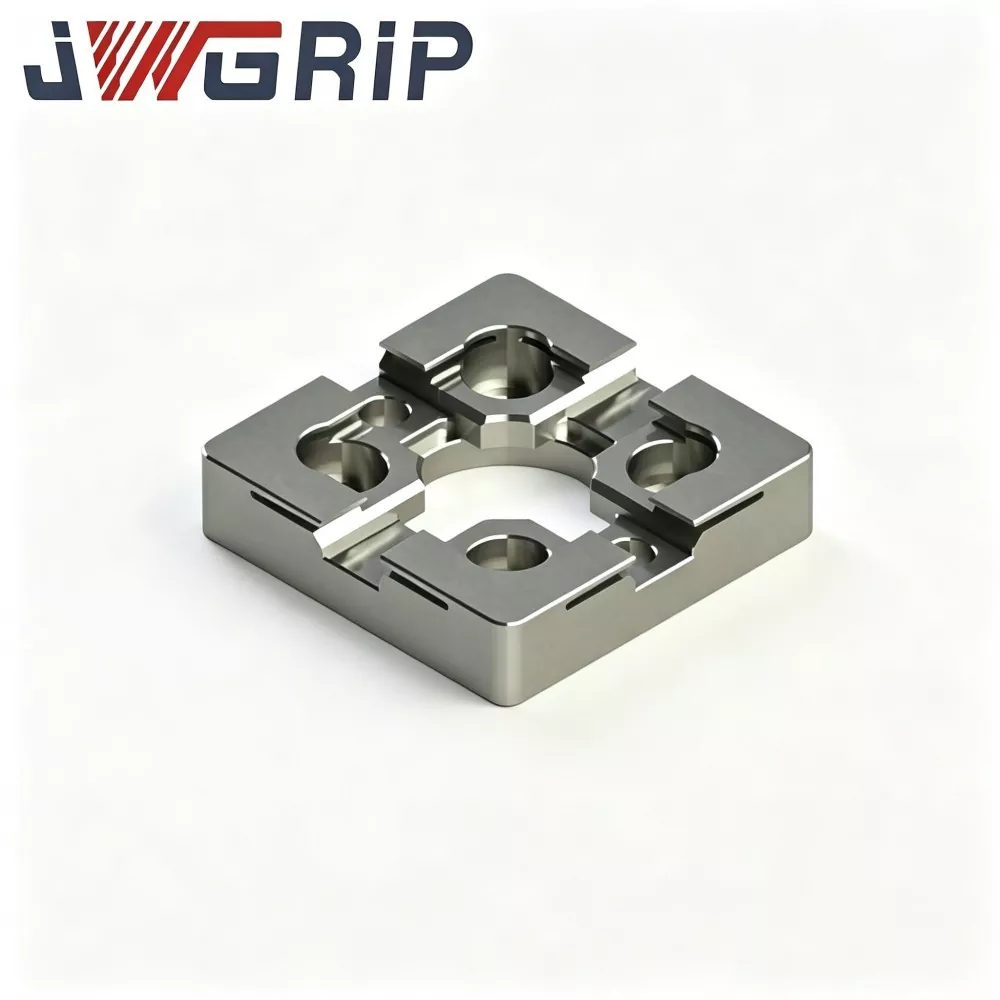
Robot Quick Change Gripper Tray Coupling: This intermediate connecting component establishes stable mechanical matching relationship between gripping modules and target pallets. It absorbs minor position deviation generated by robot motion positioning errors, avoiding rigid collision damage between mechanical structures during high-speed transfer cycles.
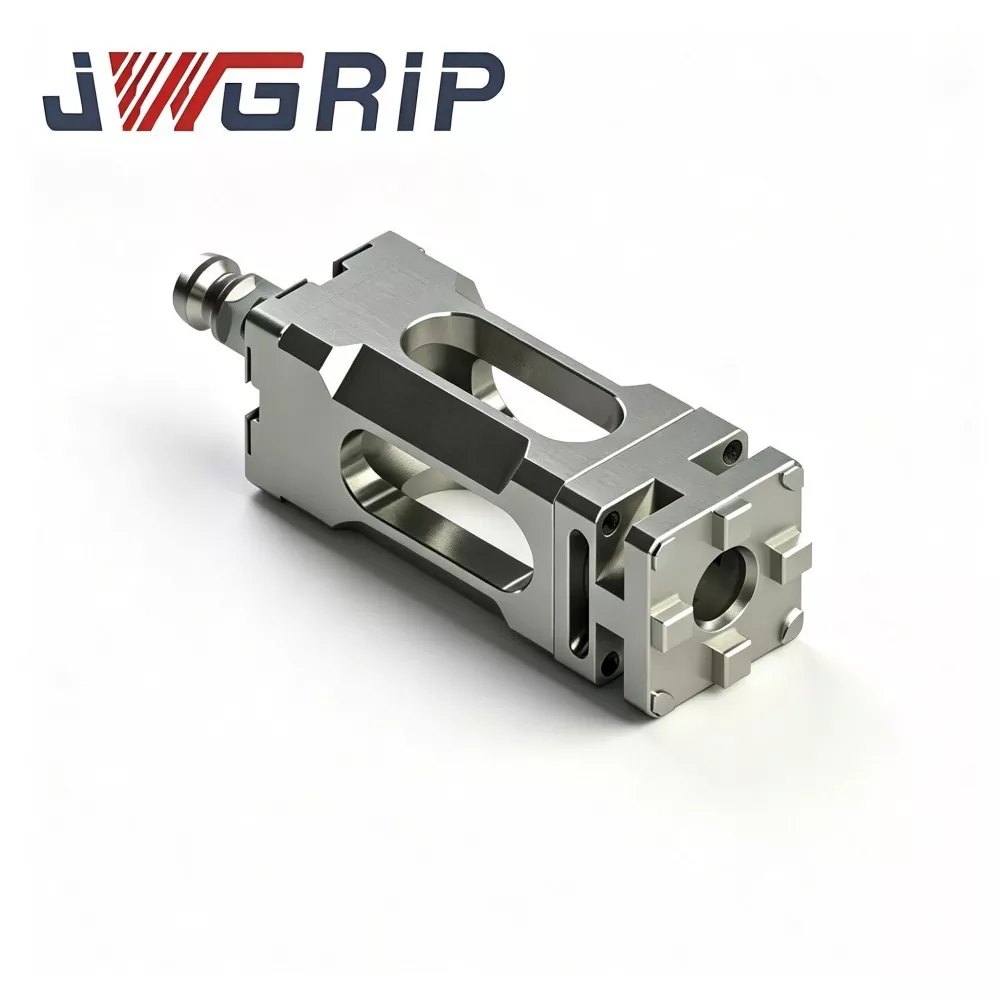
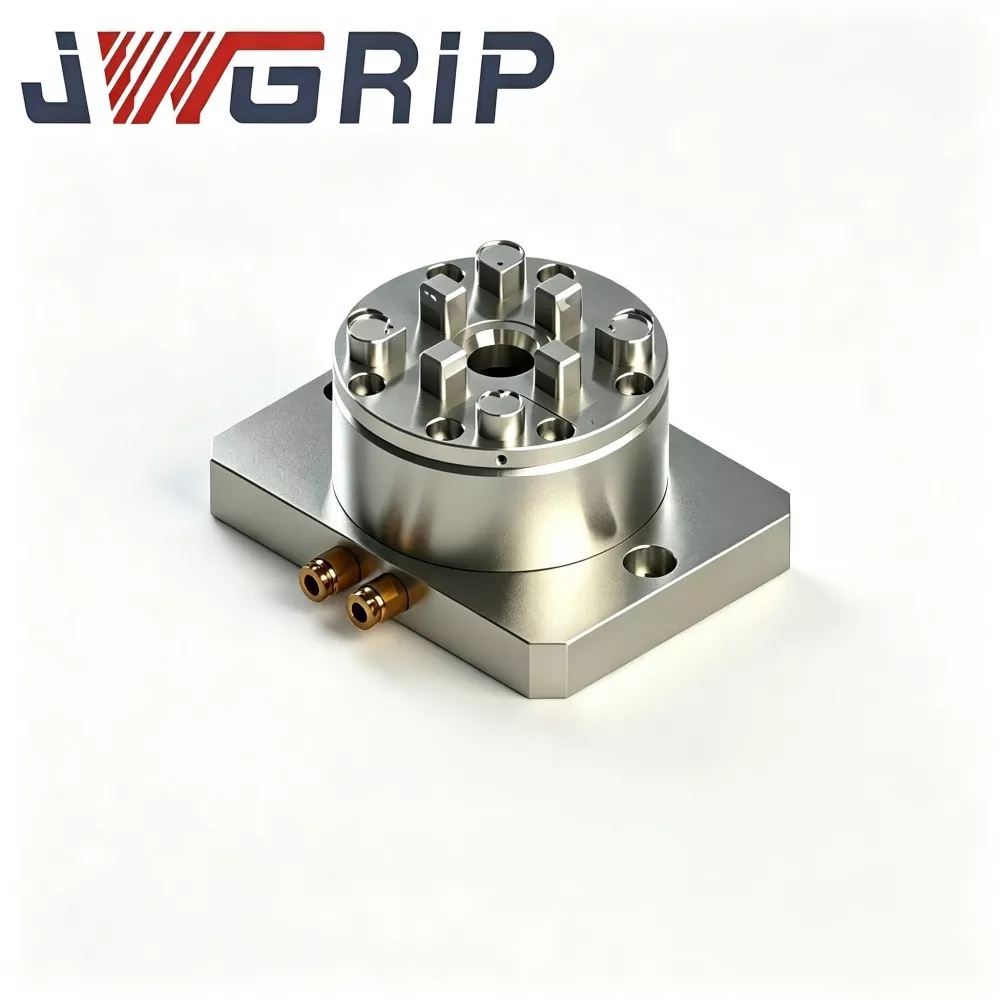
N160 Robot Quick Change Gripper Module: This core flange-mounted module serves as the base unit installed directly on robot output flange. It provides standardized locking interface for subsequent grabbing arms, allowing fast swapping of different end tools without modifying robot program parameters repeatedly.
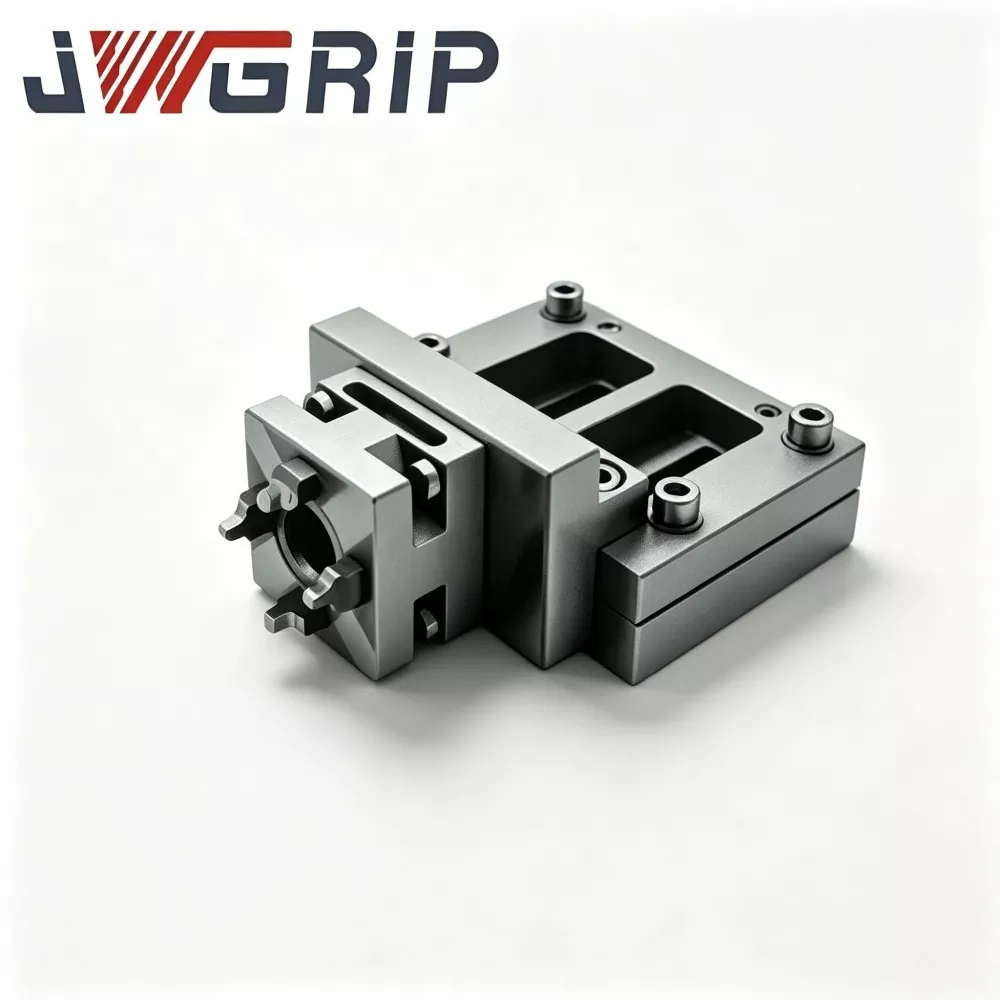
N160 Hinge Linkage Arm for Robot Quick Change Gripper: The movable executing arm that physically contacts pallet outer contours. Its structural outline is optimized according to pallet edge geometry, providing stable wrapping-style grabbing force. It prevents slipping under acceleration and deceleration during robot trajectory movement.
Core Evaluation Indicators
How to confirm whether the rated load matches actual production demands?
Users cannot merely refer to robot-arm nominal load data. They need to calculate total weight including gripper module, linkage arm, pallet, fixture and raw workpiece. Exceeding composite load will accelerate mechanical wear and induce hidden dropping risks.
Why is repeat positioning accuracy of gripping action equally important as zero-point chuck accuracy?
Even if machine-side chucks possess micron-level precision, if the robot gripper produces large position deviation during picking and placing pallets, the overall system accuracy will be greatly reduced. Gripper-side positioning error will be passed on to the whole workholding loop.
What environmental factors should be considered for robot-end hardware?
Robot end-effectors work inside machine-tool peripheral zones, splashed by cutting coolant, metal chips and oil mist. Hardware surface treatment and sealing performance must resist corrosion and chip-jamming inside joint moving positions.
How to realize seamless docking with peripheral zero-point workholding hardware?
What prerequisites are needed for cooperating with UPC Zero Point Positioning Series?
Keep consistent outer-contour grabbing dimensions for target pallets. The hinge linkage arm geometry must correspond to UPC-series pallet edge structure, so that robots can complete stable picking action for robot-compatible pallets.
What benefits are brought by matching with Zero Point Pallet Series?
With the tray coupling adapter, robots can also handle ordinary manually-used pallets. Shops do not need to replace all existing pallets to realize semi-automated transformation, protecting previous hardware investment.
What hidden risks should be avoided in hybrid-mode operation?
Prevent mixed usage of pallets with different outer dimensions in one robot working area. Different outline sizes will cause incorrect grabbing positions. Strict pallet classification management should be carried out on-site.
Hardware material and process characteristics
Main structural bodies of gripper modules and linkage arms adopt high-strength alloy steel. Key contact and locking surfaces receive carburizing quenching and precision grinding. Each finished component passes repeated grab-release cyclic fatigue testing before shipment. Structural deformation is strictly controlled under rated full-load conditions.
Flange connection dimensions follow mainstream industrial robot interface standards. Key installation hole positions maintain interchangeability, reducing secondary modification work during on-site installation.
Custom-adaptation services cover grabbing stroke adjustment, special flange conversion plates and anti-wear surface treatment, to fit non-standard pallet outlines and various robot brands.
Application Notes
Robot-side gripping components bear frequent acceleration-deceleration impact during every movement cycle. Chip accumulation inside hinge joints will increase motion resistance and produce grabbing offset. Periodic joint cleaning and lubrication must be incorporated into daily equipment-maintenance checklists. Continuous operation without routine upkeep will gradually degrade grabbing stability, even for well-engineered automation components.
- View as
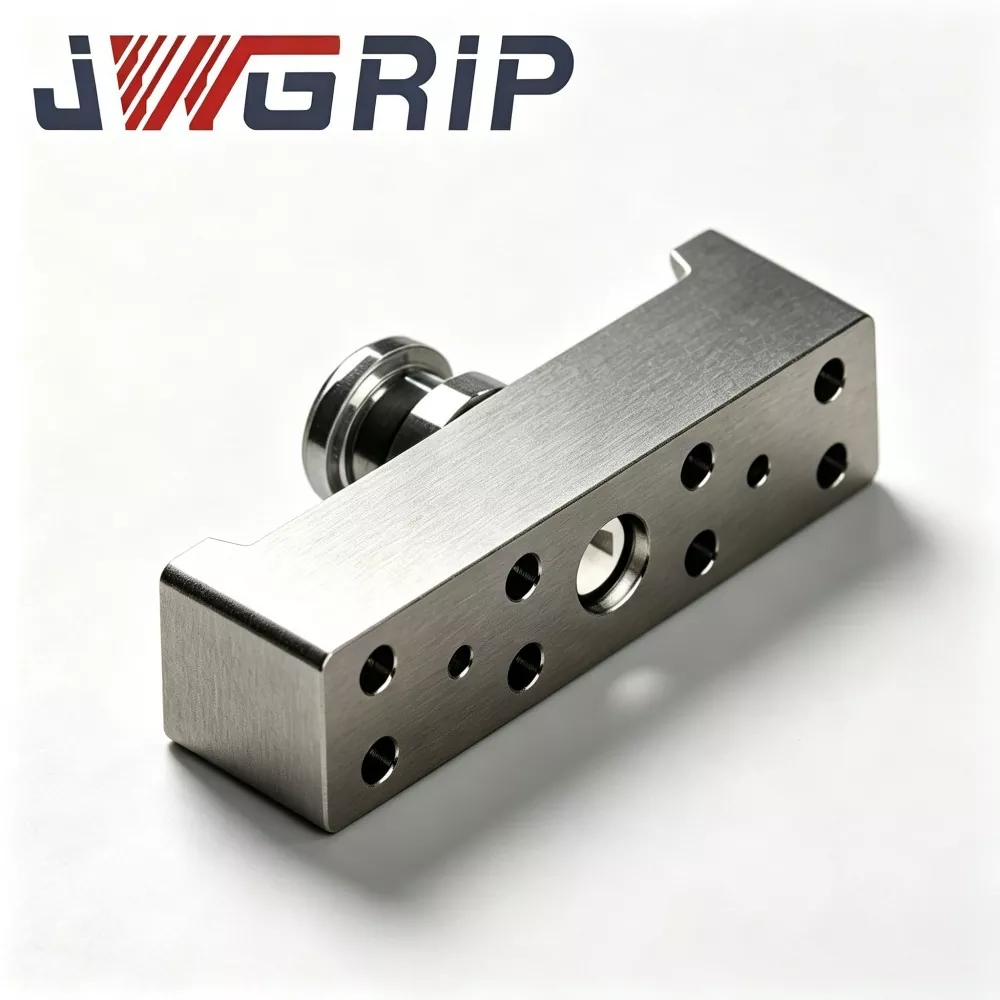
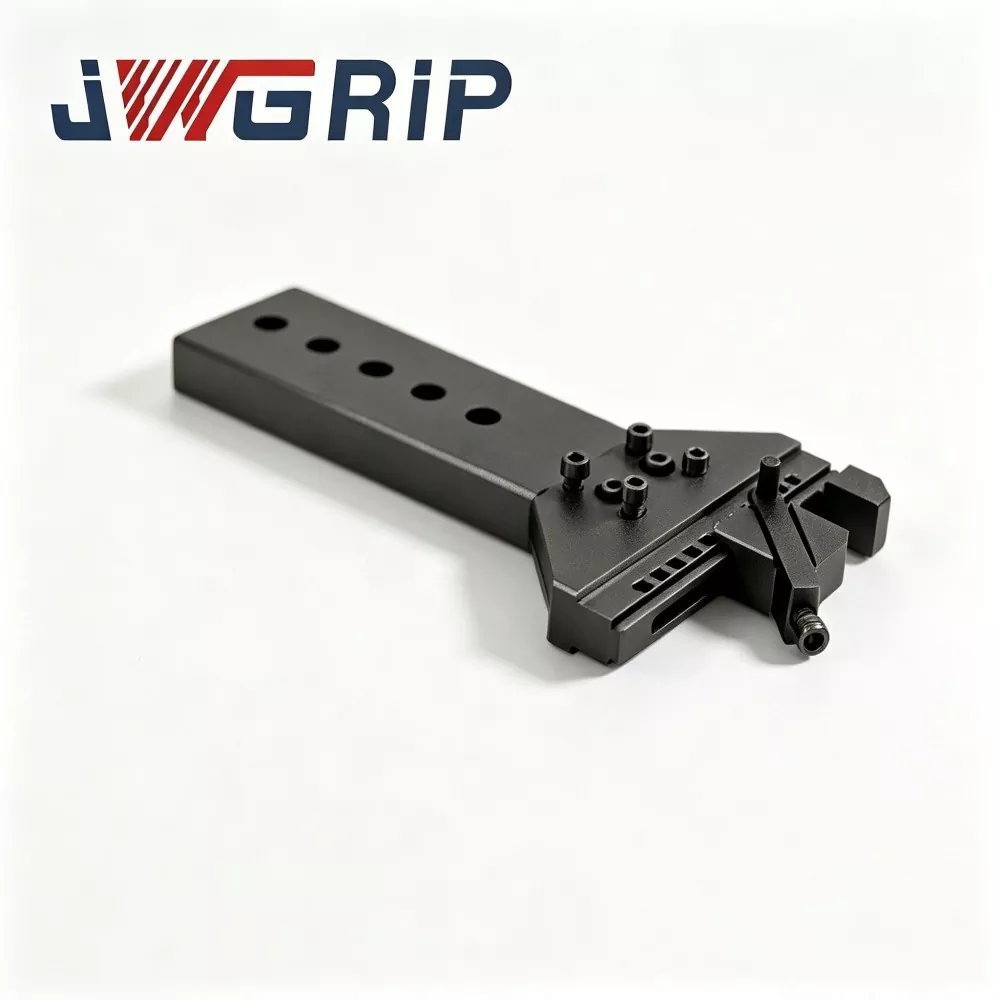
N160 Hinge Linkage Arm for Robot Quick Change Gripper
JWGRIP is the professional manufacturer and supplier of N160 Hinge Linkage Arm for Robot Quick Change Gripper in China, providing Factory Direct service with standard products fully in Stock to support global automation project deployment and workshop maintenance. It is a high-performance core force-transmission hinge rocker component specifically engineered for N160 series robot quick change gripper modules. It integrates the optimized force transmission structure and hot-forged integrated forming technology into a single functional unit, serving as the key kinematic part that converts linear piston driving force into gripper jaw swinging clamping motion.
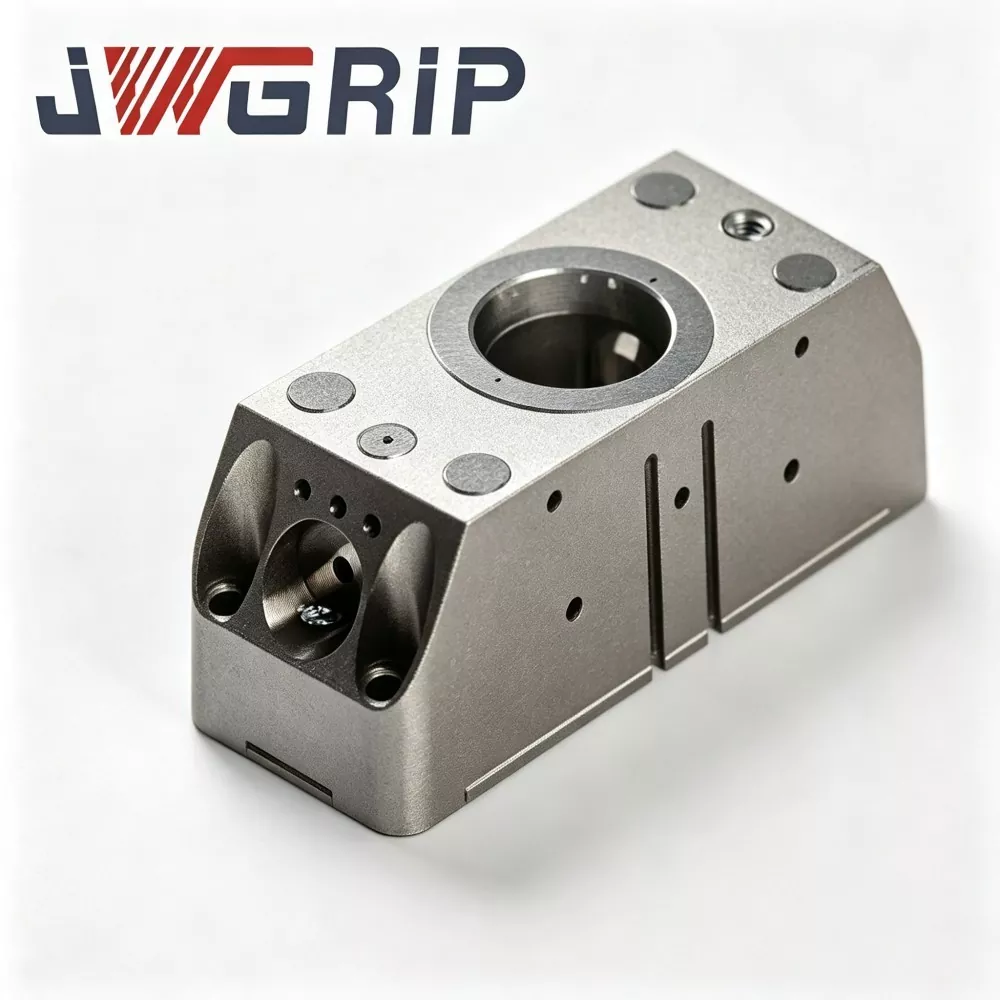
N160 Robot Quick Change Gripper Module
JWGRIP is the professional manufacturer and supplier of N160 Robot Quick Change Gripper Module in China, supporting Bulk Order procurement and providing genuine Factory Price for global automation project partners. It is a newly upgraded integrated robot end-of-arm execution unit specially designed for modern flexible unmanned production lines. Innovatively integrating pneumatic parallel gripper and robot quick-change interface into a single modular body, it eliminates the need for separate quick-change discs and independent gripper assembly, requiring no additional multi-layer connecting flanges or transitional accessories.
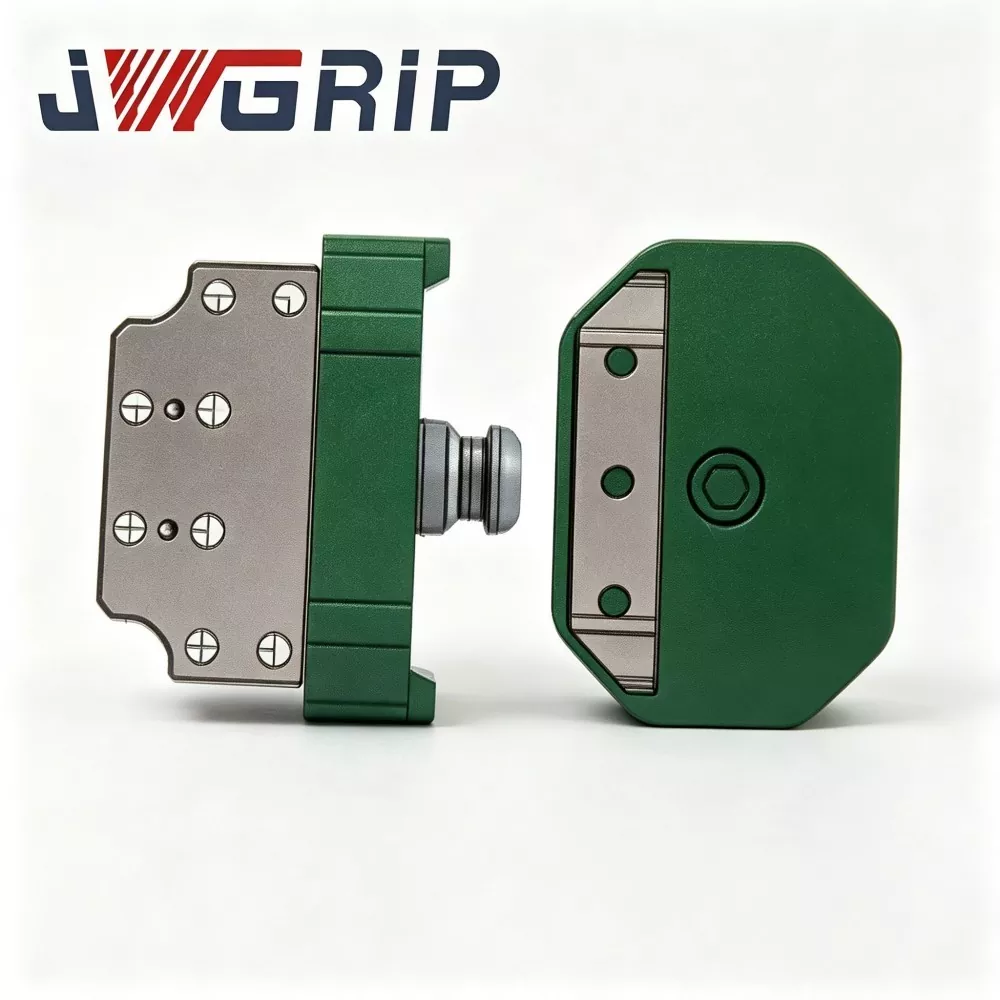
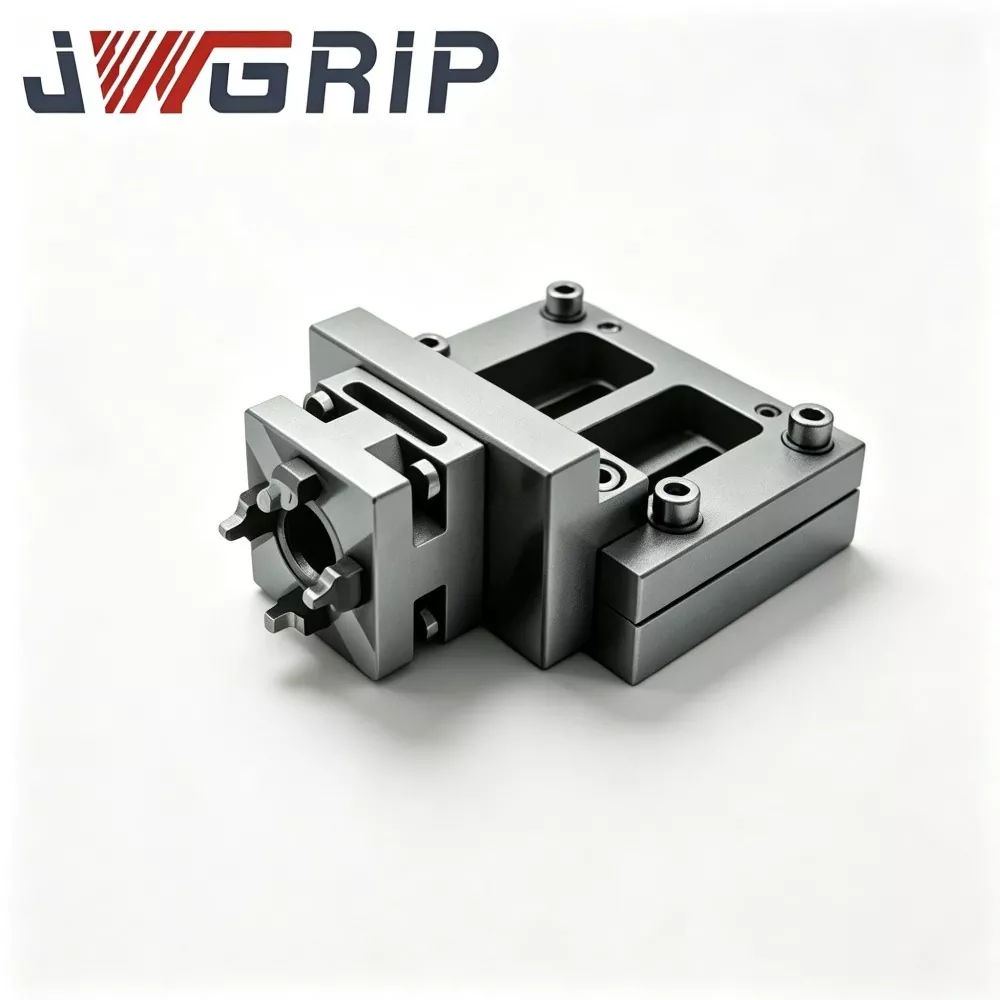
Robot Quick Change Gripper Tray Coupling
JWGRIP is the manufacturer and supplier of professional Robot Quick Change Gripper Tray Coupling in China. It is an advanced integrated robot end-effector switching component specially designed for flexible unmanned automated production lines. It integrates high-strength alloy steel structural configuration and precision grinding process into a single unit, realizing fully automatic robot tool switching without manual intervention during the replacement of grippers, trays and other end tools.
JWGRIP is a professional Robot Quick Change Gripper Series manufacturer and supplier in China. We warmly welcome you to wholesale high quality products at competitive price from our factory.