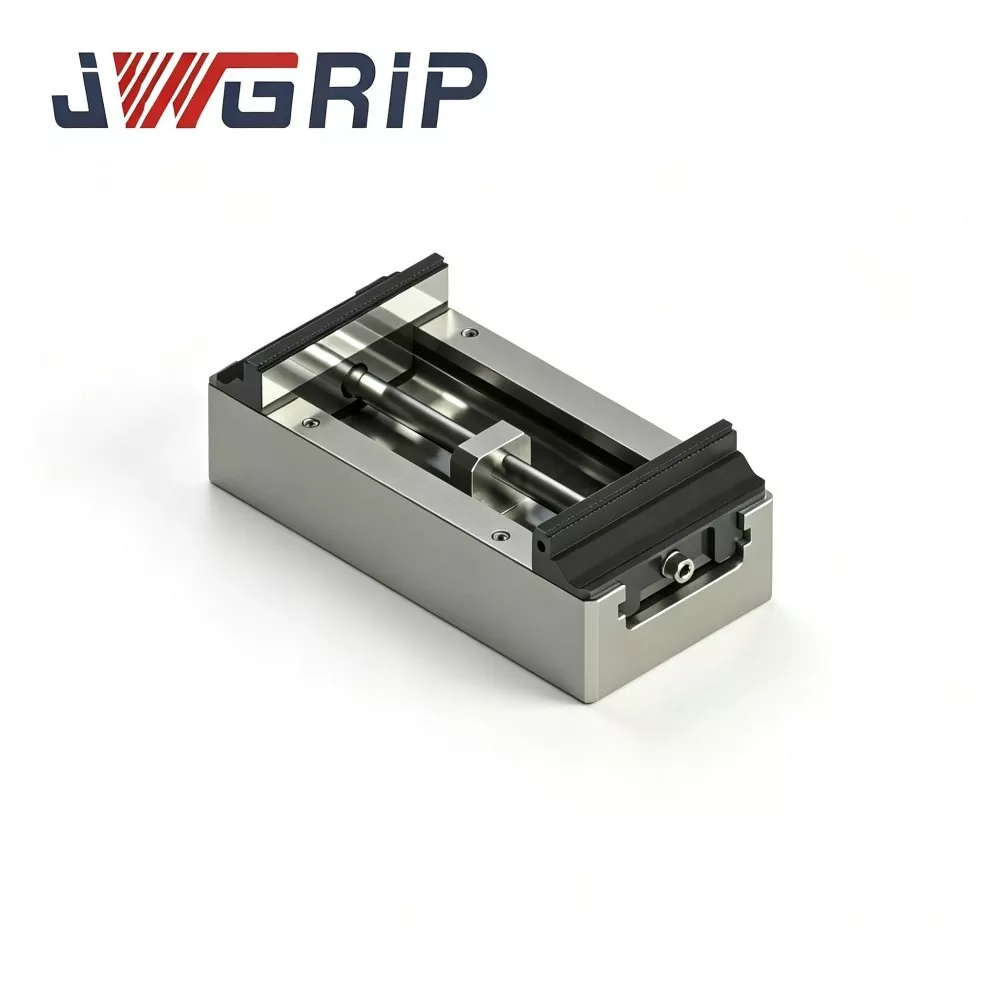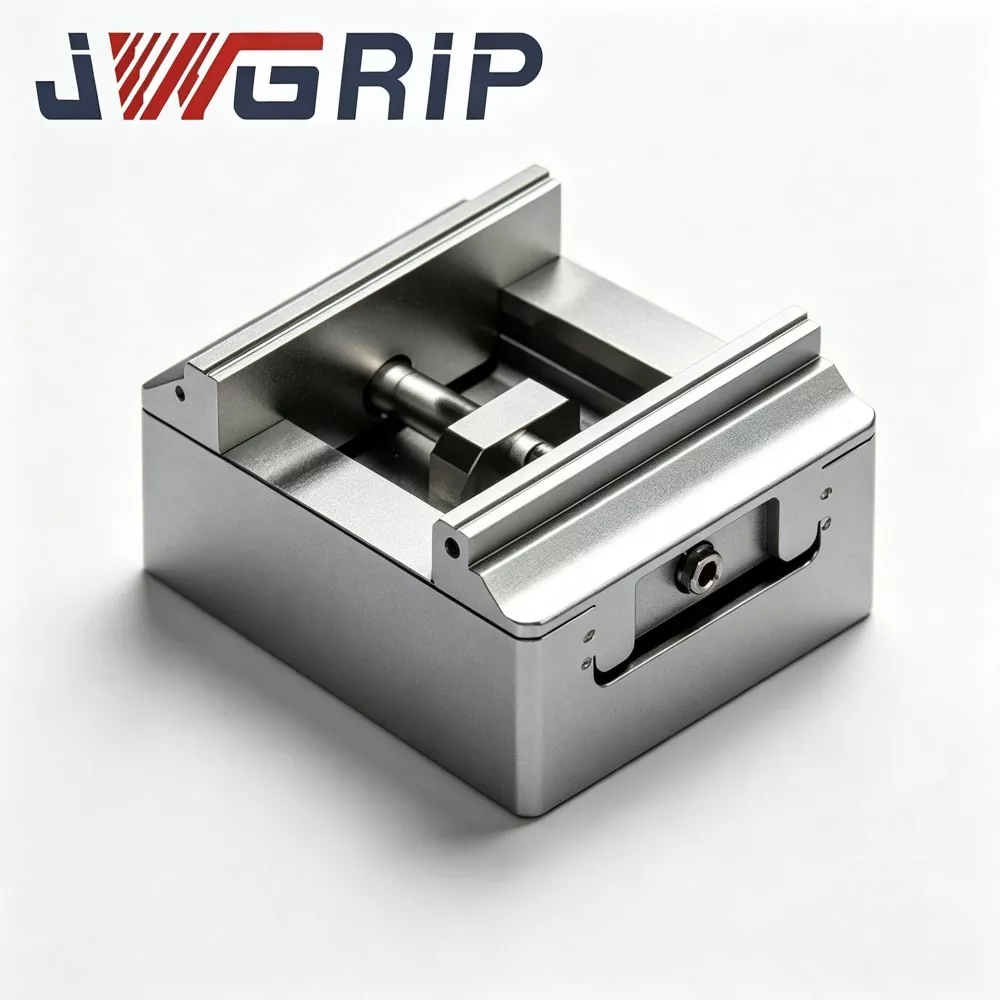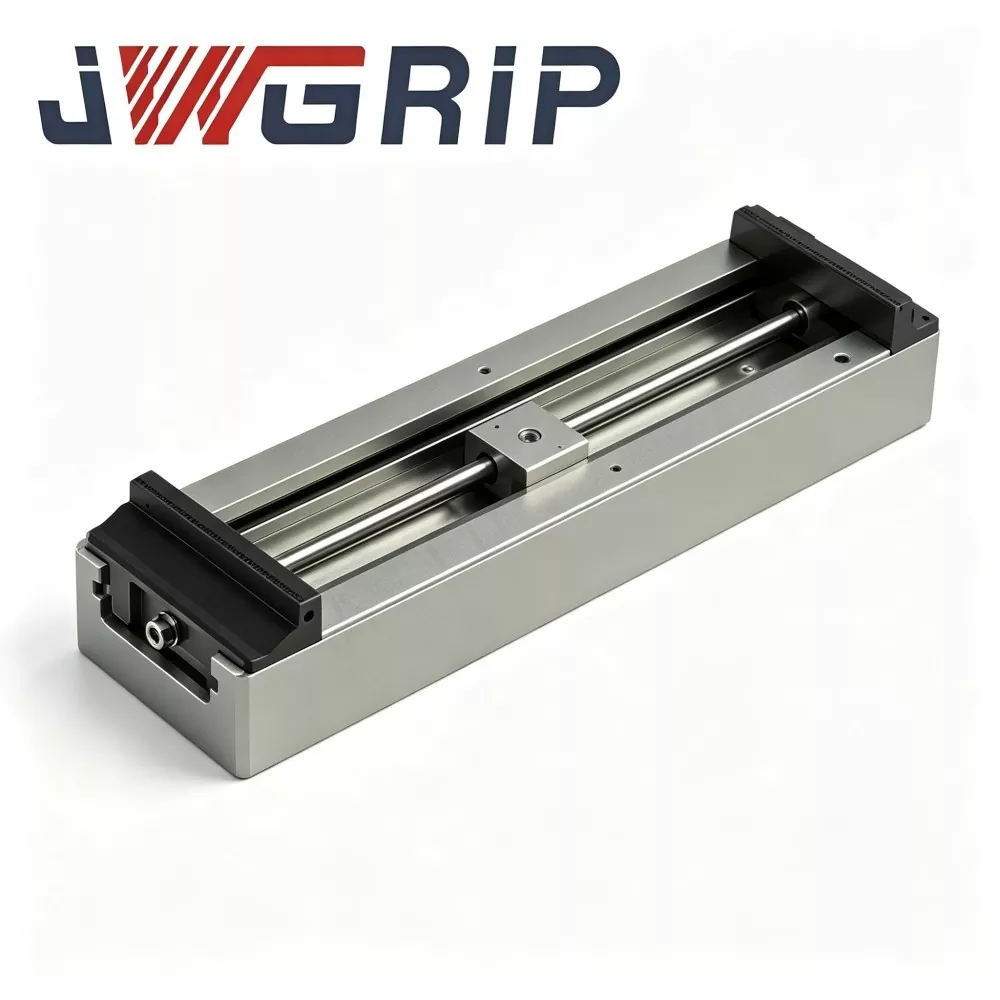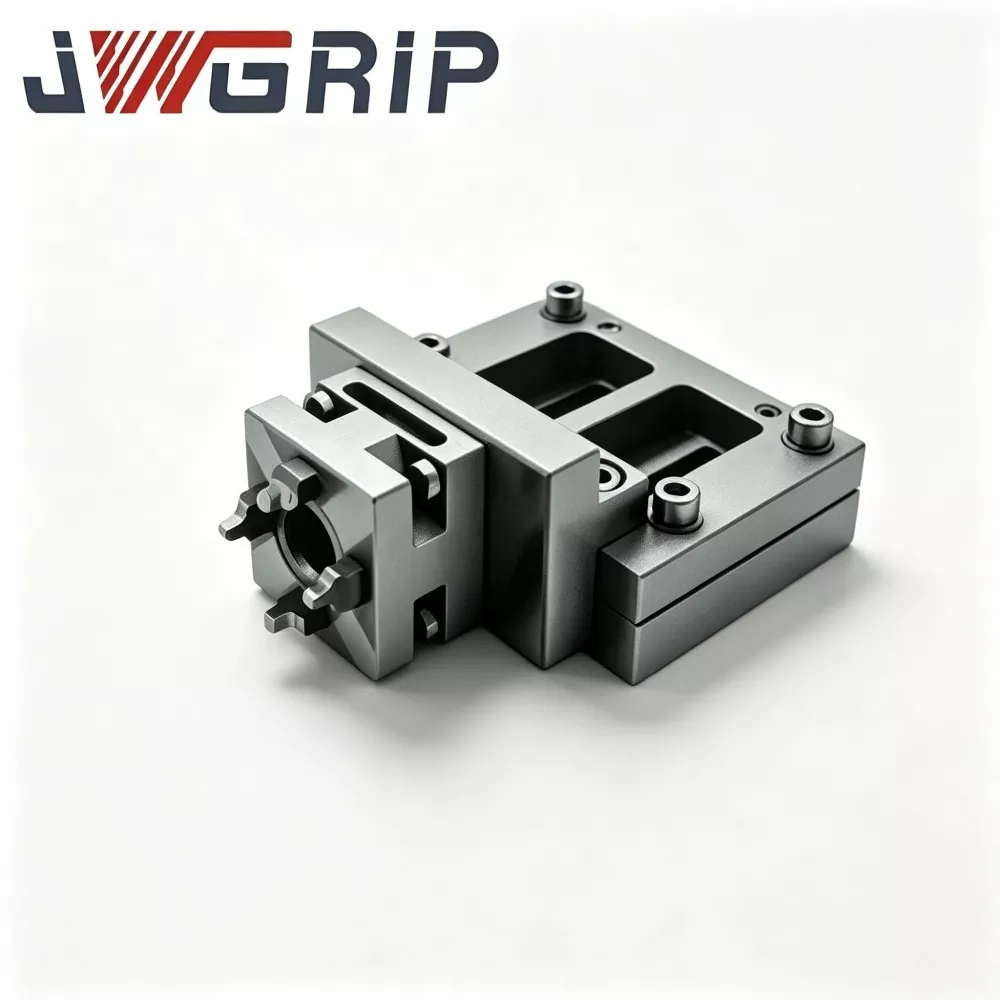
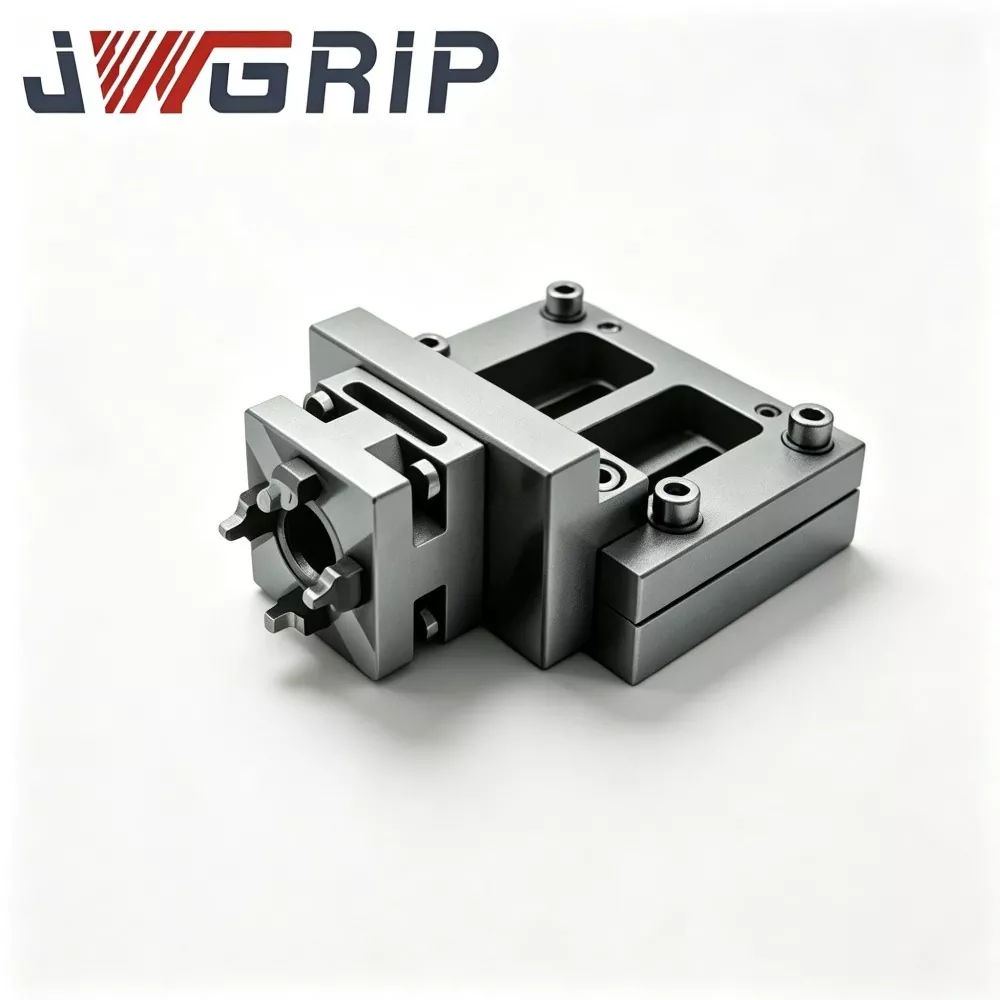
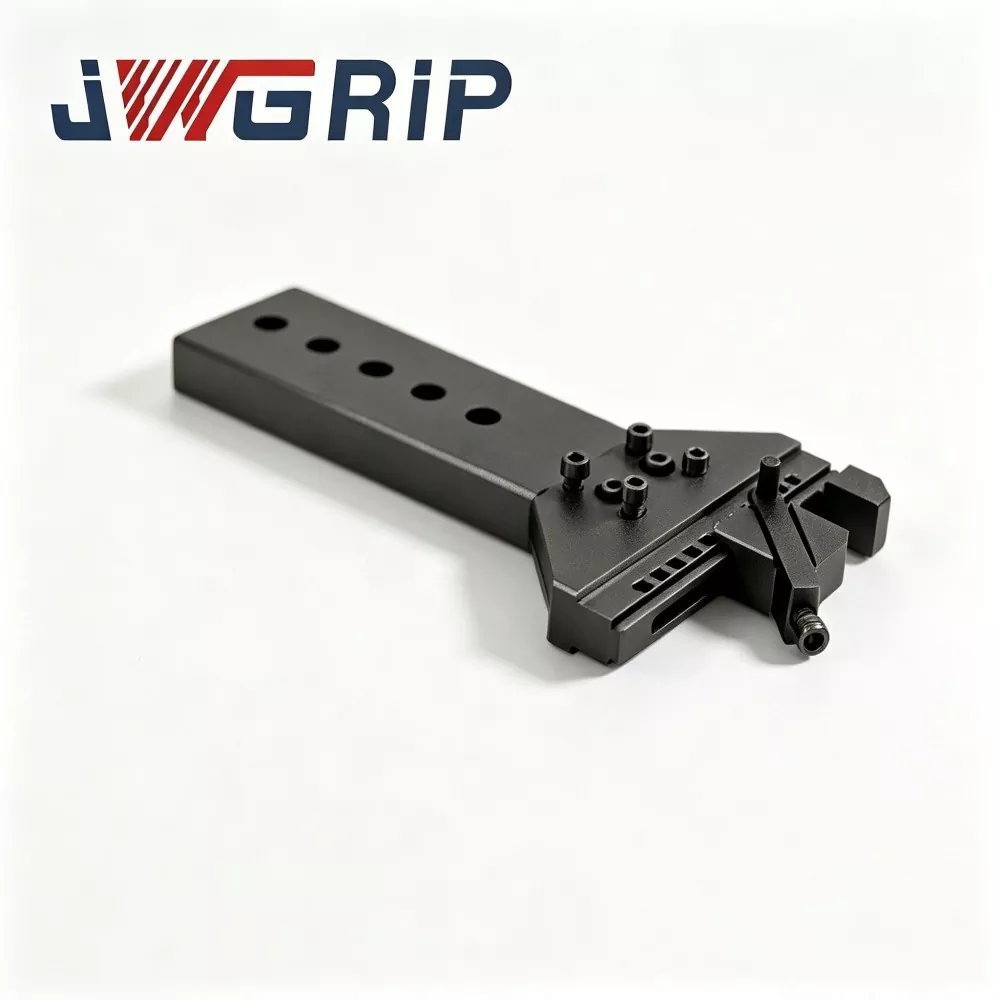
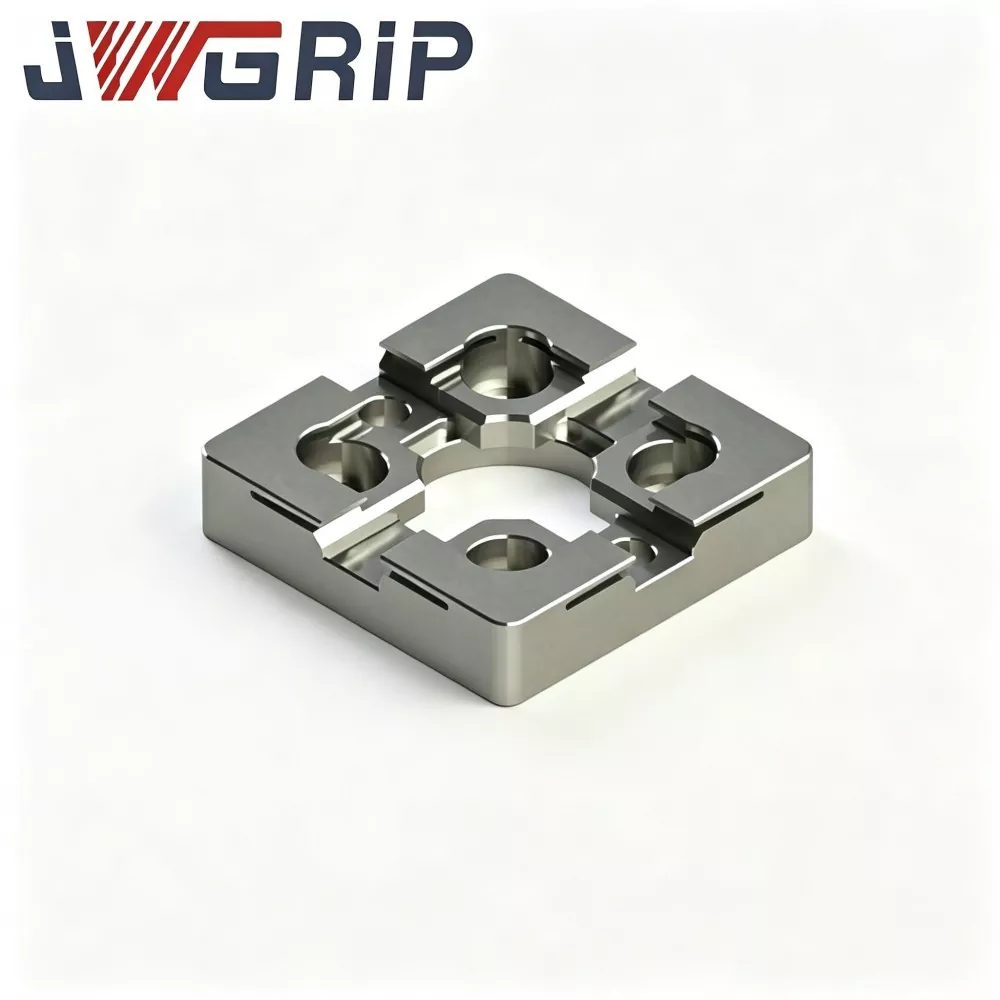
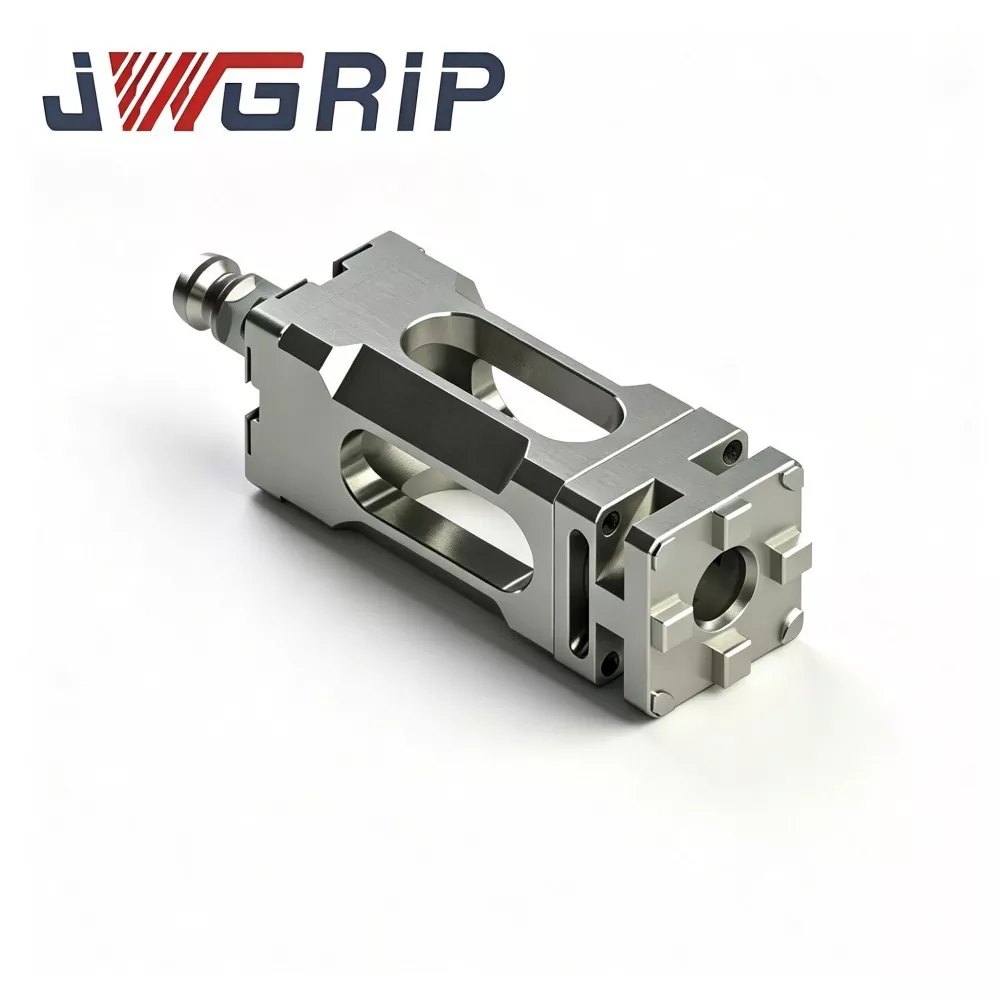
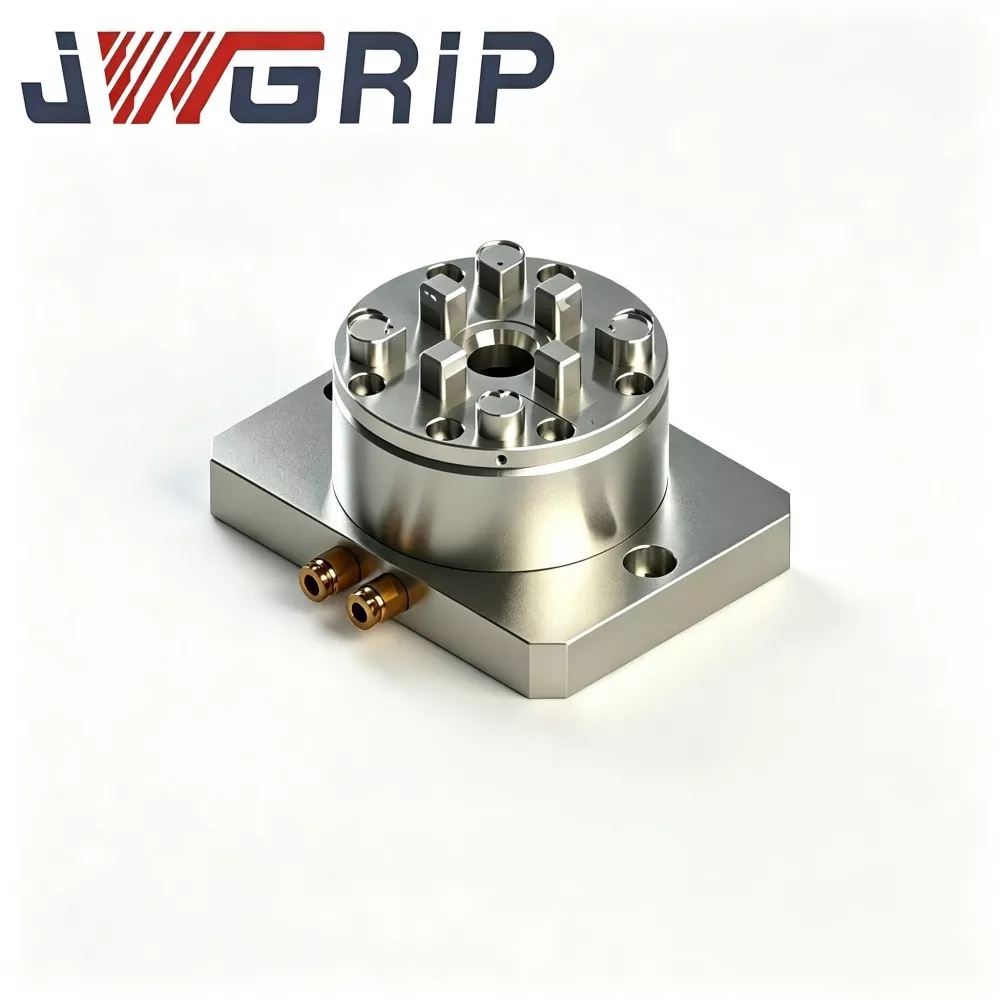
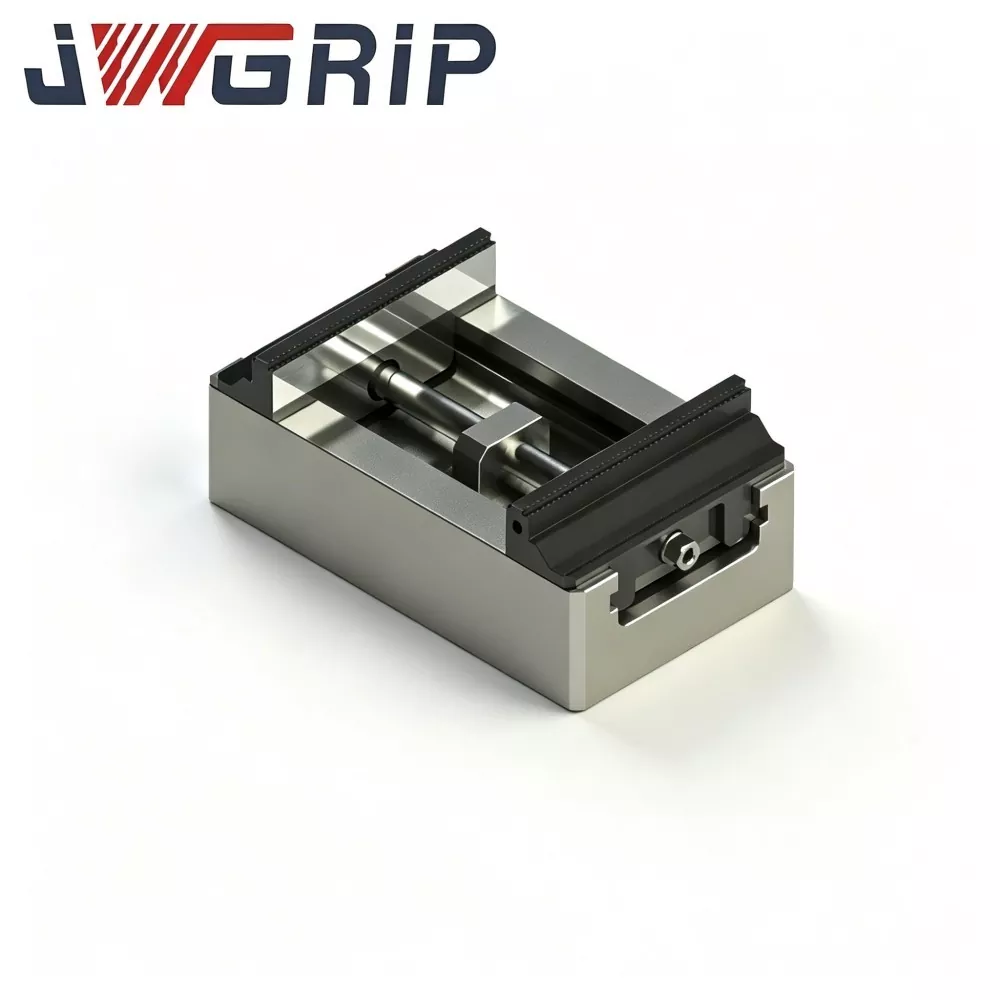
Medium-Size Heavy-Duty Self-Centering Zero Point Vise with Hard Jaws for CNC Milling
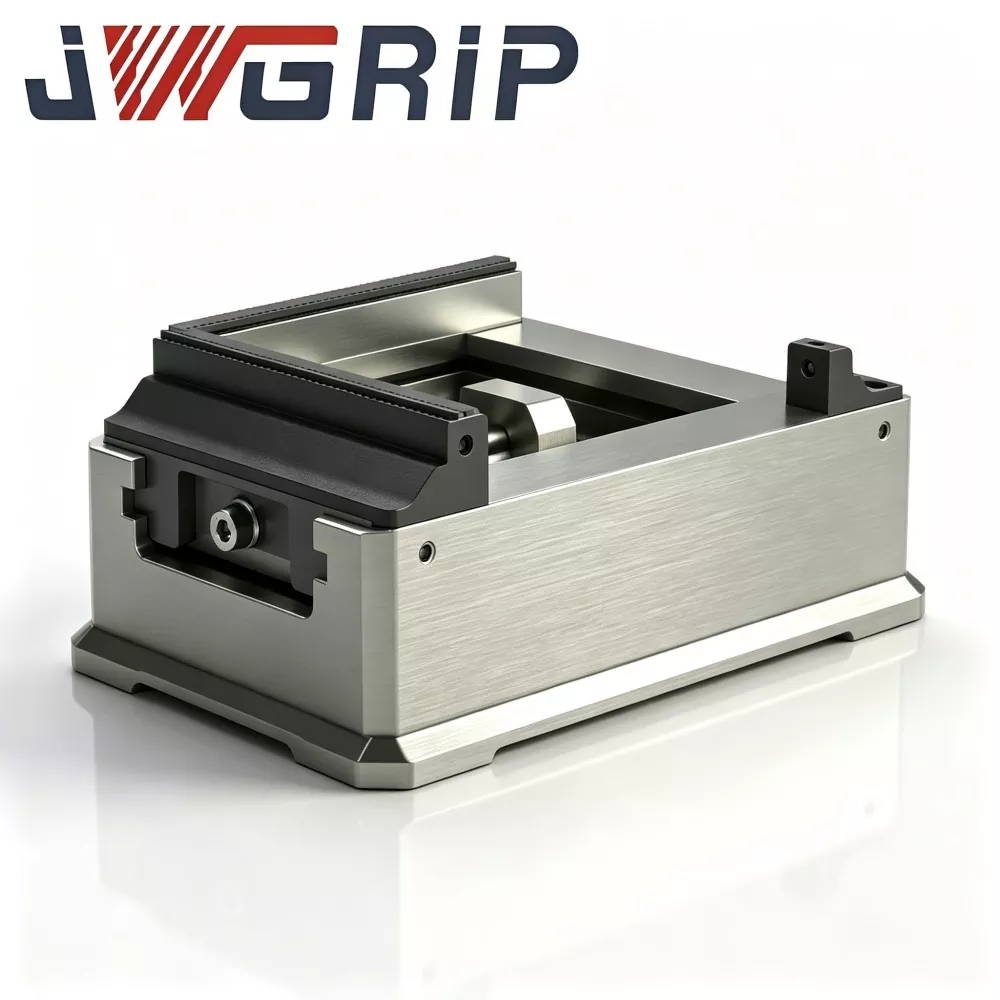
JWGRIP is the professional manufacturer and supplier of Factory Direct & Customized Medium-Size Heavy-Duty Self-Centering Zero Point Vise with Hard Jaws for CNC Milling in China. It is a new-design integrated zero-point clamping fixture specially developed for heavy-duty CNC milling production scenarios. This high-quality precision fixture integrates medium-sized heavy-duty synchronous self-centering transmission structure and standard zero-point positioning docking unit as a complete single device, eliminating the need for additional matching accessories or repeated on-site calibration.
Adopting high-strength alloy steel body and high-hardness quenched hard jaw assembly, this heavy-duty self-centering zero point vise features high performance, outstanding durability, high efficiency and user-friendly maintenance. All main body and transmission components undergo strict stress-relief aging treatment after rough machining, while critical mating surfaces are finished with precision grinding to ensure stable and accurate synchronous centering performance during long-term heavy-load cyclic milling.
Built with a fully integrated standard zero-point docking structure, the vise supports offline workpiece presetting and rapid fixture swap, greatly improving tool change efficiency and overall equipment utilization. Medium-Size Heavy-Duty Self-Centering Zero Point Vise with Hard Jaws for CNC Milling delivers excellent structural rigidity and strong anti-deformation capability, maintaining consistent clamping stability and repeat positioning accuracy even under heavy rough milling impact. Widely applicable for CNC milling processes of mold components, auto parts, hardware structural parts and engineering machinery accessories, this Made-in-China fixture provides reliable and standardized precision tooling solutions for global industrial manufacturing clients.
Typical pain-points
1. Insufficient clamping rigidity and workpiece slippage under heavy milling impact force
2. Degraded repeat-positioning accuracy after long-time heavy-load rough-milling
3. Time-consuming manual calibration during fixture swap
4. Vise-body deformation caused by heavy-load rough-milling
5. Poor native compatibility with zero-point positioning docking
In real-world milling workshops, conventional medium-size vises show obvious drawbacks under heavy-cut rough-milling:
Limited structural rigidity leads to minor body distortion under strong milling impact, bringing workpiece sliding and unstable dimensional outputs.
Lacking integrated zero-point interfaces, operators spend plenty of time on manual alignment during fixture replacement and lower overall machine efficiency.
For this JWGRIP vise, main body and transmission components adopt high-strength alloy steel and undergo stress-relief aging after rough machining. Critical mating surfaces are precision-ground to maintain stable synchronous centering performance under long-term heavy-load cycles. The built-in standard zero-point docking structure supports offline workpiece pre-setting and rapid fixture swap.
Pain-Point Review
Within actual CNC-milling production, fixture rigidity, centering precision and zero-point compatibility directly determine part yield, machine utilization and production cycle. CNC milling covers rough-milling, semi-finish-milling and finish-milling. Heavy rough-milling generates tremendous cutting impact and continuously loads fixtures.
Common shortcomings of ordinary self-centering vises on the market:
1.Insufficient structural strength for heavy-cutting
Many general-purpose vises are designed for light-duty tasks. Under heavy-load rough-milling, vise-body micro-deformation and enlarged transmission-pair clearance cause workpiece micro-slip, out-of-tolerance dimensions, surface chatter marks and even complete part scrap.
2.No built-in zero-point quick-change interface
Each fixture swap requires manual dial-indicator alignment and repeated datum adjustment, consuming massive non-cutting time. Under high-mix low-volume production, frequent change-over raises debugging cost and creates obstacles for FMS flexible-automation lines.
3.Poor wear resistance of standard jaws
Some hard jaws are not fully quenched. Continuous milling impact accelerates jaw wear, shifts centering datum and forces frequent jaw re-grinding maintenance.
4.Vibration-triggered displacement during dynamic milling
Several medium-size vises are only optimized for static clamping, ignoring vibration from dynamic milling force. Minor workpiece offset makes it impossible to meet finish-milling geometric-tolerance requirements.
5.Weak sealing against workshop contaminants
Simple sealing allows milling chips and coolant to invade inner transmission assemblies, speeding-up component wear and shortening fixture service life. Additional adapter plates are required for zero-point docking, introducing assembly-stacked errors and hurting repeat-positioning accuracy.
6.Single-condition oriented fixture design
JWGRIP Medium-Size Heavy-Duty Self-Centering Zero Point Vise with Hard Jaws for CNC Milling is purpose-optimized to solve above-mentioned bottlenecks. The reinforced heavy-duty vise-body resists dynamic milling impact. Fully quenched hard-jaw sets deliver outstanding wear-resistance for rough-milling. Standard zero-point interfaces realize fast fixture swap. Precisely-controlled internal-transmission clearance balances rough-milling rigidity and finish-milling centering accuracy. Fully-enclosed sealing prevents chip and coolant erosion. Medium-size dimension balances machining coverage and table-mount footprint. It fits most vertical CNC machining centers and milling machines for mold, auto-part, hardware and engineering-component processing.
Component Composition
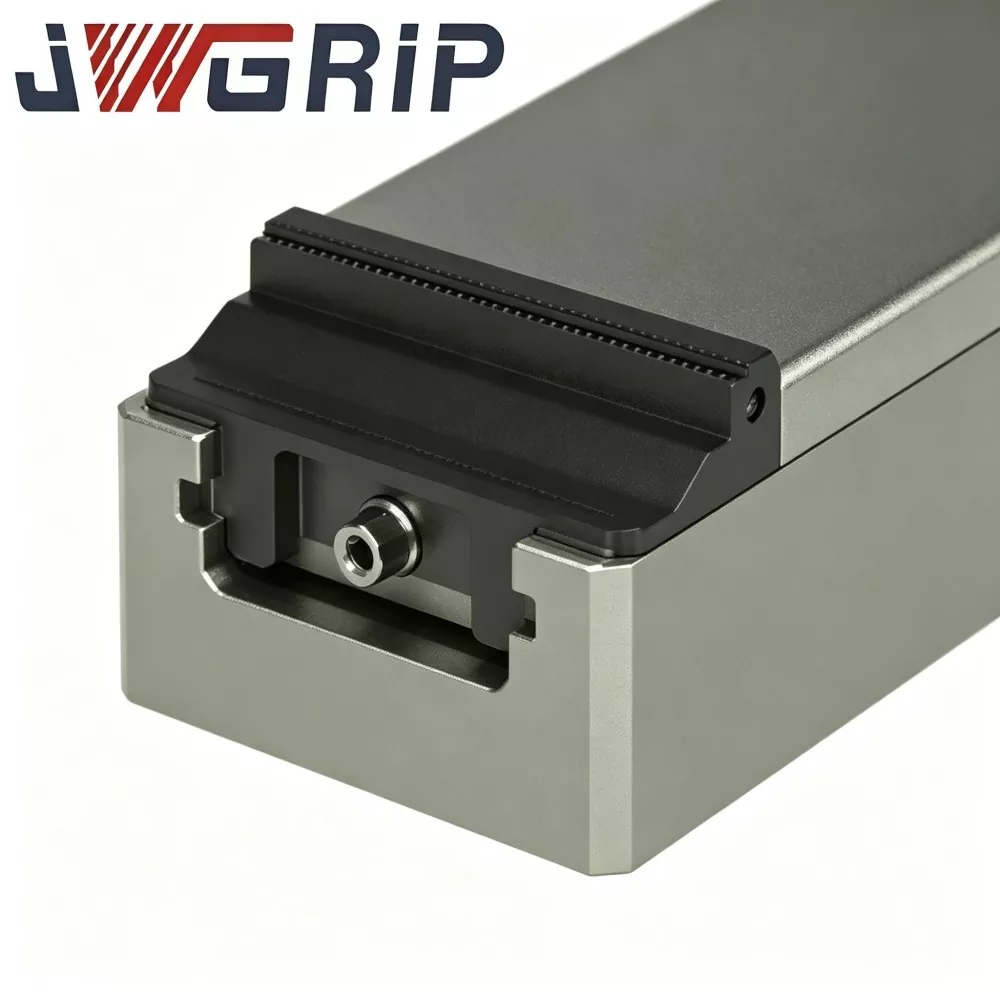
JWGRIP medium-size heavy-duty self-centering zero-point vise consists of six core functional modules:
High-strength forged stress-relieved vise body
Heavy-duty synchronous rack-and-pinion transmission module
Quenched replaceable hard jaws
Dedicated zero-point-positioning mounting base
Fully-enclosed chip-proof & coolant-resistant sealing assembly
Locking-torque fine-tuning mechanism
The vise body is integrally forged with high-strength alloy steel and processed with multi-pass stress-relieving treatment to eliminate forging-and-machining-induced residual stress. It withstands dynamic loads during heavy-load rough-milling and avoids body deformation.
Heavy-duty synchronous transmission parts go through paired precision grinding with tightly-controlled clearance, ensuring perfectly synchronized opening-closing movement for two hard jaws.
Hard jaws are made of high-hardness alloy steel, fully quenched and precision-ground, delivering superior wear-resistance and impact-resistance for heavy-duty rough-milling. Hard jaws are independent detachable spare-parts; worn jaws can be replaced separately without replacing the whole vise unit.
Fully-enclosed sealed cavities block milling chips, coolant and metal dust from invading inner transmission assemblies, adapting to heavily contaminated high-chip milling-shop environments.
The base comes with pre-machined standard zero-point-positioning interfaces, directly compatible with mainstream zero-point systems without additional adapter plates.
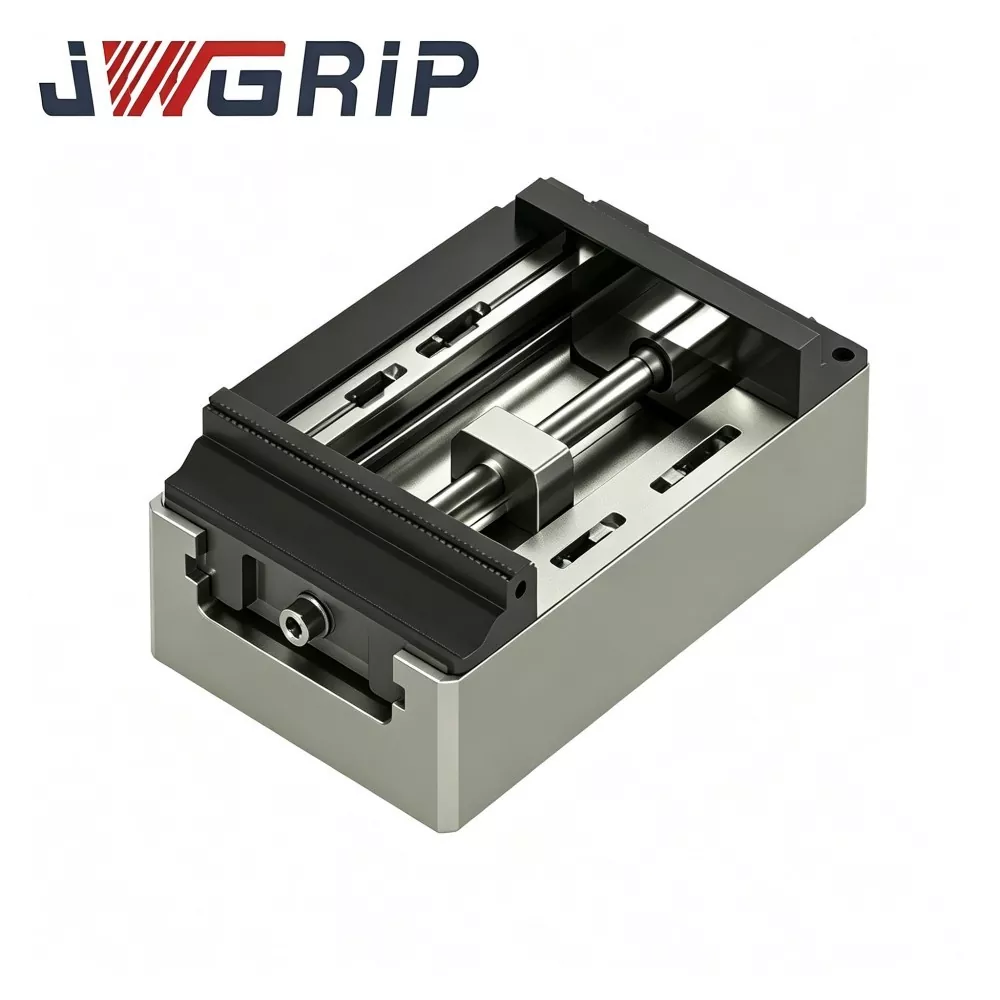
working mechanisms
1.Self-centering clamping mechanism
The internal heavy-duty synchronous transmission drives left-right hard jaws for symmetrical movement. Workpieces realize automatic centering without manual fine-alignment, eliminating dial-indicator setup. Once clamped, workpiece center is locked to remove human-caused positioning errors. High-hardness hard-jaws provide sufficient clamping friction to resist milling impact force. Workpiece position stays stable across rough-milling, semi-finish-milling and finish-milling and guarantees consistent dimensional quality for milled surfaces.
2.Zero-point-positioning linkage mechanism
The vise base follows mainstream zero-point-system dimensional standards and can be mounted directly onto zero-point base plates for fast fixture dismounting & mounting. Stable datum accuracy is retained after installation. No repeated datum calibration is required for workpiece or full-fixture swap, greatly shortening set-up hours. This design supports connection to FMS flexible-manufacturing lines and cooperates with robot loading-unloading to achieve unattended continuous CNC milling for multi-variant parts
Core Strengths
1.Medium-size heavy-duty construction against dynamic milling impact
Forged stress-relieved vise body plus reinforced heavy-duty transmission assembly resist heavy rough-milling cutting force. Vise-body deformation and transmission-gap enlargement are suppressed during milling. One single vise supports both heavy-cut rough-milling and high-precision finish-milling and lowers workshop fixture inventory pressure.
2.Fully quenched replaceable hard-jaws for superior wear-&-impact-resistance
Hard jaws receive complete quenching-hardening and precision grinding. Low wear rate under long-term milling reduces frequent re-grinding maintenance work. Independent replaceable hard-jaws cut long-term maintenance expenditure.
3.Standard zero-point interfaces for high-speed fixture change-over
Base directly matches mainstream zero-point-positioning systems without custom adapter plates. Greatly accelerate fixture disassembly-assembly, remove time-consuming dial-indicator alignment and improve CNC milling machine utilization rate for FMS automated production lines.
4.High-precision synchronous self-centering transmission stabilizes milling dimension
Pair-ground synchronous transmission keeps tight clearance control. Dual hard-jaws move synchronously. Centering datum stays stable after clamping and prevents workpiece slippage throughout rough-milling & finish-milling, ensuring qualified geometric tolerances.
5.Full-enclosure sealing extends fixture service life
CNC milling generates massive chips and coolant. Sealed cavities isolate contaminants away from transmission chambers to avoid jamming and precision decay. Durable and easy-to-maintain design reduces factory OPEX.
6.Optimized footprint fits most vertical CNC worktables
Medium-size compact heavy-duty layout does not occupy excessive table space. Compatible with most vertical machining centers, CNC milling machines and 4-axis rotary tables for rotary-milling tasks.
7.Factory-direct supply with flexible custom modification
As a source manufacturer, JWGRIP provides structural customization according to customer machine models and part features: clamping-stroke adjustment, base mounting-hole modification, special-profile jaw custom-building, satisfying personalized CNC-milling process requirements for different manufacturers.
Multi-Sector Application Scenarios
1.Mold-industry CNC milling
Rough-milling, semi-finish-milling and finish-milling for mold inserts and mold cores. Heavy-duty structure withstands milling impact while zero-point docking speeds-up mold change-over and shortens mold lead-time.
2.Automotive-part milling production
CNC milling for auto hardware structural components, cast-iron brackets and high-strength aluminum-alloy parts. Guarantees dimensional consistency for mass-produced automotive components.
3.Engineering-machinery accessory processing
Milling for metal structural parts and cast-iron accessories of construction machinery. Heavy-duty clamping fits high-material-removal rough-milling conditions.
4.General-hardware mechanical-part milling
CNC milling for medium-batch steel and cast-iron hardware parts, balancing clamping rigidity and machining accuracy.
5.3C hardware metal-component machining
Milling for high-strength aluminum-alloy structural workpieces. Stable centering accuracy secures tight dimensional tolerances.
6.FMS flexible CNC-milling automated lines
Work together with robot loading-unloading and multi-fixture rotation to realize unattended continuous milling for modern smart-manufacturing workshops.
Installation Guide
1.Before installation, fully clean CNC-milling-machine table mounting surface and vise-base contact surface. Remove metal chips, coolant residues and oil stains. Foreign debris on mating surfaces will tilt the fixture and directly cause milling dimensional deviation.
2.Place vise onto table with pin-hole alignment. Tighten fixing bolts following torque values from machine manual. Confirm complete locking without shaking and finish datum verification before starting formal CNC milling.
3.Position workpiece in the middle zone of hard jaws; fine manual alignment is not required. Activate locking mechanism for synchronous centering and clamping. Adjust clamping force based on workpiece material and milling process:
Apply higher clamping force for rough-milling to resist cutting impact
Apply moderate clamping force for finish-milling to avoid workpiece extrusion deformation
4.Perform trial-cut validation: Manually confirm no workpiece loosening after clamping. Run machine idle cycle simulating milling conditions. Start formal milling program only when zero displacement or vibration is observed.
5.Commissioning with zero-point-positioning base plate: Calibrate locating-pin alignment accuracy to guarantee fixture repeat-positioning performance. For robot-integrated automation projects, match robot-grab center against vise centering center to prevent mechanical collision damage.
Maintenance Checklist
1.Clean hard-jaw clamping surfaces after every shift. Remove metal chips and cutting residues to prevent clamping offset caused by contaminants.
2.Lubricate internal synchronous transmission assembly with special-purpose grease every two weeks, to keep jaw movement smooth and stop transmission-gap expansion induced by long-term milling impact loads.
3.Avoid violent knocking against hard jaws. Worn hard jaws can be ground for repair; heavily damaged hard jaws shall be replaced separately instead of replacing the complete vise.
4.Protect vise-base mounting surfaces from collision and scratch. Apply anti-rust treatment during long-term idle storage to preserve mounting-datum accuracy.
5.Never operate under over-stroke or over-load clamping status, to avoid deformation damage of transmission components under dynamic milling impact.
Fault Diagnosis & Countermeasures
Fault 1: Workpiece dimensional deviation and surface chatter marks after milling
Causes: insufficient clamping force; insufficient transmission lubrication; loose base bolts; hard-jaw wear
Solutions: Raise clamping force moderately; lubricate transmission parts; retighten base fixing bolts; grind or replace worn hard jaws.
Fault 2: Workpiece slip and offset during heavy rough-milling
Causes: insufficient locking torque; metal chips stuck on hard-jaw surfaces; excessive transmission clearance
Solutions: Increase locking torque; fully clean hard-jaw clamping faces; adjust transmission-mechanism clearance to restore synchronous-movement accuracy.
Fault 3: Jaw movement jamming and jaw shifting under milling loads
Causes: Chips and coolant penetrate sealed cavities; insufficient grease supply; transmission-component wear
Solutions: Clean inner contaminants; replenish lubricating grease periodically; inspect and replace heavily worn components.
Fault 4: Reduced repeat-positioning accuracy after zero-point disassembly-assembly
Causes: Chips on zero-point contact surfaces; locating-pin wear; insufficient vise-base tightening torque
Solutions: Thoroughly clean positioning mating surfaces; inspect locating-pin wear status; retighten base bolts with standard torque.
Packaging & Shipment Arrangement
① Standard models are stocked for fast overseas order dispatch.
② Each unit goes through full-item precision inspection before delivery, supplied with precision test reports and anti-rust passivation surface treatment.
③ Single-unit order: pearl-cotton wrapping plus heavy-duty carton.
④ Bulk export orders: thick shock-resistant solid-wood crates with partition padding, protecting precision surfaces against ocean-freight collision damage.
⑤ OEM branding and custom-modified orders follow negotiated lead-time. Specification documents and inspection reports are enclosed inside each package.
After-Sales Support Services
1. Remote online technical guidance for installation, commissioning and on-site fault troubleshooting.
2. Complete operation-maintenance documentation provided for every order.
3. Custom-project technical consultation for non-standard stroke, jaw and base-structure modification.
4. Wearable spare-parts including hard jaws can be purchased separately for on-site replacement.
Procurement Selection Reference
Core value of JWGRIP Medium-Size Heavy-Duty Self-Centering Zero Point Vise with Hard Jaws for CNC Milling lies in medium-size heavy-duty anti-milling-impact construction, wear-resistant quenched hard-jaws, standard zero-point fast-swap capability, dual-mode compatibility for rough-milling plus finish-milling and high centering repeat-accuracy.
It solves CNC-milling bottlenecks such as heavy-cut processing challenges, low fixture-change-over efficiency and difficult zero-point docking.
Selection reminders:
1. Match clamping stroke with maximum workpiece dimension.
2. Hard-jaw configuration is recommended for steel, cast-iron and high-strength-alloy workpieces.
3. Standard in-stock versions guarantee fast delivery.
4. Turn to our custom-solution service for special CNC machines and special-part process requirements.
Factory-direct from JWGRIP, durable and easy-to-maintain. Ideal for fixture upgrade procurement of CNC-milling workshops and FMS automated lines. Helps manufacturers raise part yield and maximize CNC-milling machine throughput.
FAQ
Q1: Can this vise cooperate with 4-axis rotary tables?
A: Yes. Its base meets mounting standards for 4-axis rotary tables and supports rotary-milling processing. Hard jaws resist cutting impact generated during rotary-milling operations.
Q2: Do I need to replace the whole vise once hard jaws are worn?
A: No. Hard jaws are independent replaceable spare-parts, which greatly reduce long-term maintenance costs.
Q3: Will this medium-size heavy-duty vise occupy too much table space?
A: No. It adopts medium-size compact heavy-duty layout. It fits worktables of most vertical CNC machining centers while retaining strong clamping capacity.
Q4: Is Medium-Size Heavy-Duty Self-Centering Zero Point Vise with Hard Jaws for CNC Milling compatible with customers' existing zero-point positioning systems?
A: Standard version fits mainstream zero-point-positioning bases. Custom modification service is available for special-spec zero-point plates.
Q5: Can one vise handle both rough-milling and finish-milling?
A: Yes. Heavy-duty vise-body and reinforced transmission structure withstand rough-milling cutting impact. Its centering repeat-accuracy satisfies finish-milling tolerance requirements. One vise completes rough-milling, semi-finish-milling and finish-milling workflows.
Hot Tags: Medium-Size Heavy-Duty Self-Centering Zero Point Vise with Hard Jaws for CNC Milling, China, Manufacturer, Supplier, Factory
Send Inquiry
Contact Info
-
Address
No. 44, Daning Entrepreneurship Road, Humen Town, Dongguan City, Guangdong Province, China
-
Tel
-
Email
Welcome to send inquiry to JWGRIP. Our professional technical and sales team will provide free fixture selection, customized solution design and accurate quotation.