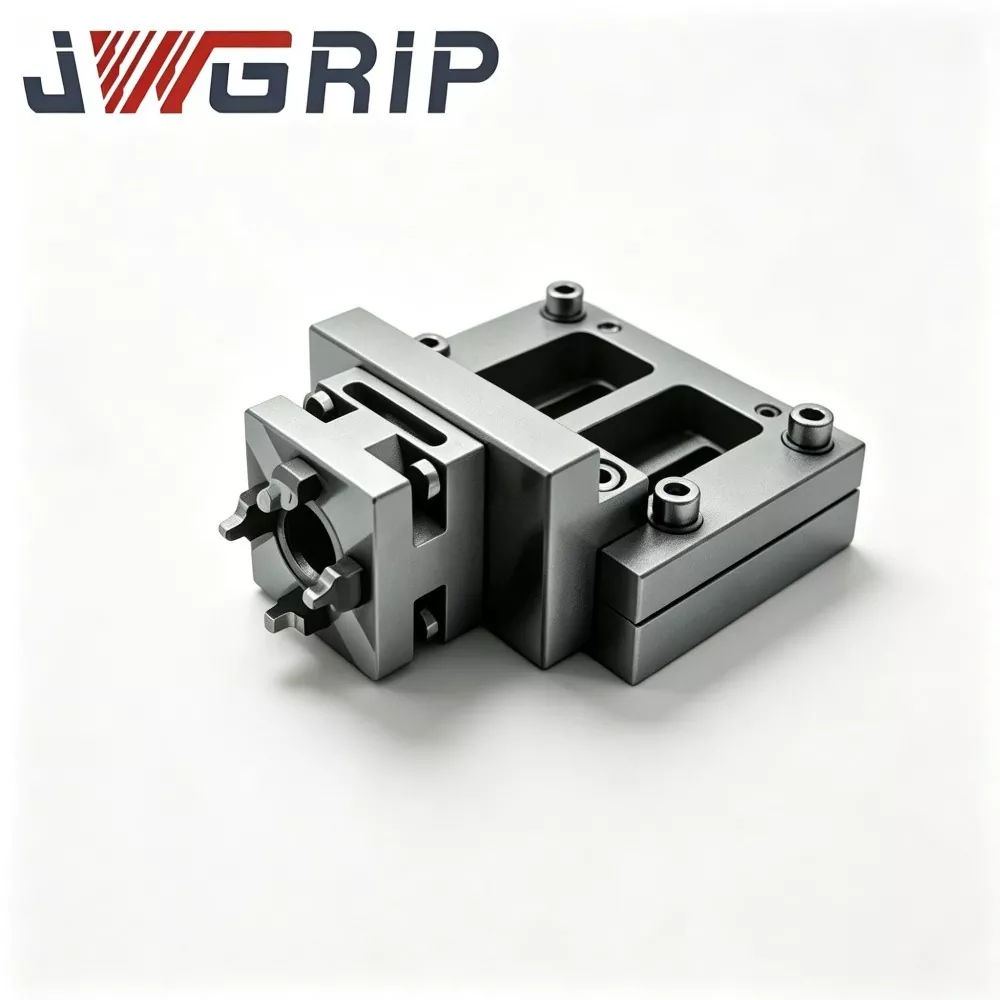
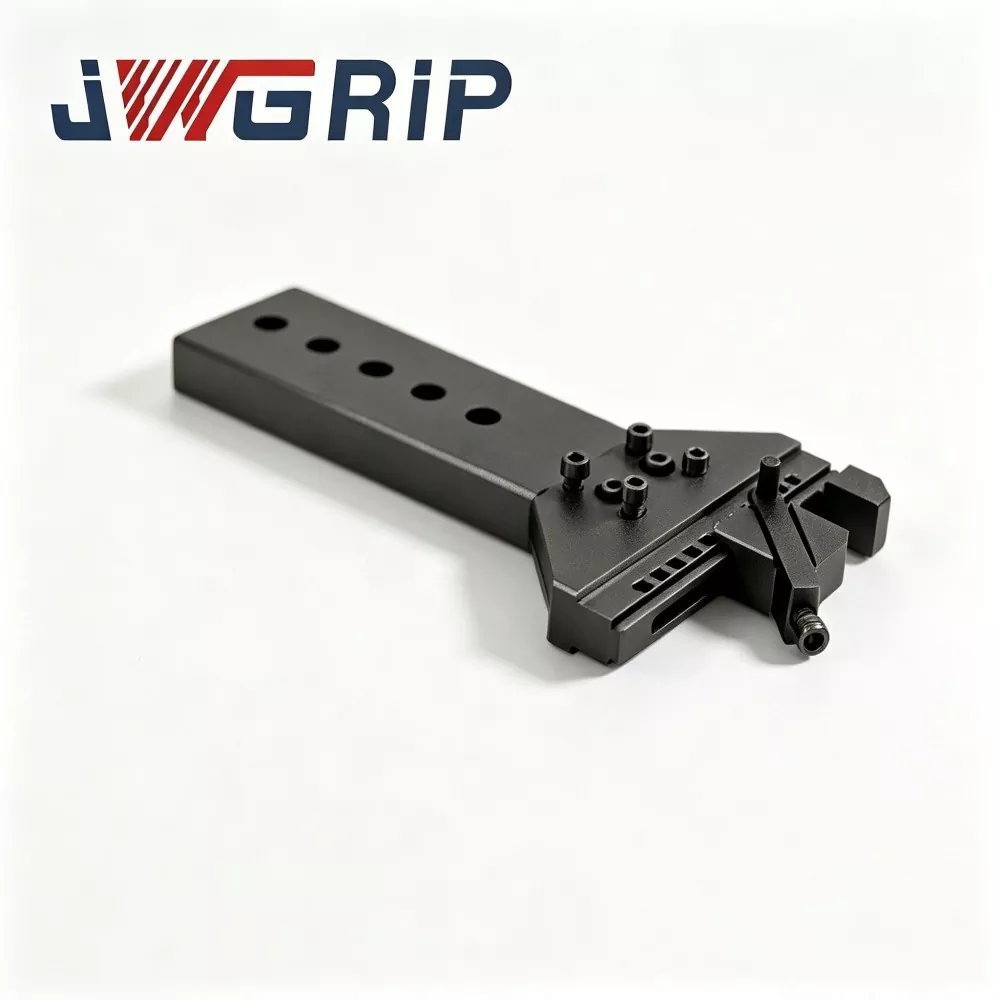
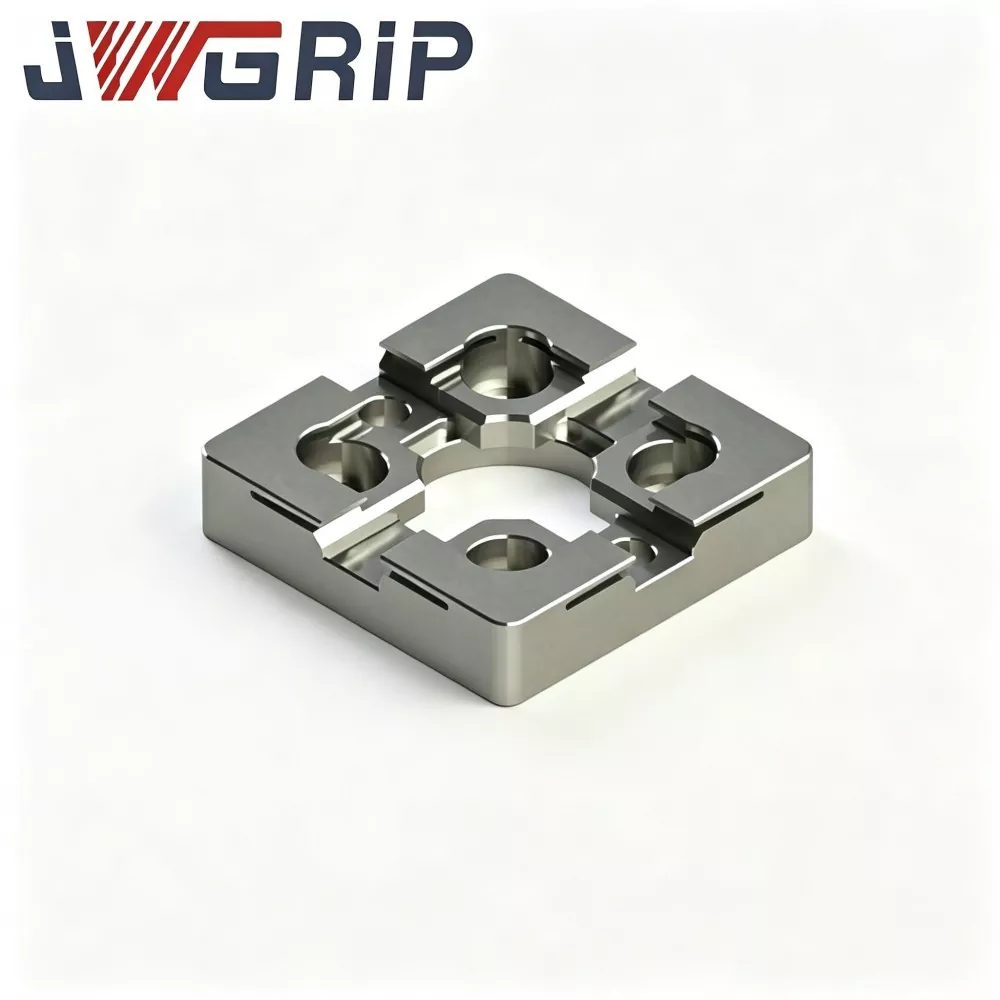
Six Position Zero Point Clamping Plate
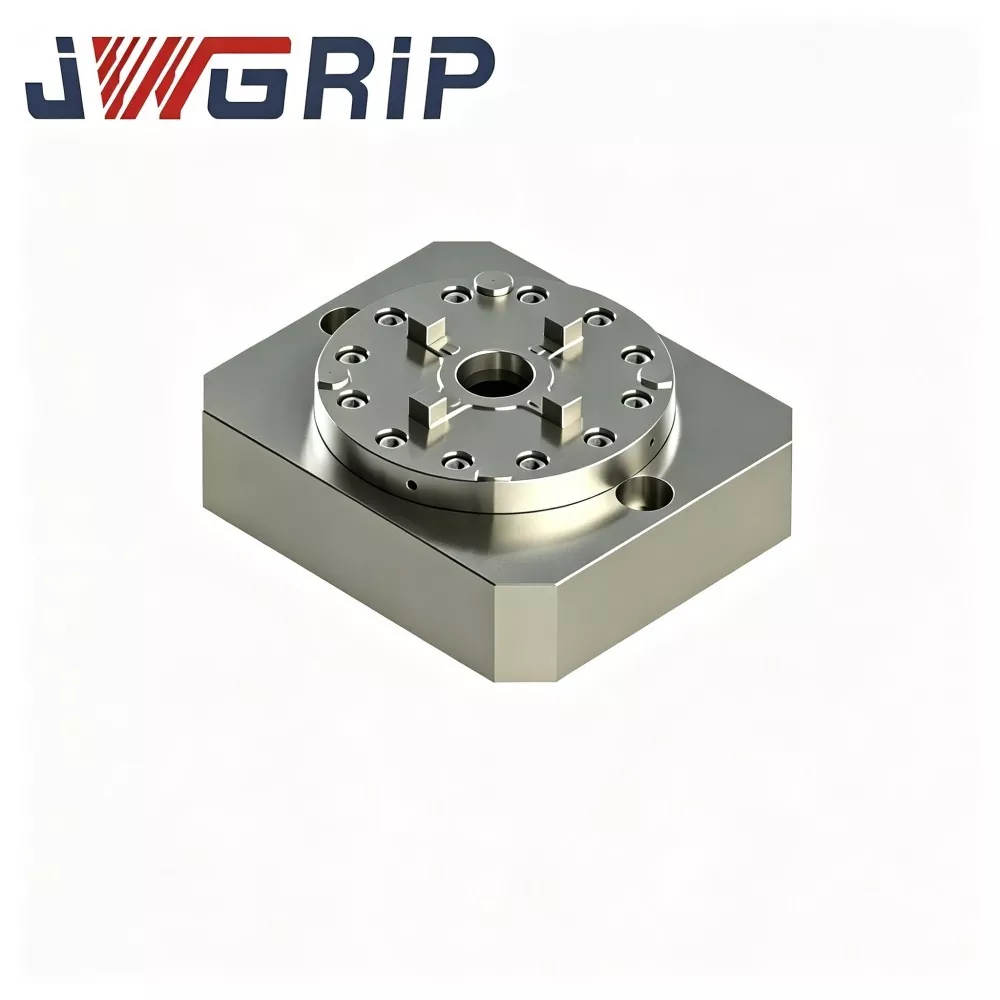
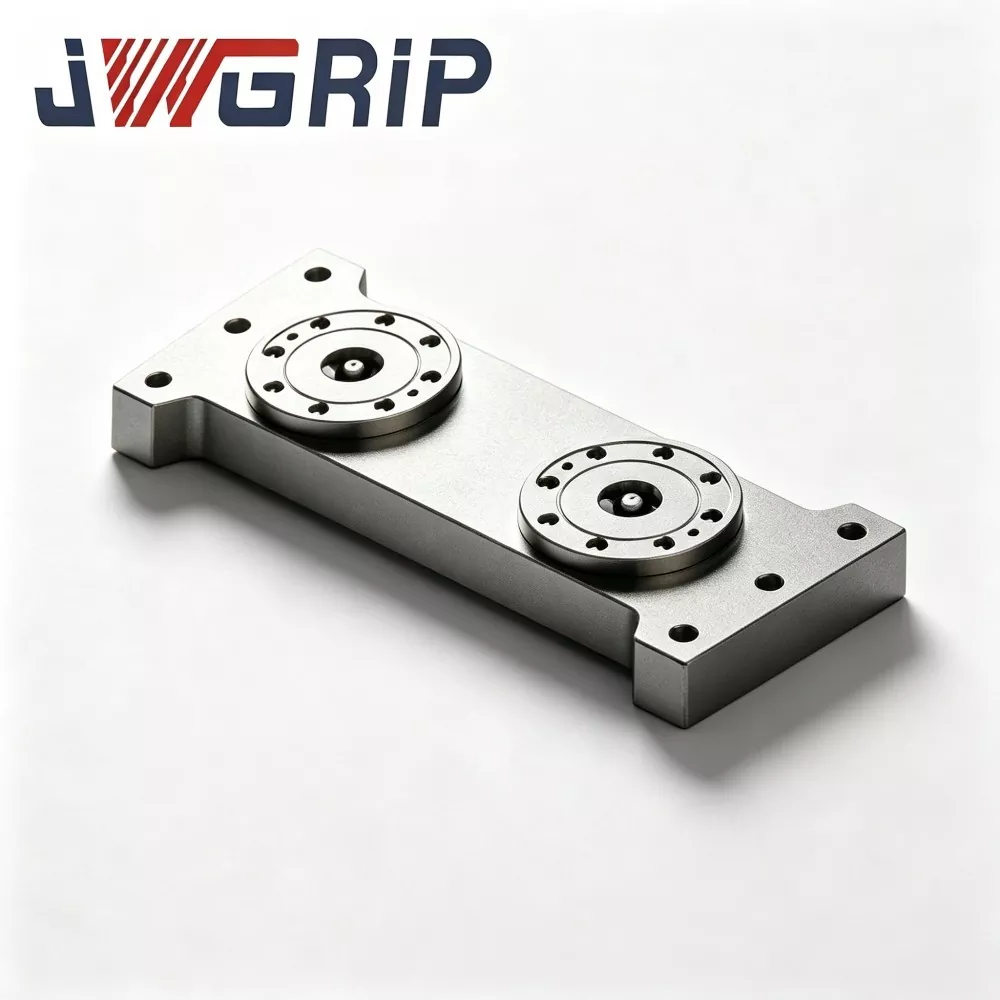
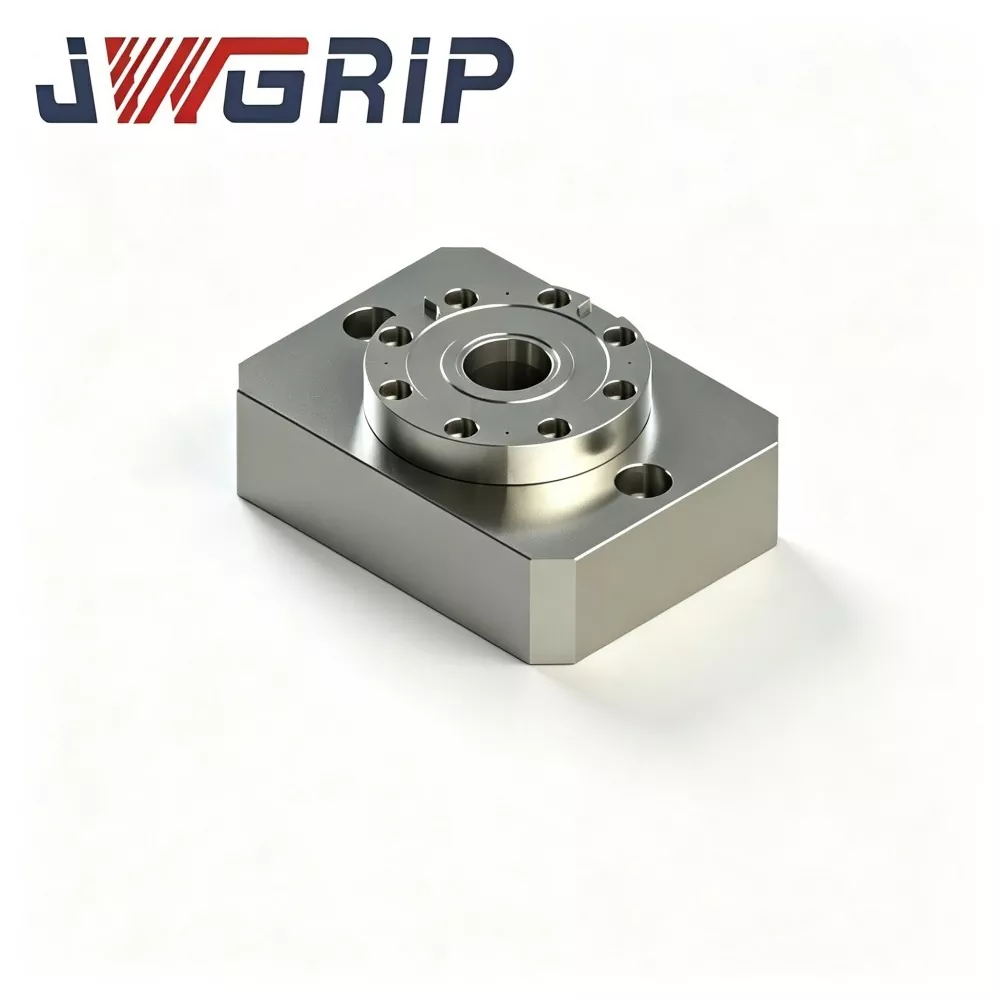
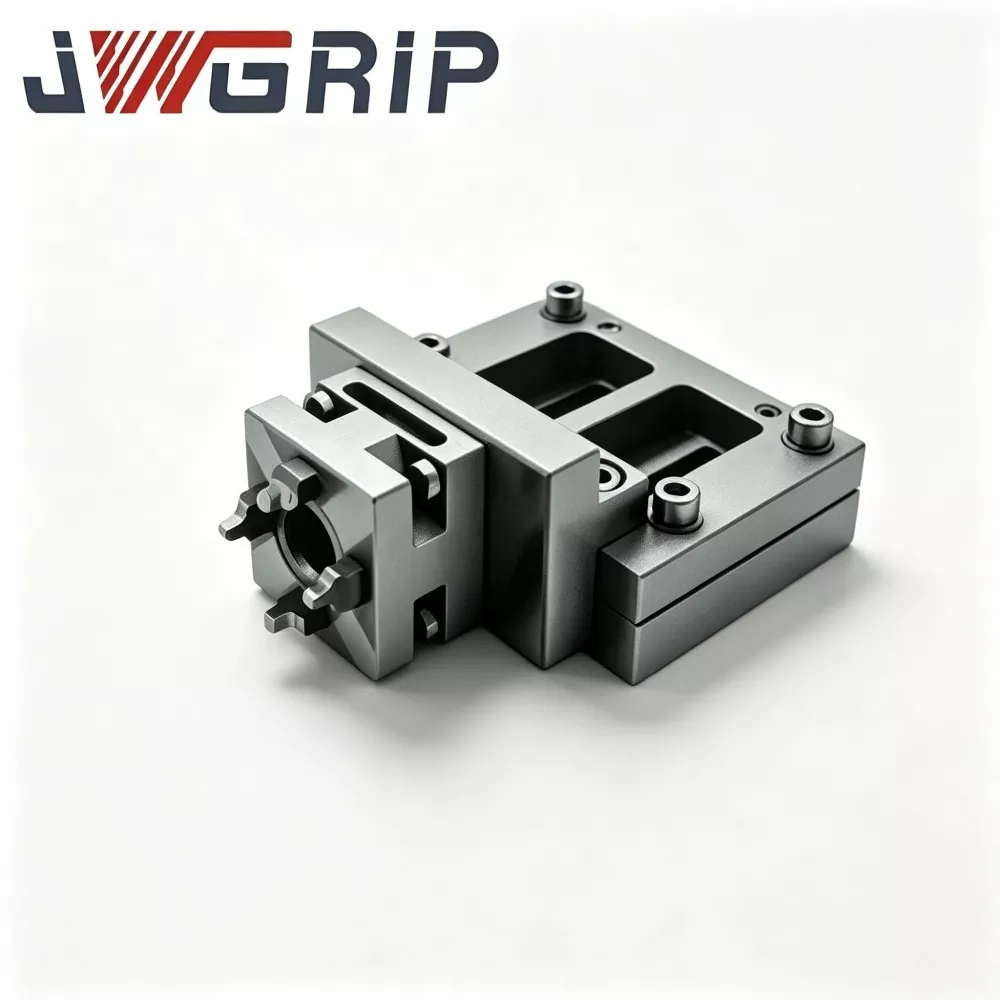
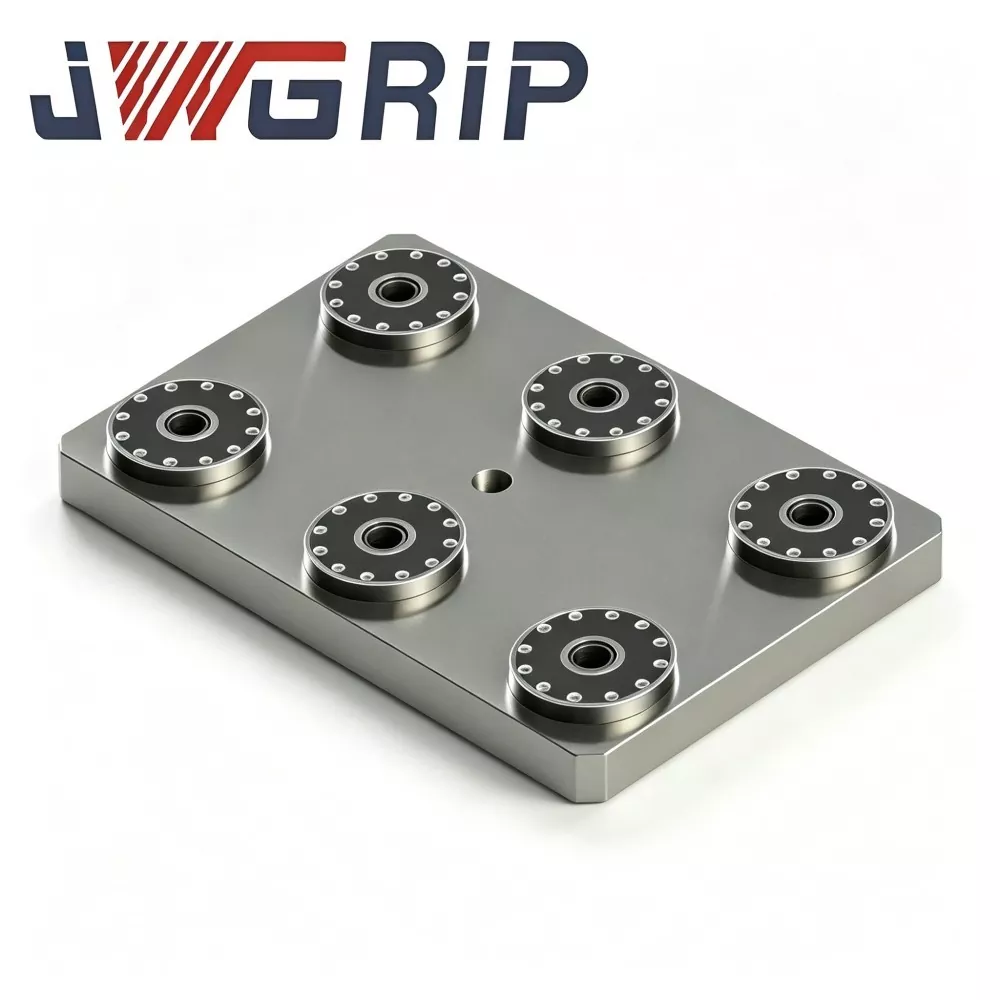
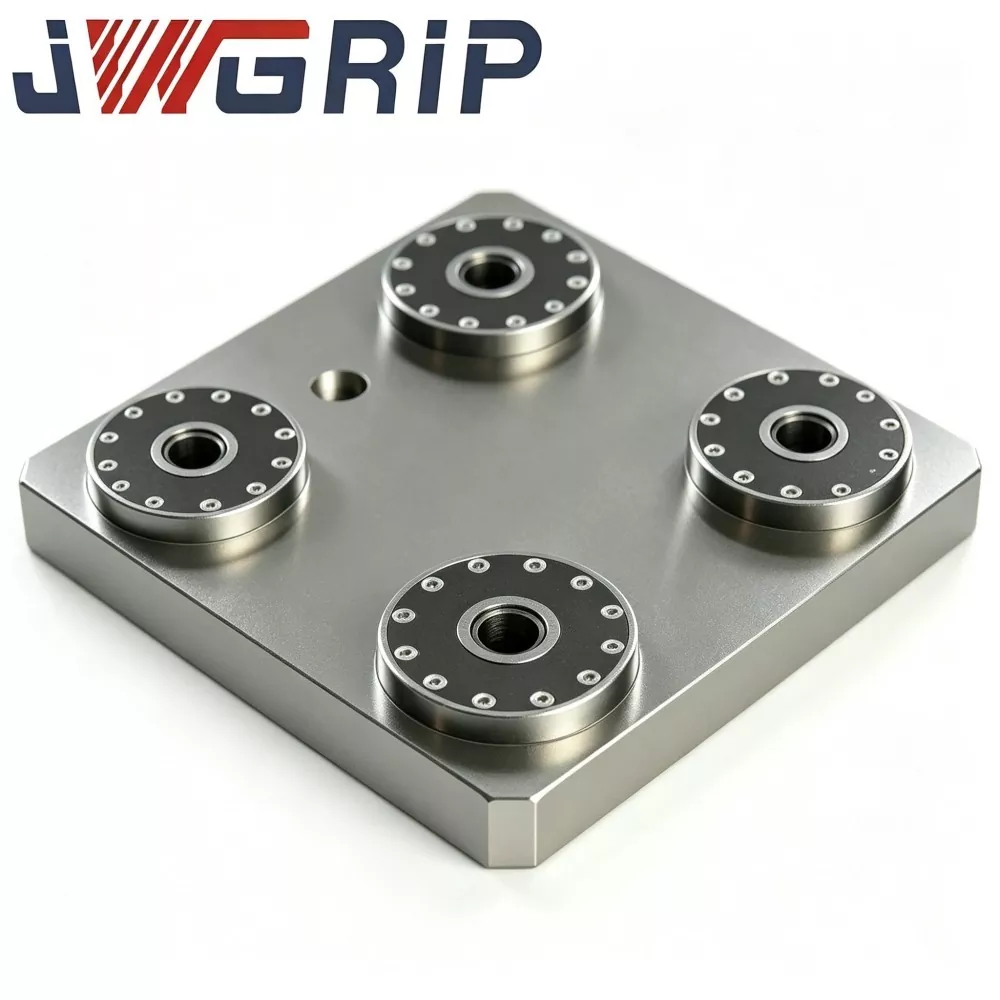
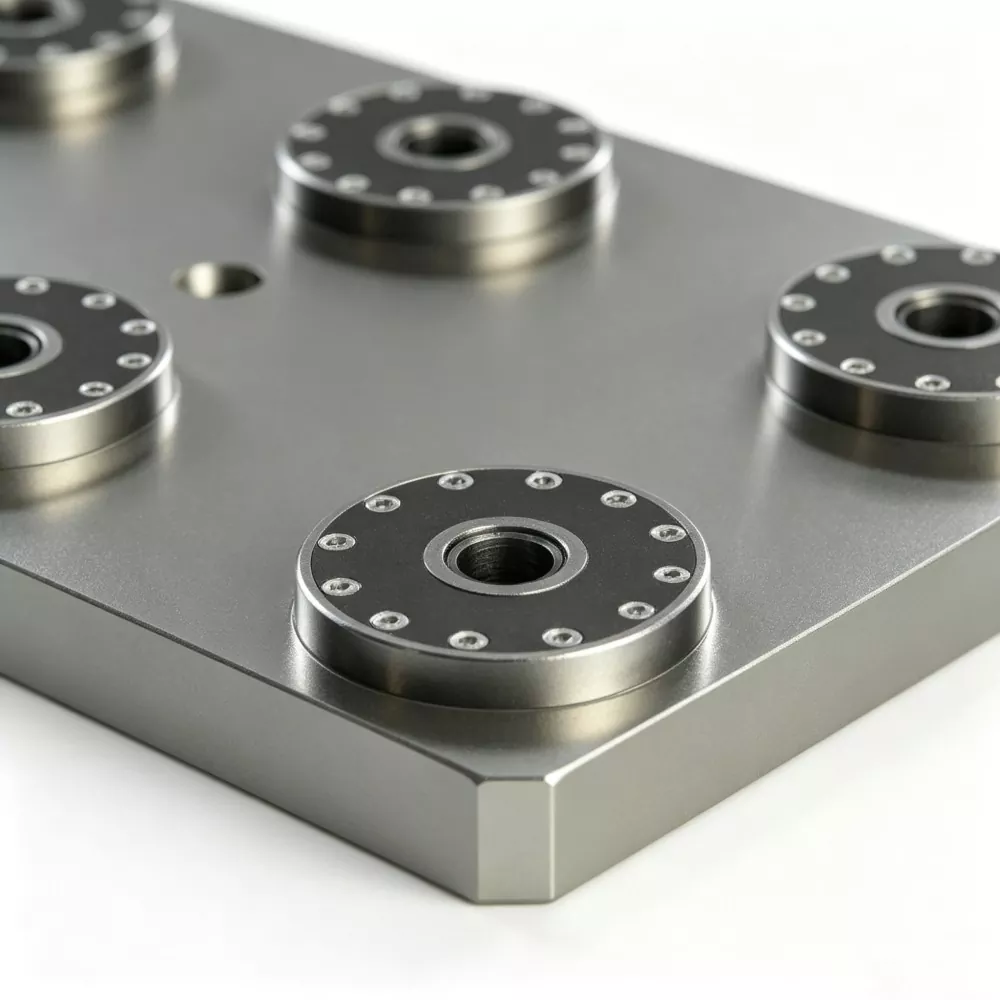
JWGRIP is the manufacturer and supplier of the professional Six Position Zero Point Clamping Plate in China. It is an integrated multi-station zero-point clamping fixture specially designed for high-efficiency CNC milling and grinding flexible production scenarios. This product integrates six independent zero-point locking units on a single integral heavy-duty base, realizing multi-fixture and multi-workpiece simultaneous mounting. It features an all-in-one structural design without scattered modular assembly, which can be directly installed on machine tool worktables and matches offline presetting systems to greatly improve the overall operational efficiency of precision processing workshops.
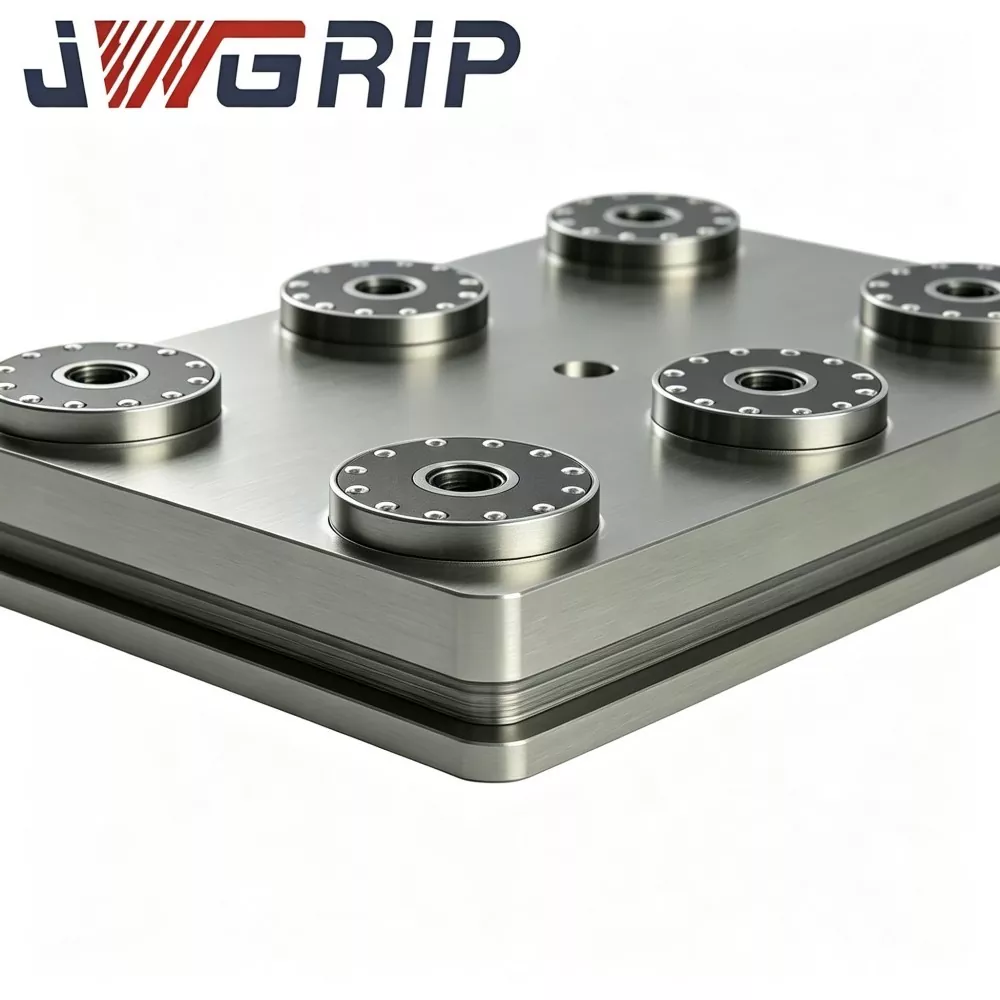
The Six Position Zero Point Clamping Plate adopts integral one-piece forming and integral precision machining technology. The whole base plate undergoes in-house overall milling, stress relief treatment and unified precision grinding, with all six zero-point positioning holes completed in one-time clamping machining. It effectively ensures minimal position deviation between stations and highly consistent repeated positioning accuracy of each station. Made of high-strength alloy cast steel with multiple aging treatments for internal stress elimination, the product features excellent structural stability and deformation resistance under long-term cutting and grinding loads.
Each station is equipped with an independent chip-proof sealing structure to protect internal locking components from cutting fluid, metal chips and abrasive dust. It supports offline pre-clamping of various jigs and workpieces, enabling synchronous or independent locking of six stations according to production demands. Widely applied in batch processing of mold inserts, aerospace small-sized parts and hydraulic precision components, it effectively reduces fixture replacement frequency and significantly boosts the overall equipment efficiency of vertical machining centers.
Complete Hardware Assembly
JWGRIP Six-Position Zero-Point Clamping Plate consists of a one-piece forged alloy-steel base with six zero-point bushing assemblies evenly arranged on a 360-degree circular layout around the central axis. Full-set components:
· One-piece forged alloy-steel base substrate
· Six groups of zero-point positioning bushing assemblies in circular equal-angle distribution
· Built-in synchronous pneumatic distribution circuit
· Main compressed-air inlet port
· NPN lock-status signal-output interface
· Worktable mounting counter-sink holes
· Protective cover plates for idle stations
Production Modes
Mode 1: Full Six-Station Mass-Production Mode
1. Secure the six-position clamping plate firmly onto the CNC machine-tool worktable.
2. Place six fixture bases pre-fitted with D20 zero-point pull studs onto the six circular locating stations respectively.
3. Supply 0.5-0.7 MPa compressed air; internal synchronous air-circuit drives six bushing assemblies to lock simultaneously.
4. Lock-confirmation signal outputs to CNC system; machine executes machining programs and completes cutting for six rotary-type workpieces within one cycle.
5. Upon machining completion, release air pressure for unlocking; six fixtures can be removed in one handling step.
Mode 2: Partial-Station Selective-Enable Mode
1. Activate only 2-5 stations for low-volume orders.
2. Fit matching protective-cover plates over remaining idle stations to block chips and cutting fluid from entering bushings.
One single hardware unit covers both low-volume sampling and high-volume mass-production. There is no requirement to purchase multiple fixtures with different station quantities.
Guideline Notice
· Forged alloy-steel blanks go through rough-machining, semi-finishing plus dual stress-relief aging cycles. Circular-arranged stations are highly sensitive to substrate deformation. Unrelieved residual stress will shift station positions and indexing angles under temperature fluctuation and continuous cutting vibration, breaking dimensional consistency across six work-pieces.
· Mounting holes for all six positioning bushings are ground on a 5-axis grinder under one-time clamping setup, securing station-index accuracy and multi-station coaxiality.
· Positioning bushings use high-hardness bearing steel; inner bores receive quenching plus honing super-finishing.
Technological Improvements
1. Factory-calibrated circular equal-angle layout ensures indexing accuracy and multi-station coaxiality Compared with manual on-site assembly of six discrete single-center chucks, this monolithic plate eliminates indexing unevenness and coaxial deviation caused by human mounting error. Consistent dimensional performance for six machined parts is guaranteed at fixture hardware level.
2. Eliminate on-site multi-station layout and repeated dial-indicating calibration work After mounting and bolting the plate, production can start immediately. Operators no longer adjust each chuck position one-by-one on the machine, greatly shortening batch-change-over time.
3. Flexible switching between mass-production and small-batch sampling Supports full six-station high-throughput runs as well as partial-station operation for low-volume orders. Idle stations are simply covered by protective plates. No need to stock multiple fixtures with different station counts and fixture-spare-part inventory pressure gets reduced.
4. Avoid station-drift risks common for discrete multi-chuck arrays Station positions are permanently fixed onto the monolithic base. Bolt loosening and gradual station shift triggered by long-term cutting vibration (a frequent issue with assembled-chuck arrays) cannot occur, lowering batch dimensional-out-of-spec risks.
5. Re-use existing D20 zero-point pull-stud fixture assets Existing fixture bases can be reused after retrofitting standard D20 zero-point pull studs. Full fixture remanufacturing is unnecessary and prior fixture-investment is preserved.
6. Adaptable for manual-workshop operation and automation-line retrofits Reserved standardized pneumatic ports and signal interfaces support manual fixture swap. It can connect with robot grippers to realize automatic loading-unloading for circular six-station fixture arrays.
Real Cases
Case 1: Component Manufacturing Plant
Previously the customer manually arranged six single-center zero-point chucks into circular arrays on machine tables.
· Each new-order setup consumed 2.5-4 hours for layout and dial-indicating calibration
· Cutting vibration slowly shifted station positions, requiring weekly re-verification of indexing and coaxiality
After deploying JWGRIP Six-Position Zero-Point Clamping Plate:
· Production starts directly after mounting without complex layout-and-calibration procedures
· Dimensional dispersion among six machined workpieces decreases noticeably
· Weekly station-recheck workflows are removed and effective machine runtime rises.
Case 2: Bearing-Housing Component Workshop
The factory faces heavily fluctuating order volumes: peak-season mass-production requires simultaneous six-part machining for high throughput; off-season small-batch orders only demand 2-3 workpieces per cycle. With JWGRIP six-position clamping plate:
· Run full-station mode during peak-volume periods; switch to partial-station mode for small-batch jobs
· Procurement and storage costs for multiple separate special-purpose fixtures are reduced.
Quality Verification
All JWGRIP Six Position Zero Point Clamping Plates complete full-process forging, heat-treatment, CNC-machining, grinding and assembly in-house; no full-unit OEM outsourcing.
Complete Production Workflow
1. Alloy-steel blank forging
2. Rough-machining
3. First stress-relief aging
4. Semi-finishing
5. Secondary stress-relief aging
6. 5-axis grinder: grind all six bushing-mounting holes under one clamping setup
7. Bushing press-fitting
8. Internal synchronous air-circuit assembly & sealing
9. Air-tightness pressure-holding test
10. CMM inspection for station indexing, coaxiality and per-station repeat-positioning-accuracy
11. Anti-rust protection treatment
12. Export-grade shock-proof packing
Inspection Checklist
· Independent repeat-positioning-accuracy test for every single station
· CMM metrology for six-station indexing accuracy, coaxiality and inter-station relative-position
· 5-minute air-holding air-tightness test; maximum allowable pressure drop ≤0.02 MPa
· Cyclic synchronous locking-unlocking functional test covering all six stations
Index accuracy and coaxiality of the six stations are fully verified before factory shipment. No on-machine relative-position calibration is required from customers. Every unit ships with original CMM inspection-data sheet for fixture-equipment archive filing.
Assessment Guidance
1. Prioritize process-requirement evaluation: This product targets rotary / annular-shaped parts requiring multi-piece simultaneous machining. Consider alternative zero-point fixture solutions for non-rotary workpieces. Check fixture outlines to ensure zero physical interference between adjacent stations.
2. Confirm on-site zero-point pull-stud specifications. Standard version fits D20 pull studs. Custom bushing assemblies can be developed upon request for alternative pull-stud dimensions.
3. For automation-line integration: guarantee stable workshop air-source pressure within 0.5-0.7 MPa and reserve PLC NPN signal IO points.
4. Calculate total stacked height of workpiece plus fixture. Evaluate collision risks for cutting tools and 5-axis spindle tilting. Submit workpiece drawings to JWGRIP technical team for interference assessment if you have uncertainties.
Technical specification
· Tighten plate mounting bolts strictly following torque-value requirements in JWGRIP user manual. Violent over-torque fastening is forbidden. Substrate deformation will destroy circular-station indexing accuracy and coaxiality.
· Install oil-water filter at air-inlet front-end. Moisture and impurities entering bushings cause rusting and abrasion, leading to accuracy drift.
· Spray dry-lubricant aerosol onto each zero-point bushing after every cumulative 80-100 working hours. Liquid engine oil is strictly prohibited, as oil traps metallic chips and triggers bushing-jamming failures.
· Blow-clean all positioning bushings and datum faces with compressed-air at each shift-change.
· Fit matching protective-cover plates onto idle stations to prevent chips and cutting fluid from invading bushing assemblies.
· Avoid heavy-object impact hitting plate datum faces. Collision-induced substrate deformation will damage circular-station indexing and coaxiality and can hardly be repaired.
· Never operate beyond single-station rated load capacity.
Packaging & Shipment
· Packaging: Export-grade shock-proof solid-wood case with thick foam inner buffer to protect circular locating datum surfaces during long-distance ocean-going transit.
· Standard lead-time: 17-23 working days. Selected standard SKUs are kept in stock for expedited shipment.
After-Sales Support
· Warranty: 12-month full-unit warranty covers manufacturing defects excluding human-caused damage. Qualified claims enjoy free repair or spare-part replacement.
· Technical resources: Online operation documents and drawings are provided.
· Paid service: Paid remote technical support is available for bulk-volume-order projects.
· Custom modification: Support circular-station-diameter adjustment, station-quantity alteration and pull-stud-spec change.
· Sample evaluation: Evaluation sample can be arranged; buyer undertakes sample freight cost.
FAQ
Q1: Can JWGRIP Six Position Zero Point Clamping Plate work with only partial stations activated?
A: Yes. Fit protective-cover plates onto idle stations; this will not harm main-plate performance. It supports both low-volume sampling and mass-production working scenarios.
Q2: What is the key difference versus six discrete single-center chucks arranged in array?
A: The monolithic six-position plate completes indexing-and-coaxiality calibration at factory side, removing on-site layout and dial-indicating work. Discrete single-chuck arrays rely fully on manual on-machine calibration and carry station-shift risks under long-time cutting vibration.
Q3: Can my existing D20 zero-point fixture bases be reused?
A: Fixture bases assembled with standard D20 zero-point pull studs can be used directly.
Q4: Can JWGRIP Six-Position Zero-Point Clamping Plate be deployed on 5-axis CNC machine tools?
A: It can be applied under collision-free conditions. Calculate total fixture-plus-workpiece height in selection phase and assess spindle-tilting collision risk.
Procurement Decision Insight
Many manufacturers producing rotary-annular components face two unsatisfactory options: either spend large labor-hours assembling multi-chuck arrays on-site, or purchase high-cost dedicated one-off special-purpose fixtures for six-piece simultaneous machining.
JWGRIP Six Position Zero Point Clamping Plate delivers pre-manufactured monolithic base with evenly-distributed six circular stations. It eliminates complex on-site calibration while preserving zero-point quick-change universality, so fixtures will not become obsolete after order-spec switches. It is well-suited for mass-production of rotary-style parts such as flanges, bearing housings and ring-type molds. If simultaneous six-part clamping is only required rarely, carefully evaluate input-output ratio before placing orders.
Hot Tags: Six Position Zero Point Clamping Plate
Send Inquiry
Contact Info
-
Address
No. 44, Daning Entrepreneurship Road, Humen Town, Dongguan City, Guangdong Province, China
-
Tel
-
Email
Welcome to send inquiry to JWGRIP. Our professional technical and sales team will provide free fixture selection, customized solution design and accurate quotation.