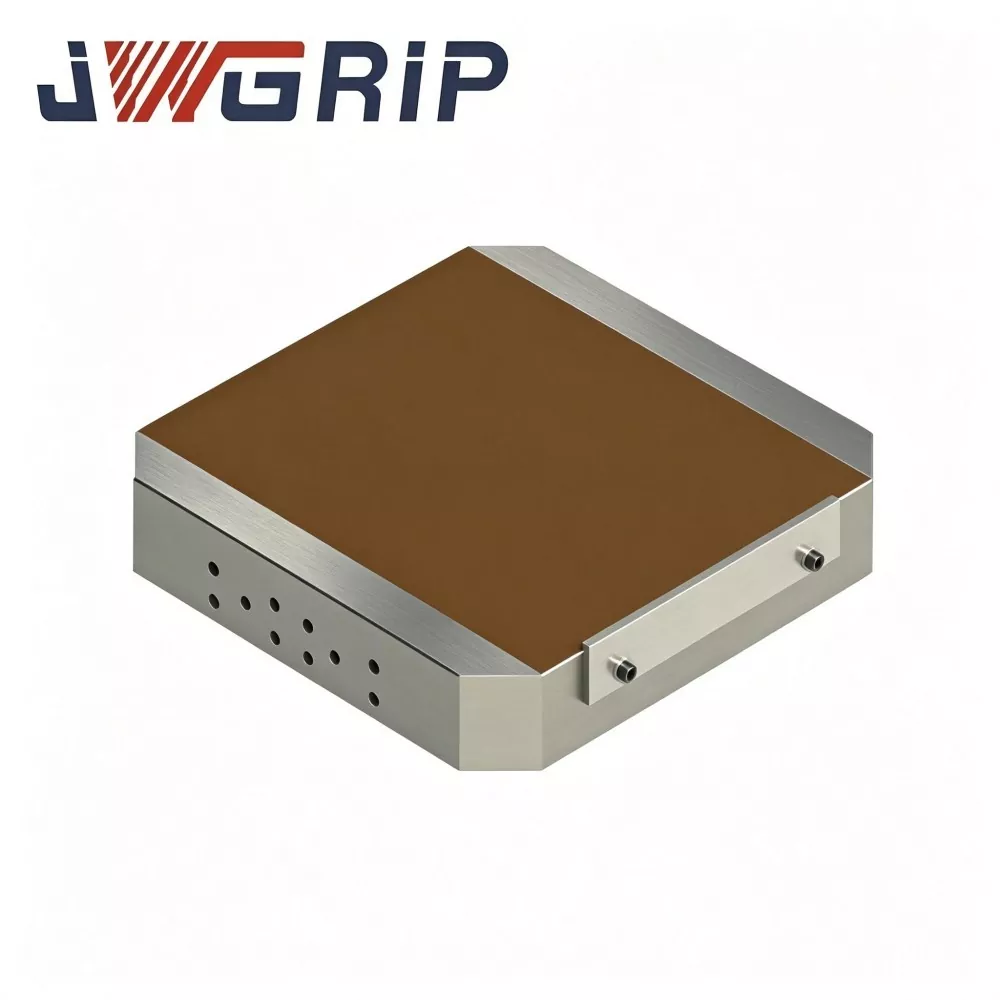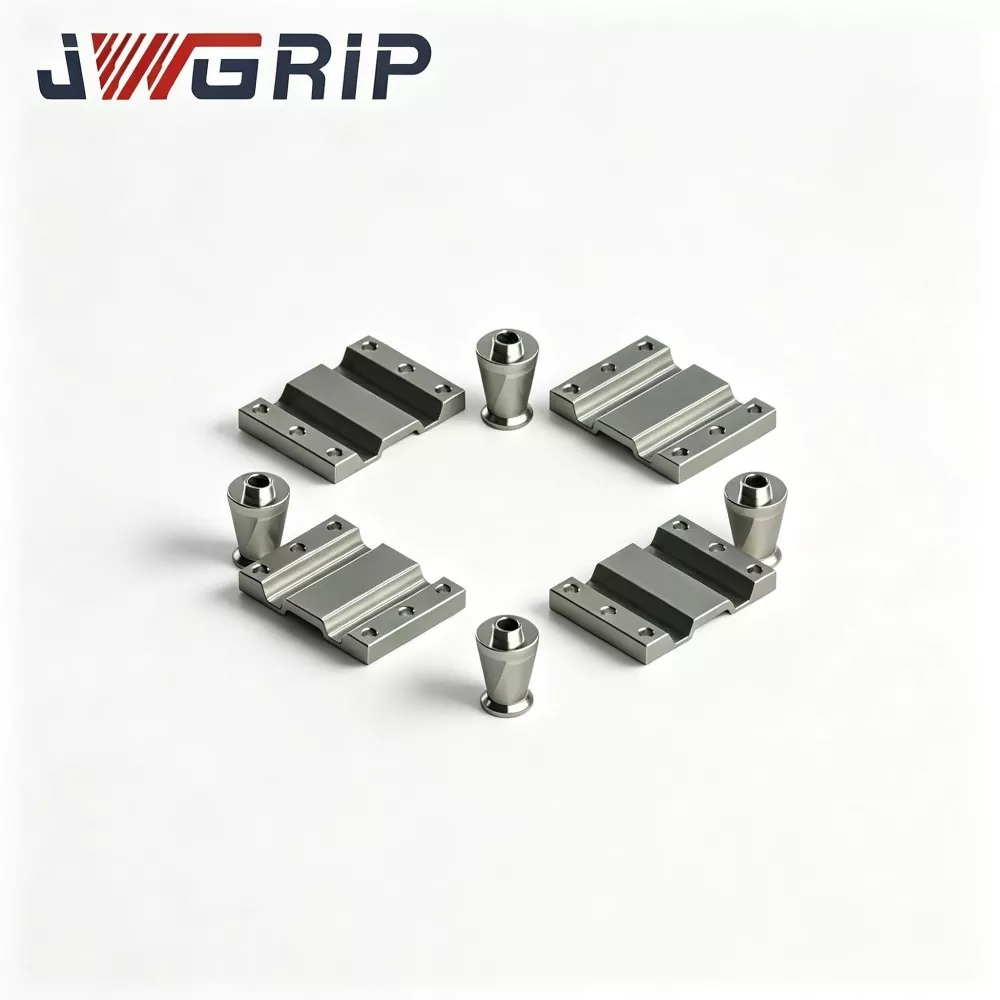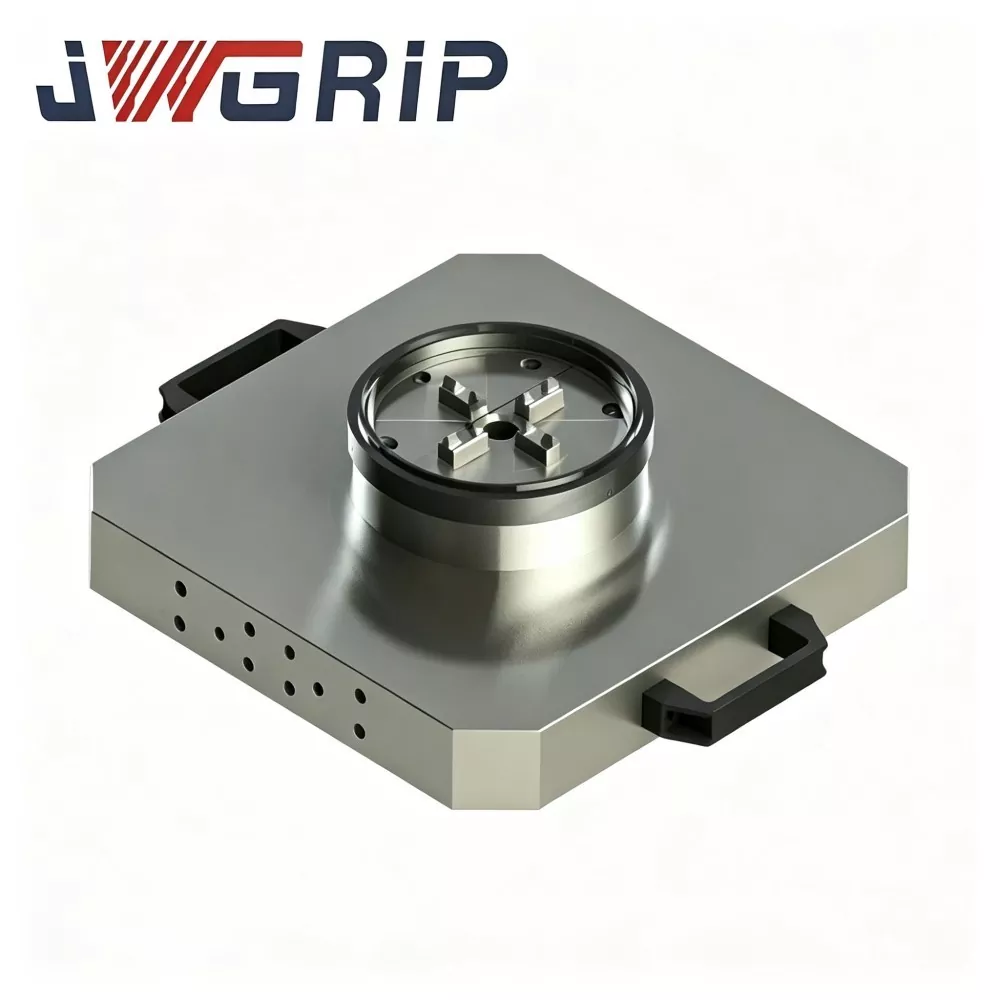
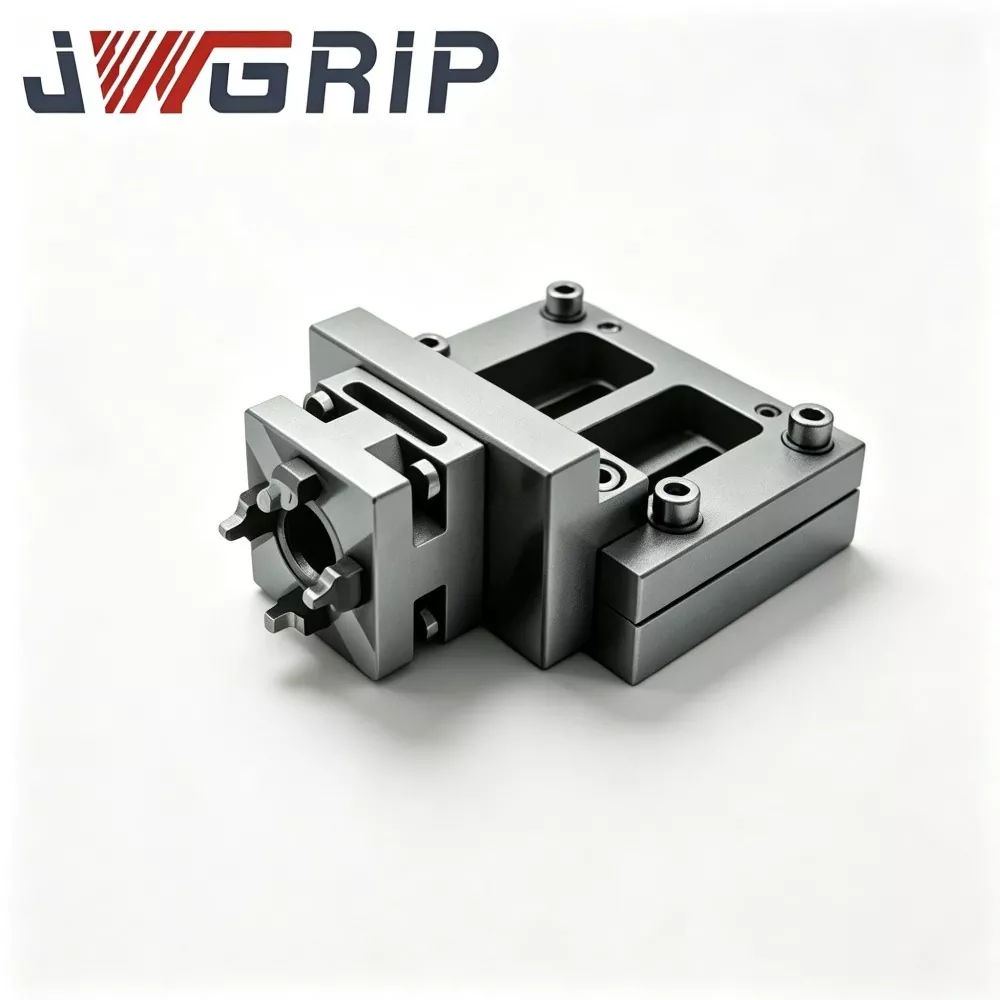
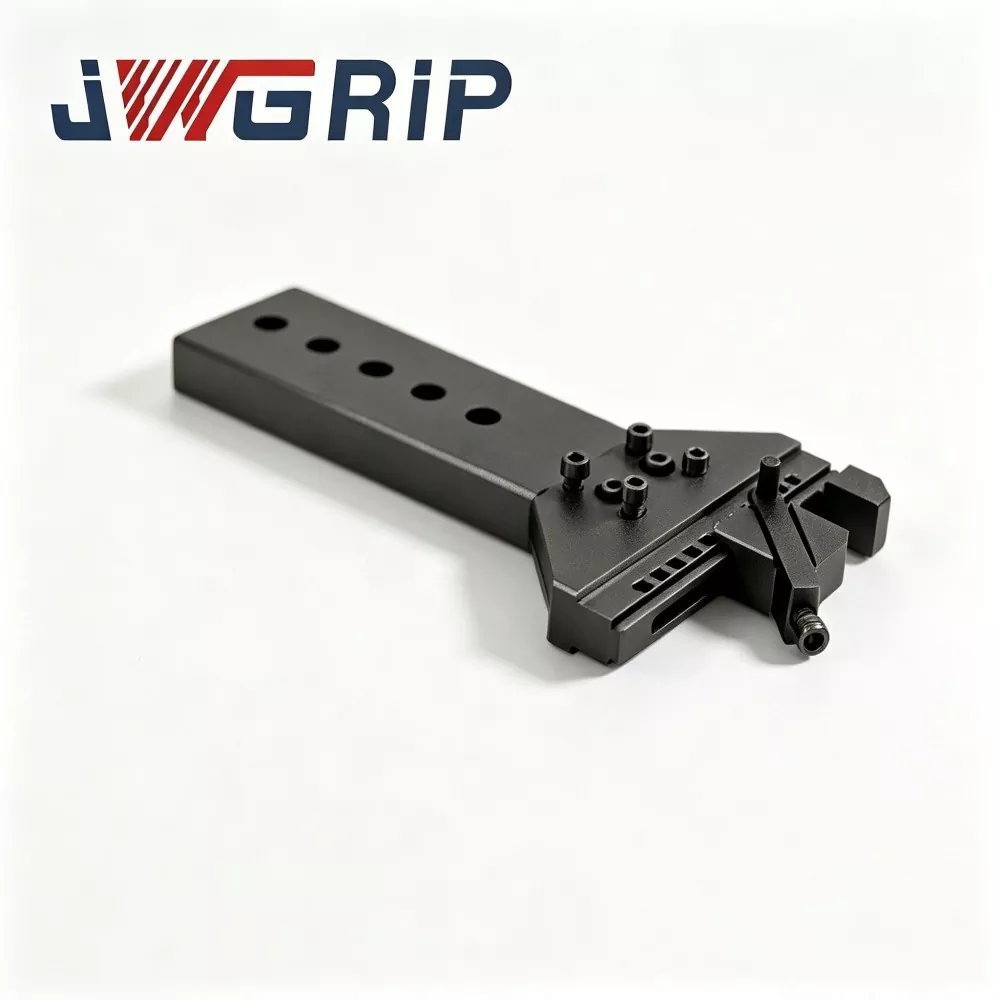
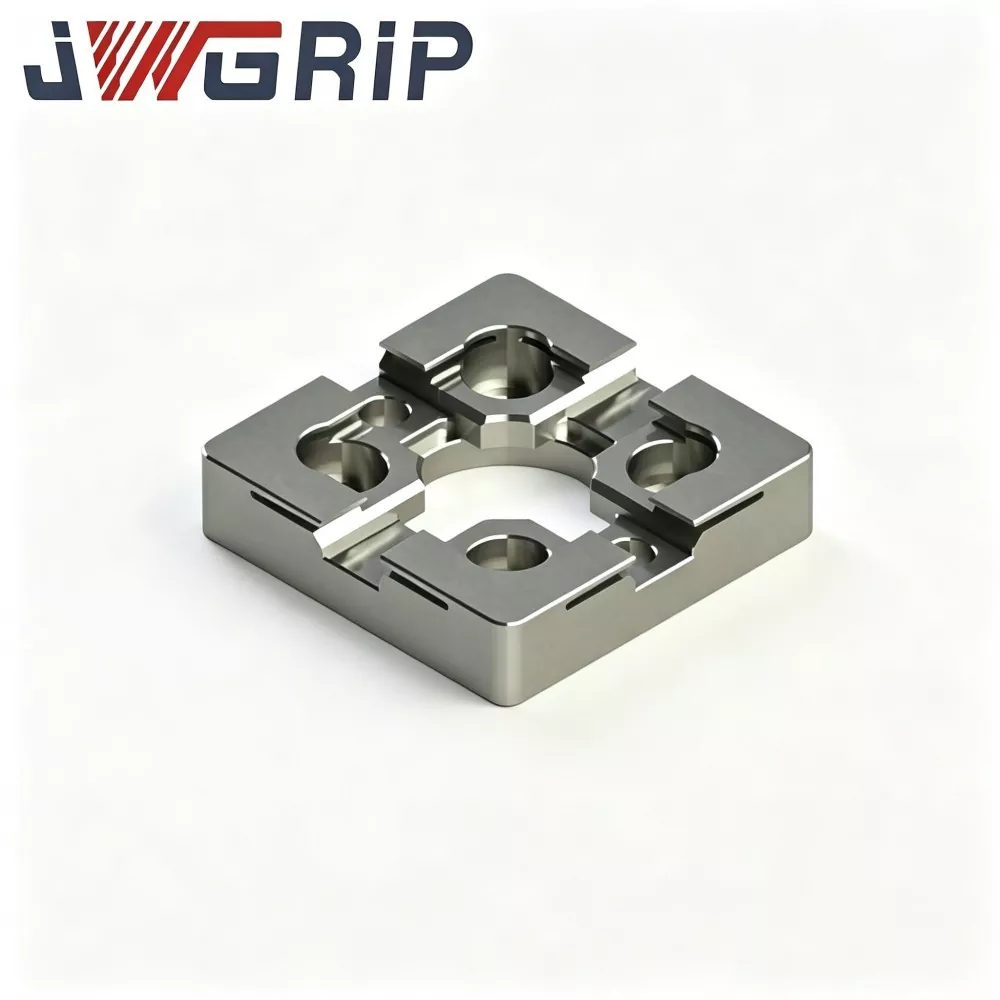
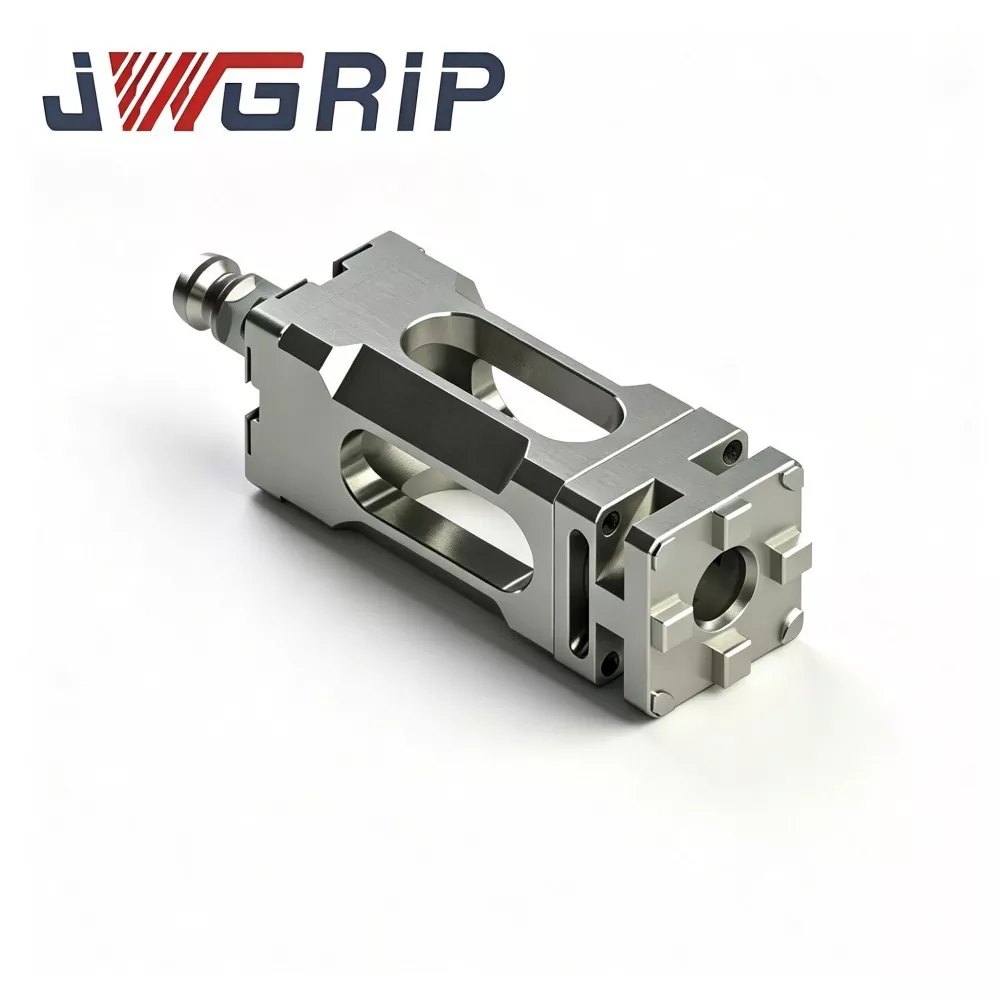
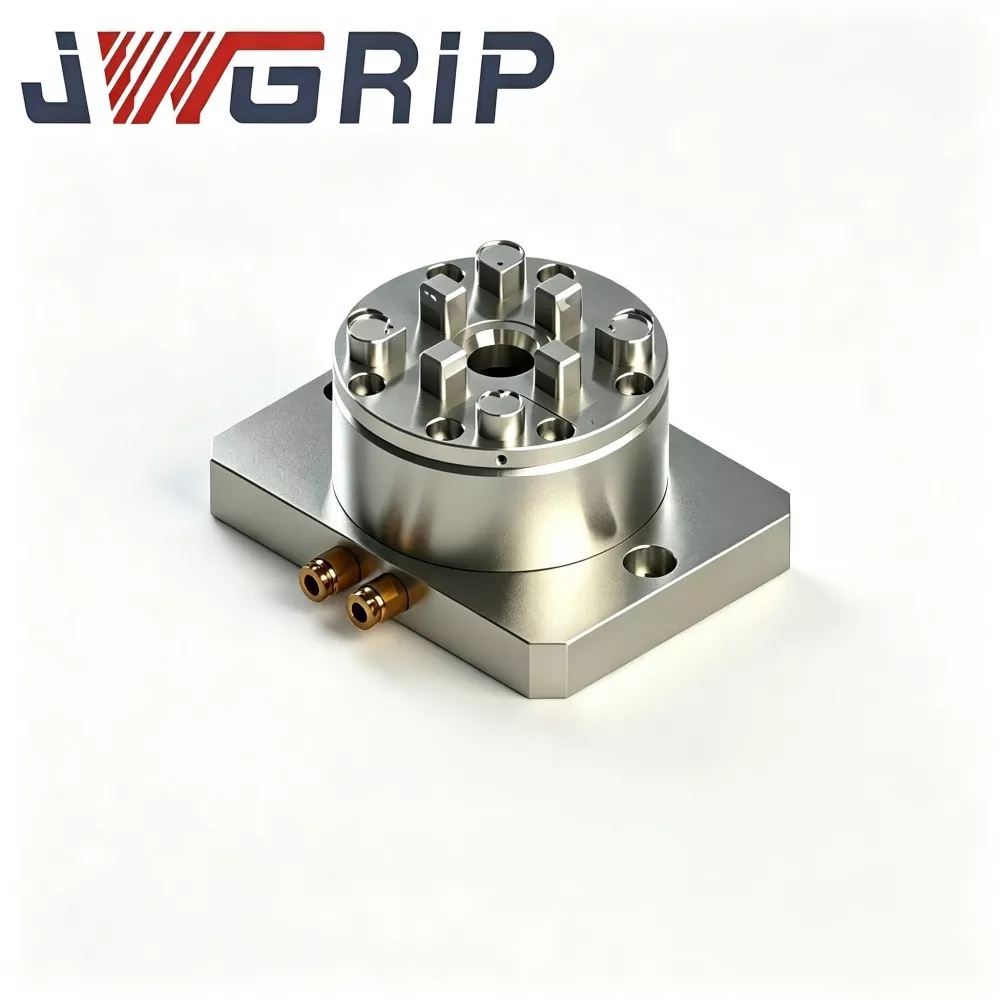
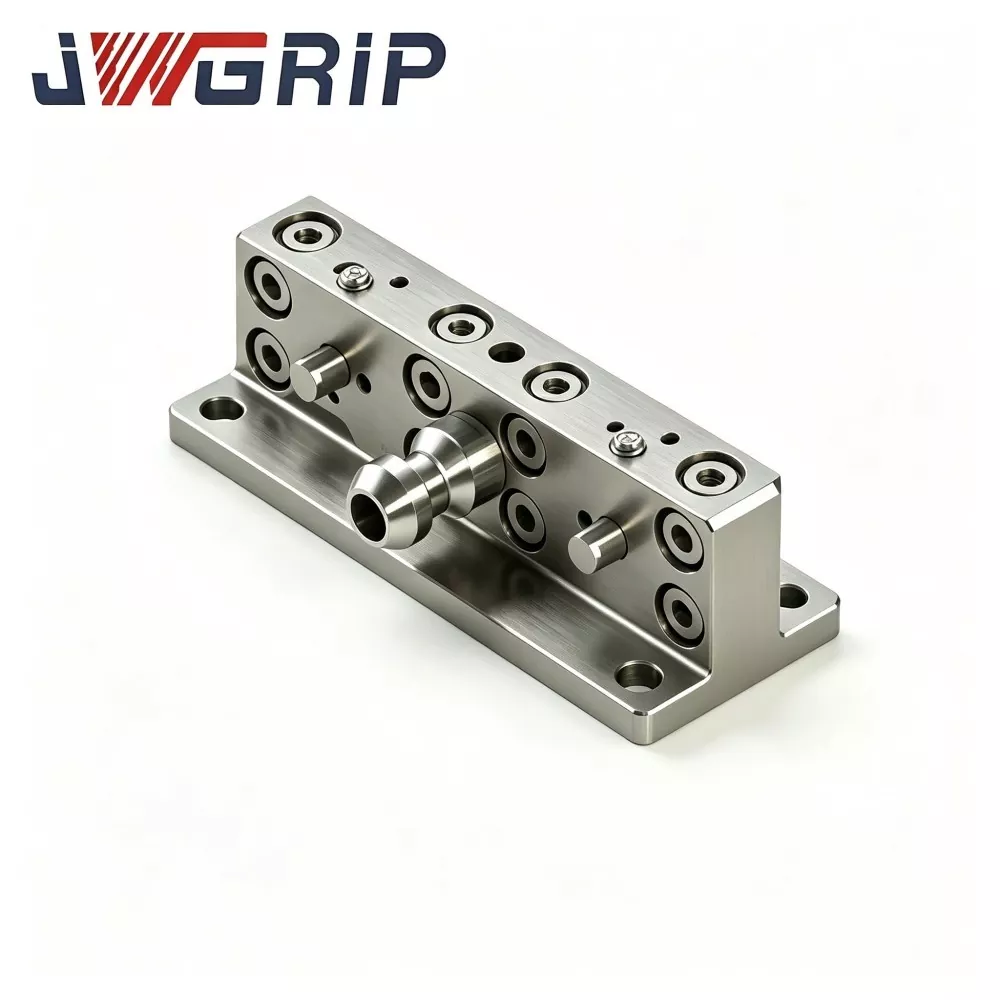
UPC Hinge Linkage Arm for Robot Quick Change Tool Changer
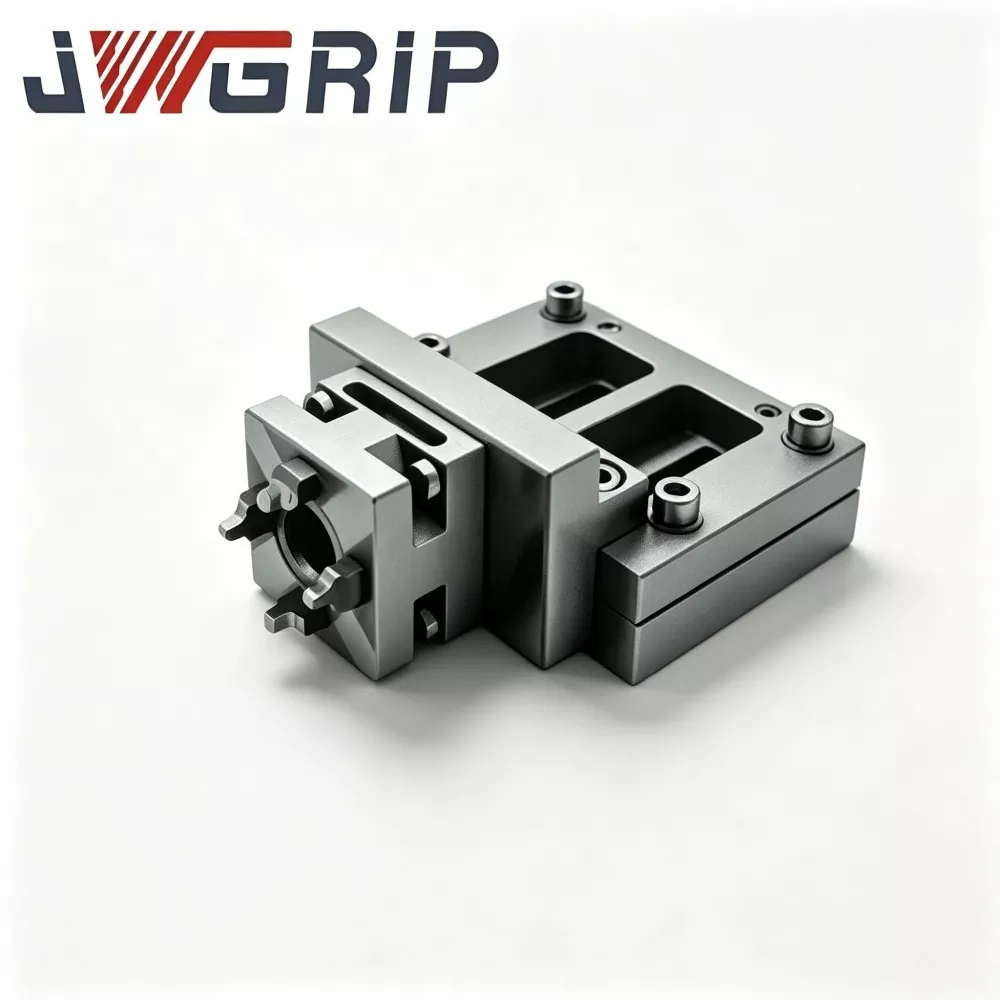
JWGRIP is a professional OEM Exporter of the UPC Hinge Linkage Arm for Robot Quick Change Tool Changer in China. It is a core structural connecting component specially designed for robot automatic fixture swap and unmanned CNC flexible production cells. Serving as the key force-transmission medium between robot end effector and UPC zero-point pallet sets, this optimized hinge linkage arm realizes mechanical locking and unlocking of zero-point pallets purely through robot axis motion, eliminating the need for additional pneumatic and hydraulic auxiliary driving devices.
The UPC Hinge Linkage Arm for Robot Quick Change Tool Changer adopts a high-precision optimized hinge linkage mechanical structure, which converts robot linear motion into stable and reliable pallet clamping and unlocking action. Machined from high-strength alloy structural steel, the product undergoes strict stress-relief treatment after rough machining to eliminate internal processing stress and ensure long-term structural stability.
The hinge joint surfaces are finished with precision grinding, enabling smooth cyclic linkage movement and excellent wear resistance. Equipped with a floating compensation function, the linkage arm can absorb tiny repeated positioning errors during robot docking, effectively avoiding component jamming and structural damage caused by minor alignment deviation. Widely applied in automated CNC production cells and lights-out manufacturing workshops, it greatly improves the stability and continuity of long-cycle unmanned pallet exchange operations.
Traditional robot pallet-change solutions
1. Most solutions rely on external air cylinders or hydraulic actuators mounted on robot flanges to complete zero-point locking and unlocking. This raises end-of-arm weight, requires extra gas-liquid piping layout, and multiplies leakage and failure risks.
2. In high-density automated production cells, excessive peripheral pipelines interfere with robot motion trajectories and shrink effective working space.
3. Simple rigid connecting arms cannot compensate for minor position offsets during robot docking. Small positioning misalignment generates abnormal stress, mechanical jamming, and even permanent damage to zero-point pallet locking structures, which increases equipment downtime for lights-out manufacturing.
Core design advantages
· Fabricated from high-strength alloy structural steel and processed with stress-relieving treatment post rough-machining to remove cutting-induced internal stress
· Hinge joint contact surfaces go through precision grinding to guarantee smooth cyclic linkage motion and lower component wear
· Built-in linkage floating function absorbs tiny alignment errors caused by robot repeated positioning tolerance during docking
· Pallet lock-unlock actions are fully driven by robot axis movement, eliminating fluid-power auxiliary hardware
· Directly compatible with standard UPC-series zero-point pallets
Feedback from multiple automated cell integrators validates that this linkage arm streamlines robot end-of-arm setups, cuts peripheral auxiliary parts quantity, and strengthens automatic pallet-swap reliability under long-cycle unattended manufacturing.
Application Value
As a mechanical transition execution component for robot end-effector quick-change units, JWGRIP UPC Hinge Linkage Arm for Robot Quick Change Tool Changer is purpose-built to pair with UPC-standard robot quick change tool changers. It solves swing transition and posture fine-tuning compensation challenges between tool magazines and robot end effectors.
During robot automatic tool-change cycles, positioning deviations are almost unavoidable, triggered by robot joint positioning tolerance, tool-magazine installation offset, and fixture deflection under self-weight. Rigid fixed connection structures will produce harsh hard impacts upon docking.
Minor consequence: quick-change plate locating pin abrasion and docking jamming
Severe consequence: robot reducer damage, destruction of quick-change internal locking assemblies, shortened service life for the whole quick-change system
Conventional rigid linkages have zero angular floating compensation capacity, which puts extremely strict requirements on fixture installation precision. Even tiny mounting misalignment will trigger on-site docking failure and mechanical blockage during project deployment.
JWGRIP hinge linkage arm uses special hinge-swing linkage architecture. While preserving high overall structural rigidity, it delivers adjustable floating compensation:
Offset position deviation during docking and buffer mechanical impact force
Relax precision requirements for robots and quick change tool changers
Realize self-adaptive tool docking alignment and smooth robot grab-and-release movements
Balance lightweight specification and mechanical strength to satisfy robot end-load limits
UPC Hinge Linkage Arm for Robot Quick Change Tool Changer is widely used for tool-magazine transition, multi-tool rotary switching and automatic pallet pick-and-place tasks. It lowers on-site debugging workload and raises the stability & service life of robot quick-change workflows. It serves as a vital mechanical linkage accessory for constructing JWGRIP UPC-compliant robot quick-change workstations.
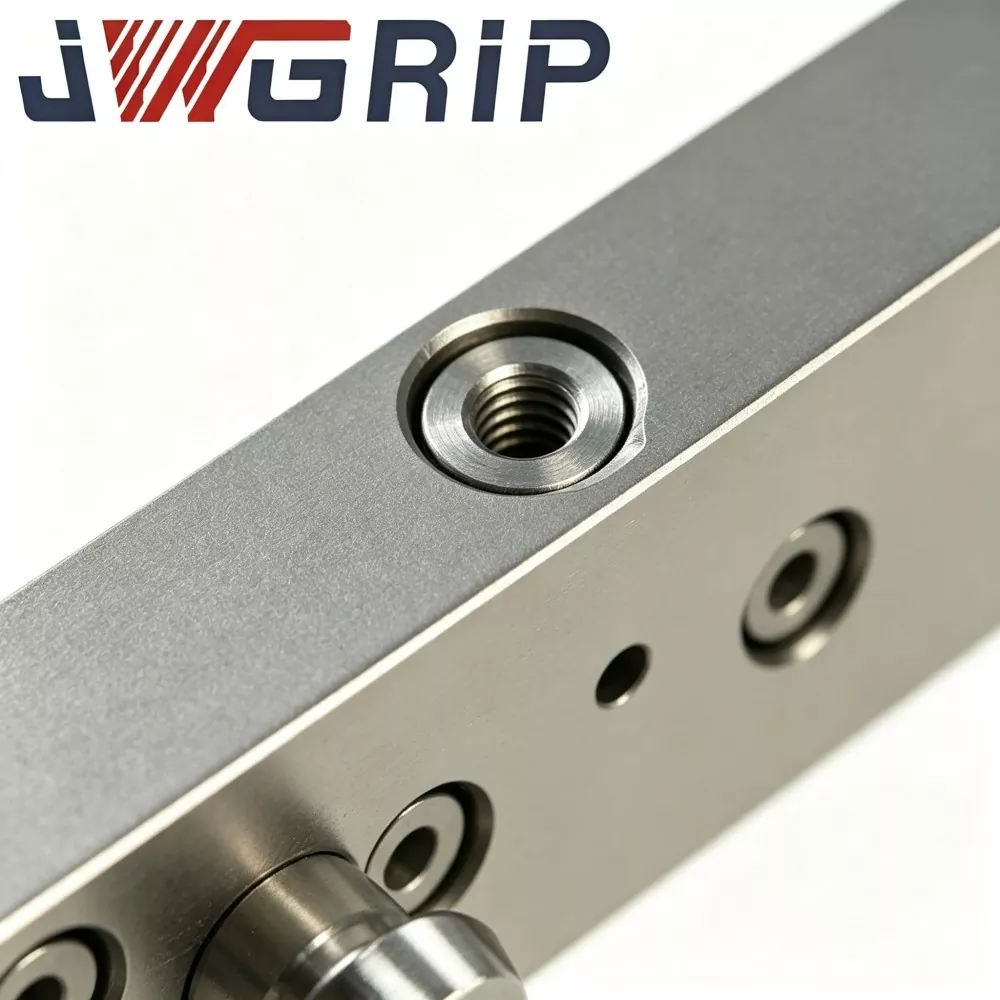
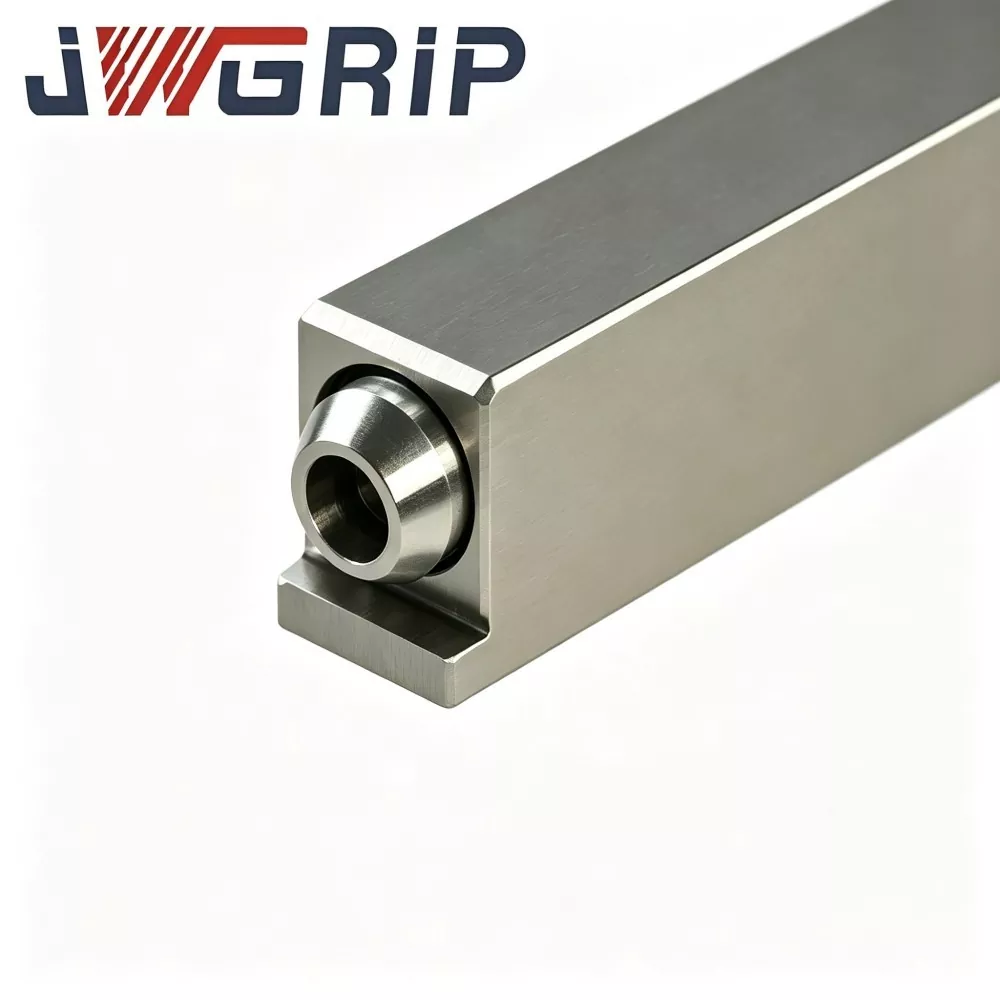
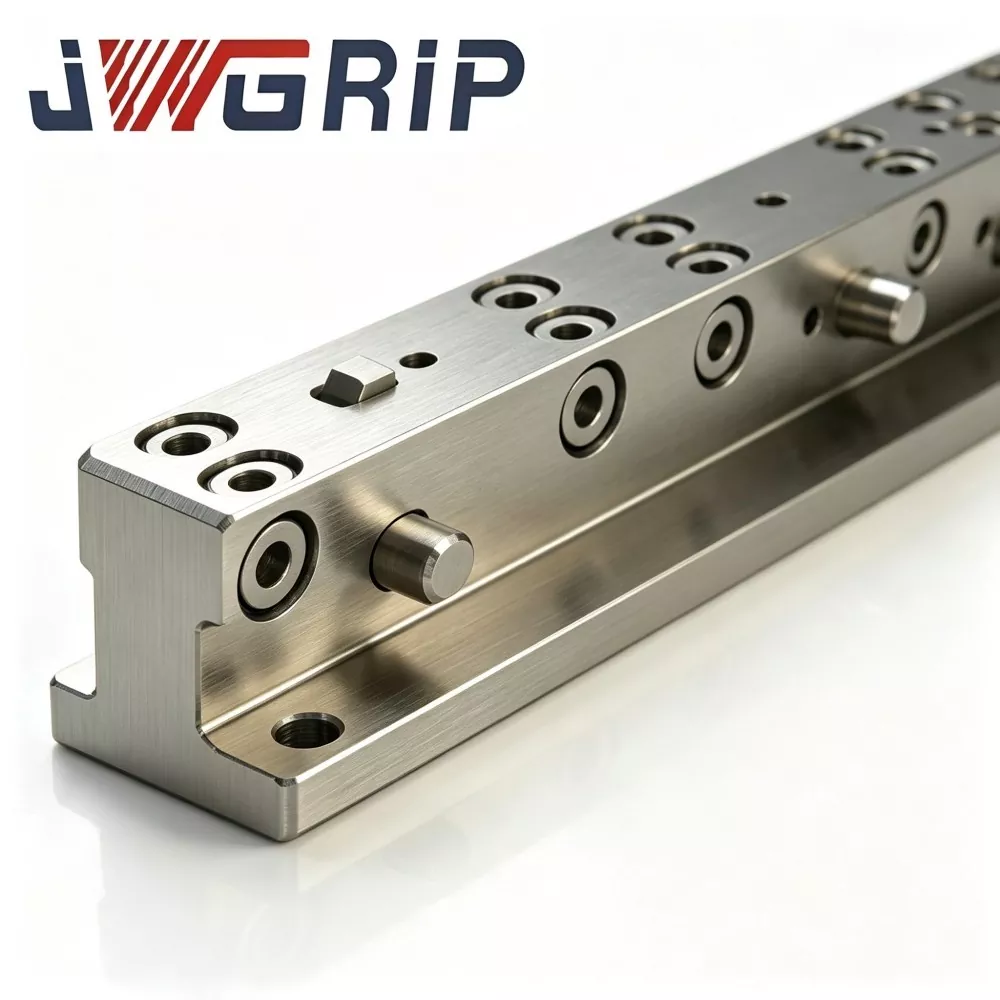
Internal Structural Layout
JWGRIP UPC Hinge Linkage Arm is assembled from multiple core modules: main linkage body, dual-hinge rotating joints, UPC-standard quick-change docking flange, mounting base, limit stop structures, as well as lubrication-sealing assemblies.
Main linkage body: precision-machined high-strength aerospace-grade aluminum alloy
Hinge rotary shafts: high-strength alloy steel processed with quenching & tempering heat treatment
Each rotating shaft is fitted with wear-resistant bushing plus dust-proof sealing structure, blocking cutting coolant, workshop dust and metal chips from entering rotary friction pairs
One interface connects toward robot quick-change tool changer flange; the opposite end connects to tool-magazine-side fixture or tool adapter
Working Mechanism
1. When the robot executes tool-changing movement, robot end effector drives the whole linkage arm.
2. At the quick-change docking phase, hinge joints allow swing floating within pre-defined angular scope to counteract positioning error and fixture installation misalignment. Floating compensation only activates during docking alignment.
3. Once quick-change locking finishes, limit stop structure engages and locks hinge joints. The linkage arm converts to rigid status with all swing motion disabled, ensuring stable tool posture throughout the subsequent machining procedure.
Core Competitive Strengths
1. ±3° floating hinge offset compensation design Absorbs robot positioning deviation and fixture mounting misalignment, buffers docking collision force. Prevents hard-collision damage to quick-change plates and robot reducers, and eases on-site installation precision standards.
2. Light-weight yet high-strength hybrid material configuration Aerospace-grade high-strength aluminum alloy for linkage body reduces robot end-load burden. Heat-treated alloy steel hinge shafts provide excellent wear-resistance and torsion-resistance, striking optimal balance between light weight and structural dependability.
3. Self-engaged built-in limit stop mechanism Swing degree-of-freedom automatically locks right after docking and locking completion. Maintains full rigidity in machining state and eliminates tool shaking. It combines docking-phase floating compensation and processing-phase high rigidity in one unit.
4. Dust-sealed rotating-shaft bushing assembly Isolates metal chips, cutting fluid and factory dust. Avoid hinge rotary pair blockage and accelerated abrasion. Fits harsh workshop machining environments and extends linkage arm service lifespan.
5. Standard UPC-spec flange docking interface Seamlessly connects with JWGRIP UPC robot quick change tool changers without additional flange modification work. Simple installation and replacement, compatible with mainstream robot end quick-change solutions on market.
6. Flexible OEM non-standard customisation service Arm length, swing compensation angle, flange mounting hole layout and rated load capacity can all be adjusted. Custom solutions support different robot models and varied tool-magazine layout requirements.
Application Scenarios
1. FMS flexible automation workstations Robots implement automatic rotary switching for multiple fixtures and pallets. Matched with JWGRIP UPC quick change tool changers, it overcomes docking alignment difficulties created by tool-magazine installation offset.
2. CNC robot loading & unloading cells Robots handle fixture pallets for in-machine pallet transfer. The hinge linkage arm absorbs docking impact and improves continuity & stability for production change-over operations.
3. Robot tool magazine buffer transition stations Robots repeatedly fetch diverse tools from multi-tool magazines. Tolerates tool-magazine installation error and cuts docking failure frequency.
4. Mold & fixture auto-switch production lines Realise automatic swapping for molds, mold inserts and jigs. Reduce on-site debugging labour and shorten workstation commissioning cycle.
5. Retrofit for non-standard automation equipment Add floating-compatibility function to existing robot end effectors. No need to replace the entire quick-change assembly set.
Installation Steps
1. Before installation, wipe clean contact surfaces of UPC quick-change flange and linkage-arm docking flange. Clear away chips and oil contamination, achieve flat fitting surface. Prevent hinge joint extra stress caused by tilted mounting.
2. Tighten flange connection bolts strictly following specified torque value. Over-torque fastening shall be forbidden, to avoid linkage-arm deformation and hinge jamming.
3. Post assembly, manually swing linkage arm to check hinge movement runs smoothly without sticking. Confirm limit-stop structures operate normally.
4. Complete robot teach-in debugging. Configure reasonable docking approach speed. Forbid high-speed hard-impact docking, to avoid exceeding hinge compensation angle and mechanism overload risk.
5. After quick-change locking procedure completes, verify limit-stop mechanism has locked linkage-arm swing freedom and no tool wobble exists, then you may start grabbing work or machining tasks.
6. Carry out routine maintenance: lubricate hinge shaft lubrication points on schedule. Clear chip buildup around shaft sealing parts. Inspect bushing wear condition when hinge swing action turns sluggish.
7. Never run cutting or heavy-load processing operations before quick-change locking finishes. Protect hinge joints from lateral torque load and prevent linkage-arm permanent damage.
Fault Diagnosis & Resolution Guide
1. Fault phenomenon: Frequent docking failure & mechanical jamming during robot quick-change
Possible causes: insufficient hinge swing compensation range; excessive robot teach-path deviation; skewed flange mounting; metal chips stuck within hinge shafts
Countermeasures: Validate normal hinge swing performance; optimise robot motion trajectory; re-calibrate flange parallelism; clean chip debris around shaft-sealing zones
2. Fault phenomenon: Tool wobble occurs after locking action
Possible causes: limit-stop mechanism incomplete engagement; UPC quick-change tool changer not fully locked; flange mounting bolts loose
Countermeasures: Inspect full engagement of stop structure; double-check UPC quick-change locking status; re-torque flange connection bolts
3. Fault phenomenon: Hinge joint swing is stiff or completely stuck
Possible causes: chips & cutting coolant penetrate hinge bushing; bushing component wear; rotating shaft deformation
Countermeasures: Disassemble and flush out internal hinge contaminants; replace worn-out bushings; replace complete linkage arm if shaft deformation appears
4. Fault phenomenon: Linkage-arm deformation or crack damage
Possible causes: operating load exceeds rated maximum load; violent docking impact; cutting torque applied under unlocked hinge condition
Countermeasures: Discontinue usage and replace linkage arm; re-evaluate practical load parameters; ensure quick-change locking completion prior to machining startup
Packaging & Shipment Arrangement
Surface anti-rust treatment is applied for every JWGRIP UPC hinge linkage arm. Hinge shaft positions are coated with anti-rust grease, then each single unit is individually packed with PE protective bag.
Small-batch orders are packed with heavy-duty cartons. Bulk project orders adopt shock-proof wooden cases fitted with buffer padding material, which safeguards flange docking faces and hinge rotary assemblies against transit damage.
Full installation-commissioning technical documents are enclosed within each shipment.
Standard production lead-time: 10-17 working days. Selected standard specifications maintain ready-to-ship stock.
Free sample evaluation is available; sample freight cost needs to be undertaken by buyers.
OEM non-custom orders support modification for arm length, compensation angle as well as flange hole layout.
After-Sales Support
Technical documentation and remote online guidance are offered for installation and commissioning issues.
Wearable spare parts such as hinge bushings can be independently purchased for field replacement.
For bulk project orders, paid on-site commissioning service can be arranged upon request.
FAQ
Q1: Can JWGRIP UPC hinge linkage arm bear machining cutting torque?
A: No. UPC Hinge Linkage Arm for Robot Quick Change Tool Changer only delivers floating compensation for quick-change docking phase. After locking, limit-stop structure locks all swing movement. Machining cutting load must be fully borne by JWGRIP UPC quick change tool changer. Hinge joints should never undertake cutting torque.
Q2: Is swing compensation angle upgrade feasible?
A: Standard specification comes with ±3° swing compensation. Larger compensation angle can be realised through OEM customisation service. Please note expanded compensation angle will reduce overall structural rigidity, robot end-load assessment will be required accordingly.
Q3: Does it support third-party non-UPC robot quick-change plates?
A: Standard version adopts UPC-standard flange interface. Customised flange hole layout can be processed to adapt alternative quick-change systems.
Q4: Can worn hinge bushings be replaced separately?
A: Yes. Bushings are defined as wearable spare components and can be procured and swapped individually. If rotating shaft suffers deformation, full linkage-arm replacement is required.
Q5: Is this linkage arm suitable for heavy-payload robot applications?
A: Standard model supports maximum 80 kg robot end-load. Reinforced custom variant should be selected for heavy-load scenarios. Always confirm robot end-load rating before final selection.
Selection Reference Points
JWGRIP UPC hinge linkage arm functions as floating transition mechanical hardware for robot quick-change systems. Its core value lies in offsetting position deviation impact at docking stage and lowering debugging difficulty for robot automation workstations.
Confirm robot actual end-load rating first; never go beyond product rated load capacity.
Verify docking flange matches UPC-standard specification.
For projects with large fixture installation offset, you may consider custom-made larger swing-compensation angle, meanwhile overall structural rigidity must be assessed comprehensively.
Prioritise finished units equipped with dust-proof sealing and integrated limit-stop structures. Avoid simple unprotected linkage versions, which will face fast hinge wear under dusty, chip-filled workshop environments.
Hot Tags: UPC Hinge Linkage Arm for Robot Quick Change Tool Changer Supplier
Send Inquiry
Contact Info
-
Address
No. 44, Daning Entrepreneurship Road, Humen Town, Dongguan City, Guangdong Province, China
-
Tel
-
Email
Welcome to send inquiry to JWGRIP. Our professional technical and sales team will provide free fixture selection, customized solution design and accurate quotation.